Shilajit Extract Powder vs Raw Shilajit Resin: How to Choose the Right Ingredient for Supplement Manufacturing
2026-07-17 17:05:42
Understanding the Difference Between Shilajit Extract Powder and Raw Shilajit Resin for Modern Supplement Production
The growing demand for botanical ingredients has encouraged supplement manufacturers to explore traditional plant-based materials in more standardized and commercially suitable formats. Among these ingredients, Shilajit has gained attention as a botanical raw material used in various wellness and nutritional product concepts. However, when developing finished products, manufacturers often face an important sourcing decision: whether to use traditional raw shilajit resin or a standardized shilajit extract powder.
Although both ingredients originate from the same natural source, they are not identical from a manufacturing perspective. The differences between resin and extract powder involve more than appearance or processing form. Factors such as standardization, handling characteristics, quality documentation, production consistency, and supply chain requirements all influence which ingredient format is more suitable for commercial supplement production.
For professional buyers working with a shilajit extract powder supplier, the decision should be based on formulation requirements and manufacturing objectives rather than simply comparing the two materials by price. A reliable ingredient selection process considers how easily the raw material can be integrated into production, how consistently it can be supplied, and whether the supplier can provide appropriate quality documentation.
This guide explains the key differences between shilajit extract powder vs Raw Shilajit Resin and helps supplement manufacturers understand which ingredient format better matches their production needs.
What Is Raw Shilajit Resin? Characteristics and Traditional Ingredient Format
Natural Properties and Origin of Raw Shilajit Resin
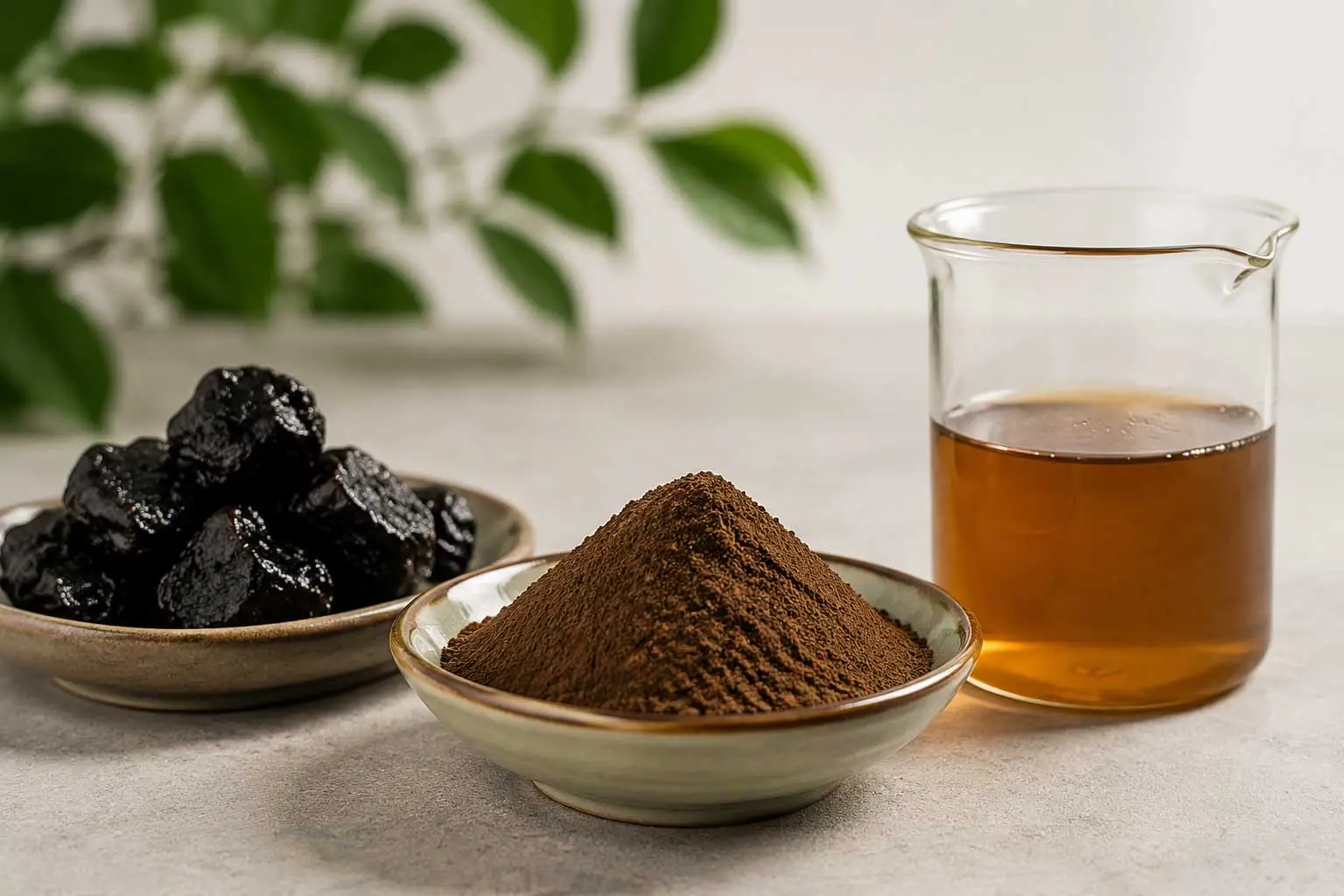
Raw shilajit resin represents one of the traditional forms of Shilajit used in herbal preparations. It is a naturally occurring substance collected and processed from mountainous regions, where organic plant materials undergo long-term natural transformation.
From a traditional ingredient perspective, resin maintains the original physical characteristics of Shilajit. It typically has a thick, sticky texture and dark appearance, which distinguishes it from processed powder ingredients.
For manufacturers interested in traditional botanical products, raw ahilajit resin may represent an attractive ingredient format because it maintains a closer connection to the original material. However, when moving from traditional applications to modern supplement manufacturing, additional considerations become important.
Commercial supplement production requires ingredients that can be measured accurately, blended efficiently, stored conveniently, and documented according to quality standards. These requirements often create challenges for resin-based materials.
Challenges of Using Raw Shilajit Resin in Commercial Supplement Manufacturing
While raw shilajit resin has historical recognition, its physical characteristics can create practical limitations during large-scale manufacturing.
The sticky and viscous nature of resin can make several production steps more complicated, particularly when manufacturers need accurate weighing, uniform mixing, or automated filling processes.
For example, supplement manufacturers producing capsules or tablets typically require ingredients with predictable handling characteristics. Powder ingredients are generally easier to integrate into existing production systems because they can be accurately measured and blended with other raw materials.
Another consideration is specification consistency. Since resin is a less processed form, its physical properties and composition may vary depending on raw material source and processing conditions. For companies producing standardized supplements, maintaining consistent batch characteristics is a key purchasing requirement.
Therefore, while raw shilajit resin may be suitable for certain traditional product concepts, manufacturers producing commercial supplement lines often evaluate whether a more standardized ingredient format would better support their production requirements.
What Is Shilajit Extract Powder? A Standardized Botanical Ingredient for Supplement Manufacturing
Shilajit Extract Powder Production and Standardization Process
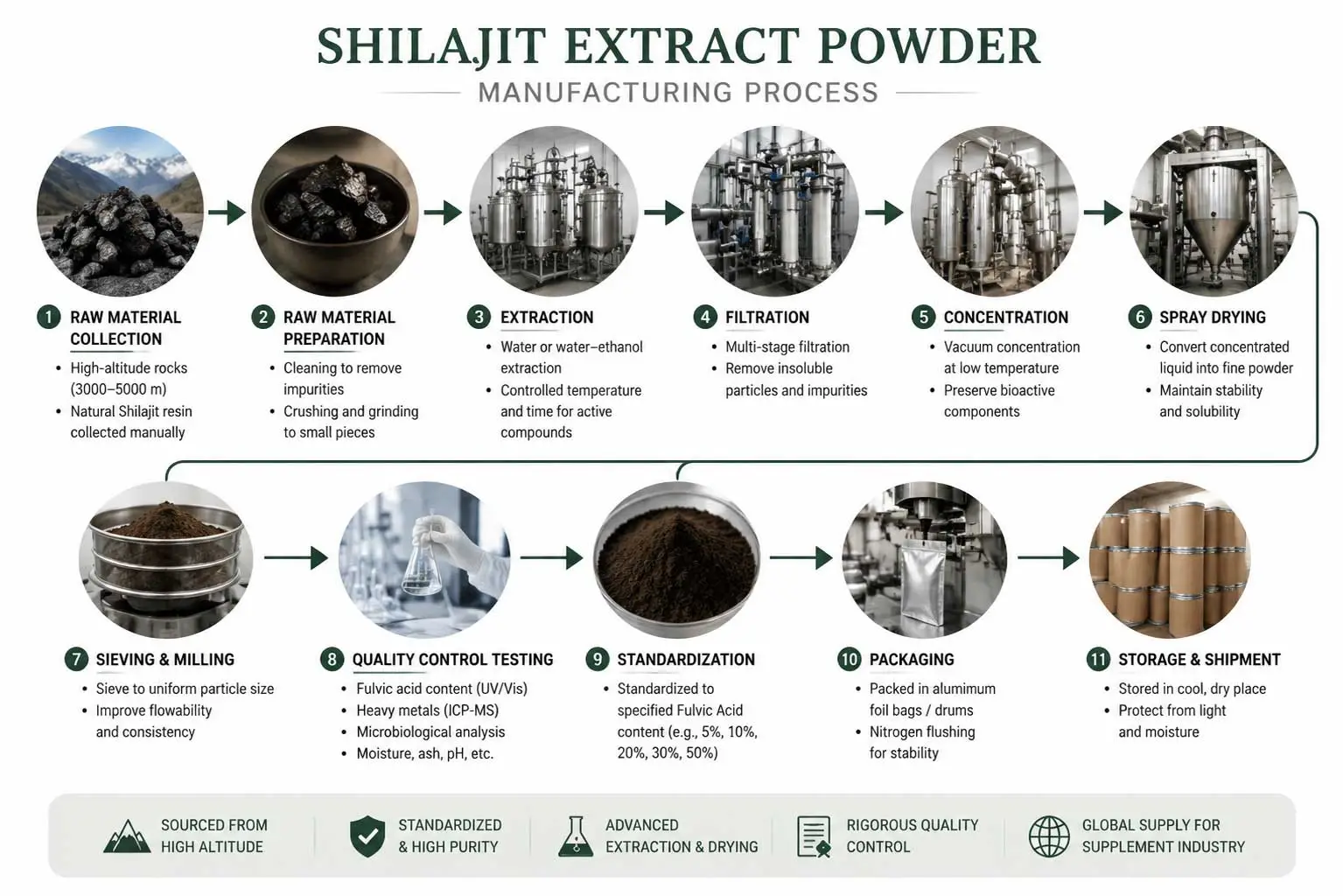
Shilajit extract powder is a processed botanical ingredient produced through controlled extraction, purification, concentration, and drying procedures. Unlike raw resin, extract powder is specifically developed to meet the requirements of modern supplement manufacturing.
The purpose of producing extract powder is not simply to change the physical form of Shilajit. The process allows manufacturers to establish clearer specifications, improve handling characteristics, and create a more consistent ingredient suitable for industrial applications.
A professional shilajit extract manufacturer typically manages multiple production stages, including raw material evaluation, purification, extraction, concentration, drying, and quality testing.
Through controlled processing, manufacturers can produce different specification grades according to customer requirements. For example, shilajit extract powder 50% fulvic acid represents a standardized specification designed for customers who require a clearly defined Fulvic Acid content.
For international supplement companies, standardization is particularly important because it allows product developers to maintain consistency between different production batches and support more predictable formulation processes.
Why Supplement Manufacturers Prefer Standardized Shilajit Extract Powder
The main advantage of shilajit extract powder in commercial manufacturing is its practicality. Powder ingredients are generally easier to handle, transport, store, and incorporate into different supplement formats.
Compared with resin, extract powder offers several advantages from a manufacturing perspective:
•easier weighing and blending during production;
•improved compatibility with capsule and tablet manufacturing;
•more convenient storage and transportation;
•clearer specification control;
•easier quality documentation management.
For supplement brands and contract manufacturers, these characteristics can simplify production planning and quality management.
When companies work with a professional shilajit extract powder supplier, they usually expect more than ingredient delivery. They require consistent specifications, reliable documentation, and stable supply capability that supports long-term product development.
This is why standardized powder extracts have become increasingly important in the global botanical ingredient market.
Shilajit Extract Powder vs Raw Shilajit Resin: Key Differences for Supplement Manufacturing
When evaluating botanical ingredients for commercial supplement production, the choice between shilajit extract powder and raw shilajit resin should be based on manufacturing requirements rather than simply the traditional form of the ingredient.
Both materials originate from Shilajit, but their characteristics are significantly different when considered from an industrial production perspective. For supplement manufacturers, the most important factors are usually ingredient consistency, processing convenience, quality documentation, storage conditions, and long-term supply reliability.
The following comparison highlights the major differences between these two ingredient formats.
|
Comparison Factor |
Shilajit Extract Powder |
Raw Shilajit Resin |
|
Physical Form |
Dry powder with controlled particle characteristics |
Thick, sticky resin material |
|
Standardization |
Available with defined specifications such as Fulvic Acid percentage |
Usually more variable depending on source and processing |
|
Manufacturing Convenience |
Easy to weigh, blend, and incorporate into production |
More difficult to handle during large-scale manufacturing |
|
Capsule & Tablet Production |
Suitable for automated filling and blending processes |
Requires additional handling considerations |
|
Quality Documentation |
Easier to provide batch-specific specifications and COA |
Quality evaluation can be more complex |
|
Storage & Transportation |
More convenient for warehouse management and shipping |
Requires more attention due to physical properties |
|
Bulk Supply |
Suitable for commercial ingredient supply |
More challenging for standardized industrial supply |
For companies developing commercial supplement products, these differences can directly influence production efficiency and product consistency.
Standardization and Fulvic Acid Content: A Key Difference Between Powder and Resin
One of the most important considerations when comparing shilajit extract powder vs raw shilajit resin is the ability to achieve consistent ingredient specifications.
Botanical ingredients naturally contain multiple compounds, and their composition can vary depending on raw material characteristics and processing methods. For supplement manufacturers, this variation needs to be carefully managed because finished products require reliable ingredient information and consistent formulation performance.
Shilajit extract powder is commonly produced with standardized specifications, particularly regarding Fulvic Acid content. Professional suppliers may offer different grades, including 5%, 10%, 20%, 30%, and higher concentration options such as shilajit extract powder 50% fulvic acid.
This type of standardization allows manufacturers to select an ingredient based on their formulation requirements and maintain clearer product specifications.
In comparison, Raw Shilajit Resin represents a less processed form of the material. While resin maintains its traditional characteristics, achieving consistent specification control can be more challenging because the physical and chemical characteristics may vary depending on the original material and processing conditions.
For international supplement brands, standardized ingredients are generally preferred because they simplify:
•formulation development;
•quality approval;
•product documentation;
•batch comparison.
Therefore, when purchasing from a professional shilajit extract powder supplier, buyers typically focus on whether the supplier can provide reliable Fulvic Acid testing results and consistent batch documentation.
Manufacturing Convenience: Why Powder Format Is Often Preferred for Supplement Production
The manufacturing process is another important difference between extract powder and resin.
Modern supplement production requires ingredients that can integrate efficiently into established manufacturing systems. Whether producing capsules, tablets, or powder blends, manufacturers need raw materials that can be accurately measured and mixed with other components.
Shilajit Extract Powder provides practical advantages because the dry powder format allows easier handling during production.
For example, during capsule manufacturing, powdered ingredients can be accurately weighed and combined with other ingredients before filling. In tablet production, powder characteristics such as flowability and uniform mixing are important considerations.
By contrast, Raw Shilajit Resin has a naturally sticky texture that may require additional preparation steps before incorporation into industrial production processes. This can increase handling requirements and make automated manufacturing more difficult.
For supplement companies producing at commercial scale, these operational differences can affect production efficiency and overall manufacturing costs.
This is why many companies working with a Shilajit Extract Manufacturer prefer standardized powder ingredients that are designed specifically for industrial applications.
Storage, Transportation, and Supply Chain Considerations
Ingredient logistics are often overlooked during product development, but they become increasingly important when companies move from small-scale testing to commercial production.
For international buyers purchasing bulk shilajit extract powder, storage stability, packaging efficiency, and transportation convenience are important supply chain considerations.
Powder ingredients generally provide advantages because they can be:
•packed in standardized containers;
•stored more efficiently;
•measured easily during production;
•transported with predictable handling requirements.
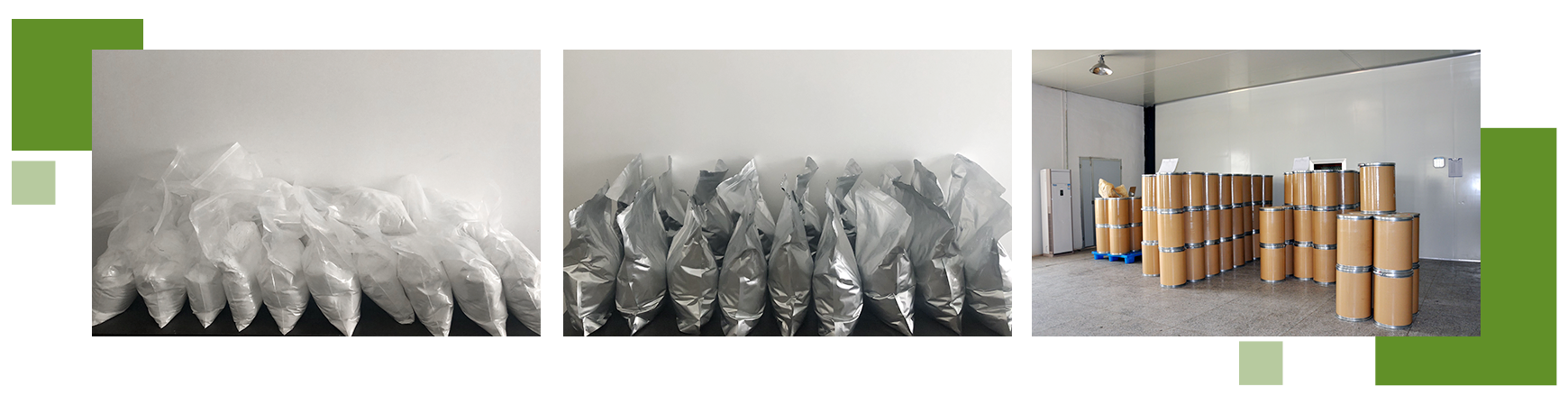
Professional suppliers usually provide packaging options such as aluminum foil bags for smaller quantities and fiber drums for bulk shipments.
Raw resin, due to its physical characteristics, may require additional handling considerations during storage and transportation. The sticky texture can make weighing, transferring, and large-scale handling more complicated.
For global customers, especially supplement brands importing ingredients across borders, these practical differences can influence purchasing decisions.
A reliable bulk shilajit extract powder supplier should not only provide the ingredient but also support customers with appropriate packaging information, storage recommendations, and shipping solutions.
Quality Control and Documentation: Why Extract Powder Offers More Transparency
Quality documentation is an essential part of international ingredient purchasing.
When companies evaluate a new supplier, they usually request technical documents to confirm ingredient identity, specifications, and safety parameters.
A professional shilajit extract powder COA typically provides information such as:
•Fulvic Acid content;
•appearance;
•moisture;
•ash;
•heavy metals;
•microbiological testing results.
This documentation allows buyers to verify whether each batch meets the agreed specification.
For resin-based products, quality evaluation may require additional consideration because the material is less standardized in physical form. This does not mean resin cannot be used, but it means buyers need to pay closer attention to supplier capability, testing procedures, and consistency management.
For companies developing products for international markets, transparency and documentation are critical parts of supplier qualification.
A qualified shilajit extract powder supplier should be able to provide complete quality records and demonstrate how product consistency is maintained from production to shipment.
Cost Considerations When Choosing Between Shilajit Extract Powder and Raw Shilajit Resin
When purchasing botanical ingredients, price is always an important consideration, but professional supplement manufacturers usually evaluate the total value of an ingredient rather than focusing only on the initial purchase cost. The lowest quotation does not always represent the most economical option, especially when the ingredient will be used in commercial-scale production.
For shilajit extract powder and raw shilajit resin, the price difference is influenced by multiple factors, including raw material processing, Fulvic Acid specification, quality testing requirements, packaging format, and production consistency. A higher specification ingredient, such as shilajit extract powder 50% fulvic acid, generally requires more controlled processing and stricter quality management compared with lower specification materials.
From a manufacturing perspective, the real cost of an ingredient is not limited to the price per kilogram. Supplement manufacturers also need to consider how efficiently the ingredient can be processed during production. A powder ingredient that can be accurately weighed, blended, and incorporated into capsules, tablets, or powder formulations may reduce additional handling requirements and improve production efficiency.
For example, although raw shilajit resin may appear attractive because of its traditional form or initial pricing, manufacturers should also consider potential additional costs related to handling, storage, formulation adjustment, and production management. The sticky physical characteristics of resin may require more manual processing or additional preparation before it can be incorporated into certain manufacturing systems.
In comparison, shilajit extract powder is designed for standardized industrial applications. The powder format allows manufacturers to manage inventory more efficiently, simplify transportation, and maintain more consistent formulation processes. This can be particularly valuable for brands producing supplements at commercial scale, where production stability and repeatability directly affect overall operational costs.
Another important factor is quality assurance. When working with a professional shilajit extract powder supplier, buyers usually receive supporting documents such as a shilajit extract powder COA, specification sheets, and batch testing records. These documents help manufacturers reduce the risks associated with inconsistent raw materials and support their own quality control procedures.
Therefore, when comparing shilajit extract powder Price with raw resin pricing, experienced buyers typically evaluate the complete supply chain value, including ingredient consistency, manufacturing convenience, documentation support, and long-term supplier reliability.
For companies planning regular purchasing of bulk shilajit extract powder, selecting a supplier with stable production capability and consistent quality can often provide greater long-term value than choosing the lowest-priced option available in the market.
Which Shilajit Ingredient Is Better for Supplement Manufacturing?
There is no universal answer to whether shilajit extract powder or raw shilajit resin is better. The right choice depends on the intended application, production process, quality requirements, and business model of the manufacturer.
For companies producing traditional-style wellness products, resin may still have market value because it represents a more original form of Shilajit. However, for modern supplement manufacturing where consistency, efficiency, and documentation are essential, standardized extract powder is often a more practical choice.
The decision should be based on how the ingredient will be used throughout the product lifecycle, from formulation development to commercial production.
When Raw Shilajit Resin May Be Suitable for Product Development
Raw shilajit resin may be considered by brands that focus on traditional ingredient positioning or specialized product concepts where the original resin format is an important part of the product identity.
For example, some companies develop products based on traditional herbal formats and prefer resin because of its historical association and unique physical characteristics.
However, manufacturers should understand that resin-based products require more attention during production. The sticky texture and less standardized physical form may require additional handling procedures compared with powder ingredients.
Before selecting resin, manufacturers should evaluate:
•whether the production facility can handle resin materials efficiently;
•whether the formulation process requires precise dosing;
•whether the supplier provides sufficient quality documentation;
•whether long-term batch consistency can be maintained.
For smaller specialty products, these factors may be manageable. However, for companies producing large commercial supplement volumes, operational efficiency often becomes a more important consideration.
When Shilajit Extract Powder Is the Better Choice for Commercial Production
For most modern supplement manufacturers, shilajit extract powder provides advantages that align better with industrial production requirements.
Powder extracts are particularly suitable for:
•capsule manufacturing;
•tablet production;
•powder blends;
•functional nutrition products;
•private label supplement formulations.
The standardized format allows manufacturers to better control ingredient ratios and maintain consistency across production batches.
For example, companies requiring a clearly defined active specification may select shilajit extract powder 50% fulvic acid because it provides a higher standardized Fulvic Acid level suitable for specific formulation requirements.
Working with a professional shilajit extract powder supplier also allows manufacturers to obtain supporting documentation, including specifications, COA reports, and quality testing information.
For businesses planning long-term product development, these advantages can simplify supplier approval, production management, and quality control.
How to Choose a Reliable Shilajit Extract Powder Supplier for Bulk Purchasing
Selecting the right supplier is one of the most important steps when sourcing botanical ingredients. A qualified supplier should provide not only the product but also confidence in quality, documentation, and supply capability.
When evaluating a shilajit extract powder supplier, international buyers should consider several key factors.
Verify Product Specifications and Testing Documentation
A professional supplier should clearly define product specifications and provide supporting analytical documentation.
For bulk shilajit extract powder, buyers should confirm:
•Fulvic Acid specification;
•batch testing results;
•product appearance;
•moisture level;
•heavy metal testing;
•microbiological analysis.
A complete shilajit extract powder COA allows buyers to verify that the ingredient meets agreed requirements before commercial purchasing.
Suppliers that provide transparent documentation demonstrate stronger quality management and better understanding of international procurement expectations.
Evaluate Manufacturing Capability Rather Than Only Trading Ability
One important consideration is whether the supplier is an actual manufacturer or simply a trading company.
A professional shilajit extract manufacturer typically has better control over:
•production processes;
•quality management;
•batch consistency;
•customization capability;
•supply planning.
For supplement companies, long-term cooperation requires more than a competitive quotation. A reliable manufacturing partner should be able to support product development, provide technical information, and maintain stable supply as demand grows.
Consider Certifications and Quality Management Systems
Quality systems are another important part of supplier evaluation.
International buyers often review whether a supplier has established quality management procedures and relevant certifications.
A professional botanical ingredient supplier should maintain systems covering:
•raw material inspection;
•production control;
•finished product testing;
•traceability management.
These systems help ensure that each batch of shilajit extract powder meets consistent quality expectations.

Why Choose CHEN LANG BIO TECH as Your Shilajit Extract Powder Supplier?
For global supplement manufacturers, choosing a supplier means selecting a long-term ingredient partner rather than simply purchasing a raw material.
CHEN LANG BIO TECH specializes in botanical extracts and functional ingredients, providing standardized ingredient solutions for supplement brands, formulation companies, and distributors.
Our production capability is supported by professional extraction and processing technologies, including extraction, purification, concentration, and drying systems designed to maintain consistent botanical ingredient quality.
For customers sourcing shilajit extract powder bulk, we provide different specification options, including Fulvic Acid standardized grades such as shilajit extract powder 50% fulvic acid, together with quality documentation to support supplier evaluation.
Our quality management system is supported by ISO9001-2015 certification, and our products are manufactured according to internationally recognized food safety requirements, including ISO22000, FAMI-QS, HALAL, and KOSHER standards.
We understand that international buyers need reliable communication, stable quality, and predictable supply. Therefore, our focus is not only delivering ingredients but also building long-term cooperation based on transparency and consistency.
Frequently Asked Questions About Shilajit Extract Powder vs Raw Shilajit Resin
What is the main difference between Shilajit Extract Powder and Raw Shilajit Resin?
The main difference is the processing form and standardization level. Raw Shilajit Resin represents a traditional unprocessed form, while shilajit extract powder is processed into a standardized powder format designed for easier industrial application.
Which Shilajit form is better for capsule manufacturing?
For most capsule manufacturing applications, shilajit extract powder is generally more convenient because it offers better handling characteristics, easier weighing, and improved blending performance.
Is Shilajit Extract Powder available with different Fulvic Acid specifications?
Yes. Professional suppliers may provide different specifications, including 5%, 10%, 20%, 30%, and shilajit extract powder 50% fulvic acid, depending on customer requirements.
What documents should I request before buying Shilajit Extract Powder?
Before purchasing, buyers typically request:
•COA;
•product specification sheet;
•MSDS;
•testing reports;
•packaging information.
A reliable shilajit extract powder supplier should be able to provide complete technical documentation.
Can I buy Shilajit Extract Powder in bulk?
Yes. Manufacturers and distributors can purchase bulk shilajit extract powder according to their production requirements. Professional suppliers usually provide flexible packaging and supply solutions for different order volumes.
Conclusion: Choosing the Right Shilajit Ingredient for Supplement Manufacturing
The choice between shilajit extract powder vs raw shilajit resin depends on the specific requirements of the product and manufacturing process. While raw resin maintains traditional characteristics, standardized shilajit extract powder offers practical advantages for modern supplement production, including easier handling, clearer specifications, better documentation, and more efficient manufacturing integration.
For companies looking to buy shilajit extract powder for commercial applications, selecting an experienced shilajit extract manufacturer with strong quality systems and reliable supply capability is an important step toward long-term success.
CHEN LANG BIO TECH provides standardized Shilajit extract ingredients with professional documentation, flexible supply options, and manufacturing support for global supplement companies.
For specifications, COA, samples, or bulk inquiries, please contact: Email: admin@chenlangbio.com

Send Inquiry
Related Industry Knowledge
- Hydrolyzed Keratin vs Keratin: Which is Better for Your Hair Care Formulations
- How Much D-chiro-inositol is Used in Supplement Ingredient Formulations for PCOS Products?
- How to Buy Dutasteride Powder in Bulk: A Pharmaceutical Buyer's Guide
- What are the Benefits of Acetyl Hexapeptide-8 in Skincare?
- Everything You Need to Know About Sesamin Powder
- How Does Kopexil Work for Hair Loss?
- What is Kopexil and How Does it Work for Hair Loss?
- Pure Fisetin: A Natural Senolytic Solution
- Potential Green Tea Extract Benefits
- Is Honokiol the Same as Magnolia Bark