
Madecassoside vs Asiaticoside
2025-12-29 17:54:30
When working with centella asiatica–derived ingredients, one question tends to come up repeatedly during formulation discussions, specification reviews, or sourcing conversations: Madecassoside vs Asiaticoside — what is the actual difference?
Both names appear frequently on technical documents, ingredient labels, and standardization sheets. Because they originate from the same plant and belong to the same chemical family, it is easy to assume they play the same role. From an ingredient supplier’s and formulator’s point of view, however, that assumption often leads to confusion. Madecassoside and asiaticoside are closely related, but they are not interchangeable, and understanding how they differ is important when selecting the right Centella-derived material for a specific application.
In this article, we look at madecassoside vs asiaticoside from a practical ingredient and formulation perspective. Rather than focusing on marketing claims, the discussion centers on chemical identity, standardization, consistency, and how these two compounds are typically positioned in cosmetic and personal care formulations. This approach reflects how these ingredients are evaluated in real-world product development and sourcing decisions.
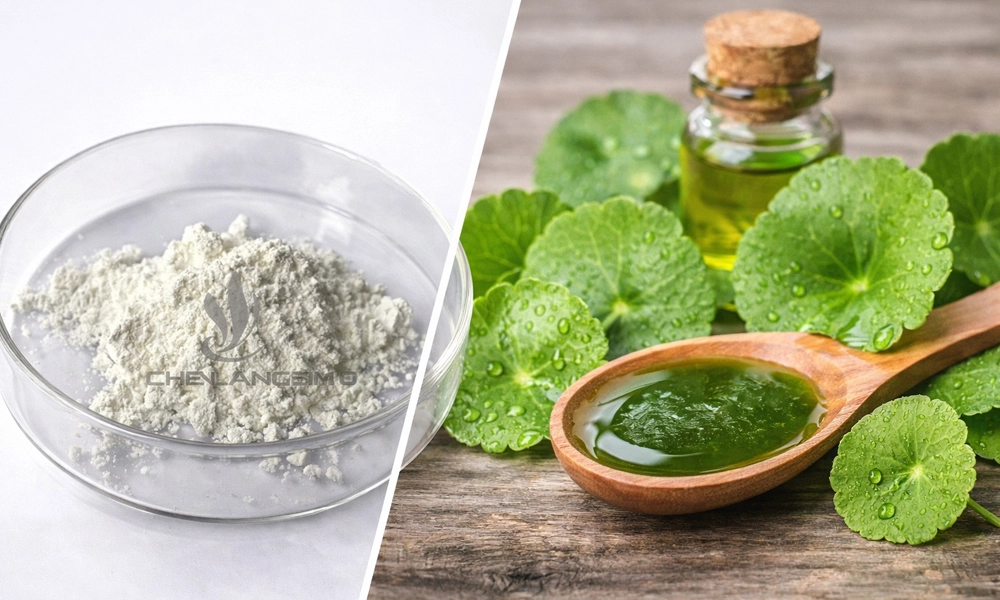
Short Answer: How Madecassoside and Asiaticoside Differ
In simple terms, madecassoside and asiaticoside are two distinct triterpenoid saponins naturally found in centella asiatica. While they share a similar structural backbone and botanical origin, they differ in their parent acids, analytical behavior, and how they are commonly used in formulations.
From a practical standpoint, madecassoside is often selected as a precision active with tight specifications, while asiaticoside is more frequently associated with botanical extracts and broader phytochemical profiles. Which one is more appropriate depends less on which compound is “better” and more on what a formulation is designed to achieve.
What Is Madecassoside?
Madecassoside is a well-defined triterpenoid saponin derived from centella asiatica. Chemically, it is the glycosylated form of madecassic acid and is recognized as one of the key marker compounds used to characterize Centella-based ingredients.
In commercial ingredient applications, madecassoside is typically supplied as a highly standardized or purified material. This means that its identity, purity, and concentration are clearly defined, usually supported by analytical methods such as HPLC. From a supplier’s point of view, this level of definition allows madecassoside to be handled much like other single active ingredients rather than as a traditional botanical extract.
In formulation work, madecassoside is often chosen when consistency and control matter most. Because its composition is well characterized, formulators can include it at low, precise use levels without worrying about large batch-to-batch variation. This makes it particularly attractive in products where reproducibility, regulatory clarity, and ingredient transparency are important considerations.
It is also worth noting that madecassoside is commonly used as a reference compound in centella research and quality control. Its presence and concentration are frequently measured to assess the quality and standardization of centella-derived materials.
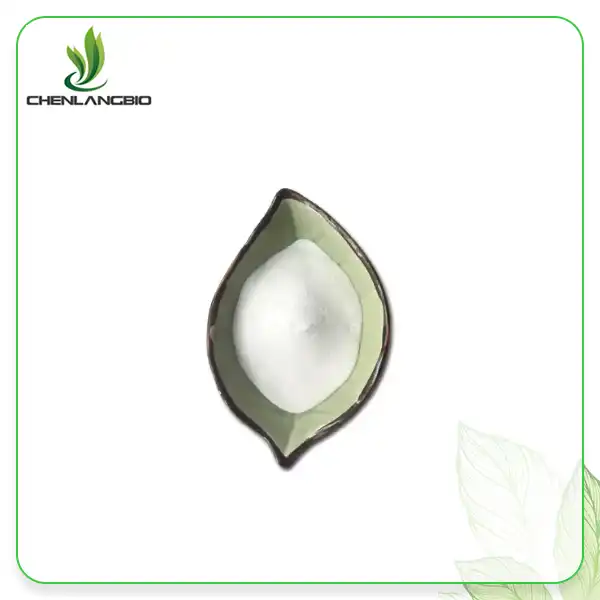
|
Name |
Madecassoside |
|
Purity |
80%, 90% |
|
Soluble |
100% soluble in water |
|
Appearance |
White Powder |
|
CAS |
34540-22-2 |
|
Molecular Formula |
C48H78O20 |
|
Molecular Weight |
975.13 |
What Is Asiaticoside?
Asiaticoside is another major triterpenoid saponin naturally present in centella asiatica. Structurally, it is the glycosylated derivative of asiatic acid, which distinguishes it from madecassoside, even though both belong to the same broader chemical family.
In contrast to madecassoside, asiaticoside is most often encountered as part of a botanical extract rather than as a fully isolated compound. While purified asiaticoside is available, in many commercial contexts it serves as a marker or contributing component within standardized Centella asiatica extracts.
From an ingredient perspective, asiaticoside is closely tied to the concept of botanical complexity. Its content in an extract can vary depending on factors such as plant origin, harvest time, and extraction conditions. As a result, asiaticoside is frequently evaluated alongside other centella triterpenoids, such as madecassoside, asiatic acid, and madecassic acid, rather than on its own.
For formulators who value a whole-plant or traditional botanical approach, asiaticoside plays an important role in defining the overall phytochemical profile of centella-based ingredients.
|
Name |
Asiaticoside |
|
Spec |
70% 80% |
|
Appearance |
White powder |
|
CAS |
16830-15-2 |
|
Molecular Formula |
C48H78O19 |
|
Molecular Weight |
959.12 |
|
EINECS |
240-851-7 |
|
PH |
4.5–7.5 |
|
Solubility |
Water |
|
Package |
1Kg/Aluminum foil bag, 25Kg/Paper drum |
Madecassoside vs Asiaticoside: Key Differences in Ingredient Practice
Although madecassoside and asiaticoside share a common botanical source, their practical roles in formulation and sourcing are different. This becomes clearer when the two compounds are compared side by side from an ingredient management perspective.
|
Aspect |
Madecassoside |
Asiaticoside |
|
Chemical classification |
Triterpenoid saponin |
Triterpenoid saponin |
|
Parent acid |
Madecassic acid |
Asiatic acid |
|
Ingredient form |
Typically purified or highly standardized |
Often part of standardized extract |
|
Standardization level |
High, compound-specific |
Variable, extract-dependent |
|
Batch consistency |
Very high |
Influenced by botanical variability |
|
Typical positioning |
Precision active ingredient |
Botanical marker or supporting component |
|
Use level |
Low, precisely controlled |
Low to moderate, formulation-dependent |
Structural and Standardization Considerations
One of the most meaningful differences between madecassoside and asiaticoside lies in how they are standardized and controlled in commercial supply chains.
Because madecassoside is commonly offered as a purified compound, it is accompanied by clear specifications, including defined purity ranges and analytical confirmation. This level of control allows suppliers and formulators to work with madecassoside in a predictable way, minimizing variability across batches and production runs.
Asiaticoside, on the other hand, is frequently standardized as part of a multi-component extract. Its content may be expressed as a percentage within a total triterpenoid specification rather than as a single isolated value. While this approach preserves the botanical character of centella asiatica, it also means that natural variability is an inherent part of the ingredient.
Neither approach is inherently superior. Instead, they serve different formulation goals. Madecassoside emphasizes precision, while asiaticoside reflects botanical complexity.
Formulation Strategy: When Each Compound Makes Sense
When Madecassoside Is Typically Selected
From a formulation standpoint, madecassoside is often chosen when:
•The product concept requires a clearly identified active ingredient
•Tight control over ingredient concentration is important
•Batch-to-batch consistency is a priority
•The formulation benefits from low inclusion levels
In these cases, madecassoside functions much like other single-molecule actives. It allows formulators to design products with predictable performance and straightforward quality control.
When Asiaticoside Is More Appropriate
Asiaticoside is commonly selected when:
•The formulation emphasizes botanical or plant-derived ingredients
•A broader Centella phytochemical profile is desired
•Ingredient storytelling focuses on traditional or holistic plant use
•Some natural variability is acceptable within defined limits
In this context, asiaticoside contributes to the overall identity of centella asiatica extracts rather than standing alone as a single active.
Can Madecassoside Replace Asiaticoside?
This is a question we often hear during ingredient selection discussions. From a technical perspective, madecassoside cannot simply replace asiaticoside without changing the nature of the formulation.
Although both compounds are triterpenoid saponins, substituting one for the other affects:
•The ingredient’s classification (purified active vs botanical component)
•The formulation’s positioning
•The standardization and labeling strategy
In some formulations, both compounds are present together—either naturally within a centella extract or through a combination of purified actives—to balance precision and botanical context. This approach reflects how centella-derived ingredients are often used in practice rather than forcing a one-to-one substitution.
Practical Considerations for Ingredient Selection
When evaluating madecassoside vs asiaticoside, the decision should be guided by practical questions:
•How much control does the formulation require?
•Is botanical authenticity or ingredient precision more important?
•How will the ingredient be labeled and communicated?
•What level of batch consistency is needed?
Answering these questions helps ensure that the selected compound aligns with both formulation goals and supply chain realities.
Conclusion
Although madecassoside and asiaticoside originate from the same plant and share similar chemical roots, they represent two different approaches to using Centella asiatica–derived ingredients in modern formulations. Madecassoside offers a higher level of precision, consistency, and specification control, while asiaticoside contributes to botanical complexity and the broader phytochemical identity associated with centella extracts.
Understanding the difference between madecassoside vs asiaticoside allows formulators, buyers, and product developers to select the ingredient that best aligns with their formulation objectives, regulatory considerations, and product positioning—rather than treating these two compounds as interchangeable.
At CHEN LANG BIO TECH, we work closely with customers to support ingredient selection for both madecassoside and centella-derived triterpenoids, providing clear specifications, technical documentation, and application insight.
If you are evaluating these ingredients for formulation use or would like to discuss sourcing, specifications, or samples, you are welcome to contact our team directly.
Contact CHEN LANG BIO TECH today
📧 Email: admin@chenlangbio.com
🌐 Website: https://www.chenlangbio.com
Our technical team is available to support your formulation and sourcing needs.
References
1.James, J. T., & Dubery, I. A. (2009). Pentacyclic triterpenoids from the medicinal herb, Centella asiatica. Journal of Ethnopharmacology, 126(2), 181–187.
2.Brinkhaus, B., Lindner, M., Schuppan, D., & Hahn, E. G. (2000). Chemical, pharmacological and clinical profile of the East Asian medicinal plant Centella asiatica. Phytomedicine, 7(5), 427–448.
3.Gohil, K. J., Patel, J. A., & Gajjar, A. K. (2010). Pharmacological review on Centella asiatica. Indian Journal of Pharmaceutical Sciences, 72(5), 546–556.
4.PubChem. Madecassoside – Compound Summary. National Center for Biotechnology Information (NCBI).
5.PubChem. Asiaticoside – Compound Summary. National Center for Biotechnology Information (NCBI).
6.Cosmetic Ingredient Review (CIR). Safety Assessment of Centella asiatica–Derived Ingredients.

Send Inquiry

Related Industry Knowledge
- Top 7 Benefits of Hydrolyzed Keratin for Hair Repair
- What Are the Health Benefits of Natural Daidzein Powder?
- How Does Tranexamic Acid Powder Work in the Body?
- What is Potassium Methoxysalicylate Used for?
- Does Green Tea Extract Give You Energy
- Which Is Better, Bakuchiol or Niacinamide
- What are the Benefits of Polyphenols in Apples
- Who Shouldn't Consume Curcumin or Turmeric
- Where Can You Buy Mangiferin
- What is Tribulus Terrestris Extract Used for