
L-Carnosine vs Glutathione: Which Antioxidant Is Better for Supplement Formulation?
2026-06-30 15:31:15
1. Market Evolution of Antioxidant Ingredients in Supplement Formulation
L-Carnosine vs Glutathione has become a reference comparison in the modern antioxidant ingredient market, particularly as supplement manufacturers move toward more advanced formulation strategies focused on oxidative stress control and cellular protection efficiency.
In recent years, the discussion around L-Carnosine vs Glutathione has expanded beyond traditional efficacy comparisons and shifted toward formulation practicality, supply stability, and industrial scalability. This reflects a broader trend in the nutraceutical sector, where ingredient selection is increasingly influenced by manufacturing performance and sourcing reliability rather than biological activity alone.
Within this evolving landscape, demand for antioxidant raw materials for supplement formulation continues to increase, especially for amino acid–based compounds that offer both functional versatility and processing stability. As a result, manufacturers are paying closer attention to bulk supplement ingredient sourcing, prioritizing suppliers that can provide consistent quality, technical documentation, and long-term production assurance.
From a procurement perspective, ingredient evaluation now often includes a comparison between different antioxidant systems, including amino acid derivatives and peptide-based compounds. This has naturally positioned L-Carnosine powder suppliers and glutathione manufacturers within the same evaluation framework when assessing suitability for advanced supplement formulations.
As formulation complexity continues to increase, sourcing decisions are being shaped by a combination of scientific performance and industrial feasibility, making L-Carnosine vs Glutathione a practical benchmark in antioxidant ingredient selection processes.
2. L-Carnosine Powder: Functional Profile and Industrial Relevance
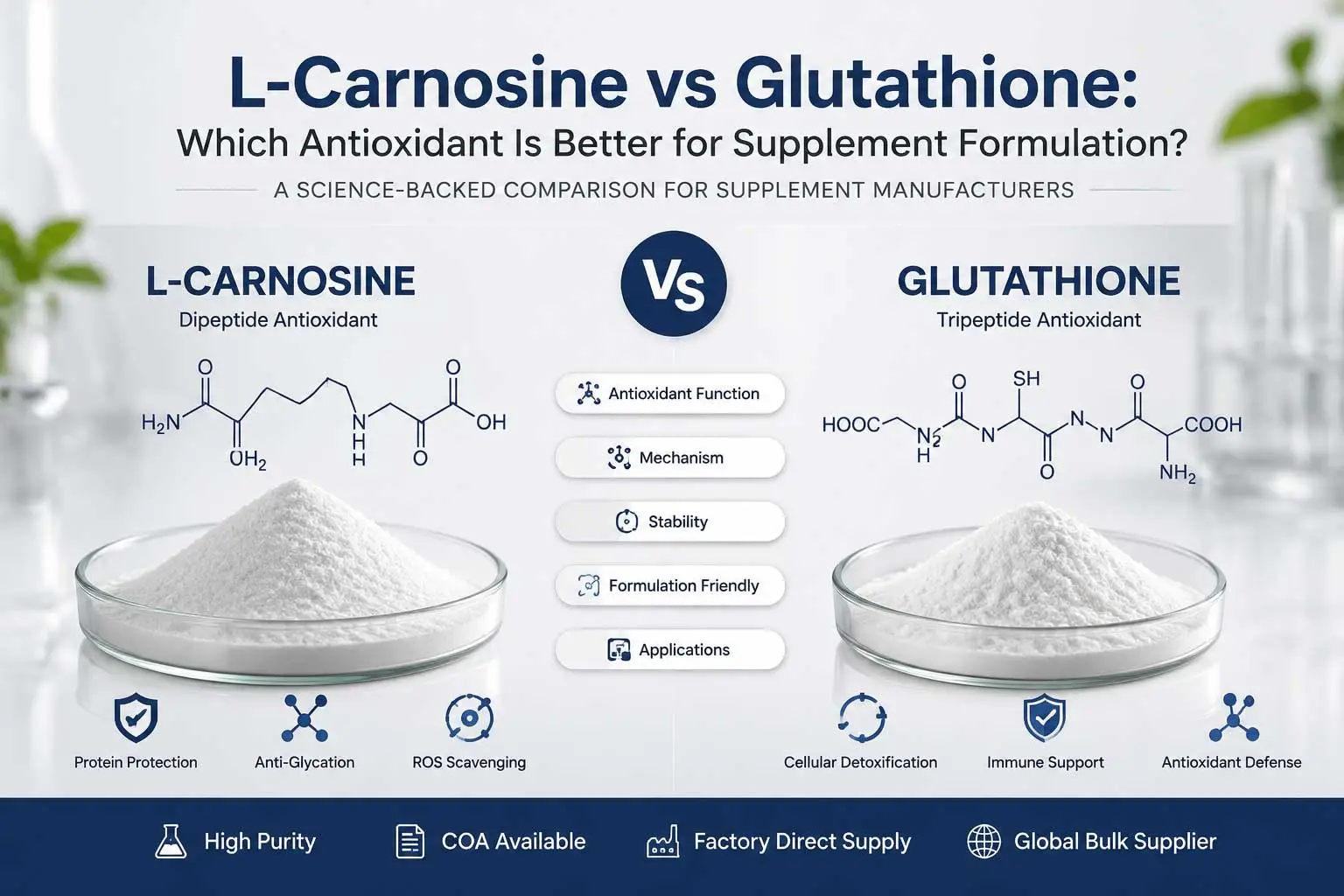
L-Carnosine powder (CAS 305-84-0) is a naturally occurring dipeptide composed of beta-alanine and L-histidine, widely recognized for its multifunctional role in oxidative stress modulation and protein protection mechanisms. In modern formulation science, it is increasingly positioned as a high-performance antioxidant amino acid ingredient used in dietary supplements, functional foods, and cosmetic applications.
From a technical standpoint, L-Carnosine demonstrates strong compatibility in aqueous systems and maintains stability under neutral pH conditions, making it suitable for a wide range of supplement formats including capsules, tablets, and powder blends. These characteristics have significantly increased demand for bulk L-carnosine powder suppliers capable of delivering consistent purity levels and reliable production standards.
In commercial sourcing channels, manufacturers and formulators typically evaluate L-carnosine powder manufacturers in China based on purity specifications (≥99%), analytical verification through HPLC testing, and the availability of full documentation including COA and MSDS. These factors are essential for ensuring regulatory compliance and formulation stability in international markets.
As global demand continues to expand, cosmetic grade L-carnosine raw material suppliers and food grade amino acid manufacturers are becoming increasingly important within the supply chain, particularly for companies seeking scalable production and long-term ingredient security.
3. Glutathione: Market Position and Formulation Considerations
Glutathione is a tripeptide widely recognized for its role in intracellular redox regulation and detoxification pathways. It remains one of the most established antioxidant compounds used in dietary supplements and functional nutrition products, particularly in formulations focused on oxidative balance and cellular protection.
However, from a manufacturing and formulation perspective, glutathione presents specific challenges related to stability and processing sensitivity. The compound is highly prone to oxidation, which requires strict environmental control during production, storage, and formulation stages. This has led to increased attention on reduced glutathione powder suppliers capable of maintaining product integrity across the supply chain.
In global sourcing markets, glutathione powder wholesale pricing is also a key consideration, as production complexity and stability requirements often influence overall cost structure. Compared to more stable amino acid derivatives, glutathione typically requires more controlled handling conditions, which can impact its integration into large-scale manufacturing systems.
For this reason, supplement developers frequently assess bulk glutathione manufacturers in China alongside alternative antioxidant ingredients when designing formulations that require both biological activity and production efficiency.
4. Mechanistic Differences in Antioxidant Function and Formulation Behavior
The functional distinction between L-Carnosine and glutathione becomes particularly important when examined through their biochemical pathways and formulation performance characteristics. While both are widely used in antioxidant systems, their mechanisms of action differ significantly, influencing how they are applied in supplement development.
L-Carnosine primarily operates through dual mechanisms involving reactive oxygen species scavenging and inhibition of protein glycation processes. This combination makes it especially relevant in formulations targeting aging-related biochemical pathways, where both oxidative stress and glycation contribute to functional decline. As a result, L-Carnosine powder for supplement formulation is often selected for products requiring multi-target antioxidant support.
Glutathione, in contrast, functions as a central component of intracellular redox cycling systems, playing a key role in maintaining cellular homeostasis under oxidative stress conditions. Its mechanism is more closely associated with enzymatic detoxification and redox balance regulation, which gives it a distinct positioning in antioxidant formulation design.
From a formulation engineering perspective, these mechanistic differences translate into practical considerations during ingredient selection. Factors such as solubility behavior, stability under processing conditions, and compatibility with other active compounds often determine whether bulk antioxidant raw materials can be successfully integrated into final product systems. This is why supplement developers carefully evaluate antioxidant ingredient suppliers not only based on biological function, but also on technical performance in real manufacturing environments.
5. Stability, Solubility and Formulation Compatibility Considerations
L-Carnosine vs Glutathione becomes particularly relevant when evaluating ingredient stability under real manufacturing conditions, where solubility behavior, pH sensitivity, and processing tolerance directly influence formulation success.
In aqueous systems, L-Carnosine powder demonstrates strong solubility and maintains relatively stable performance under neutral pH conditions, making it suitable for a wide range of supplement formats. This includes capsules, tablets, and powder blends where ingredient degradation must be minimized during processing and storage.
By contrast, glutathione shows higher sensitivity to oxidation and environmental exposure, which can significantly affect its stability during manufacturing and shelf life. This characteristic often requires stricter control over processing conditions and storage environments, particularly in high-activity antioxidant formulations.
From a formulation perspective, developers sourcing antioxidant amino acid raw materials increasingly prioritize compounds that offer predictable behavior during scaling. As a result, bulk L-carnosine powder suppliers are often evaluated for their ability to provide stable, low-variation material suitable for industrial production systems.
This difference in formulation behavior has a direct impact on ingredient selection, especially for manufacturers seeking scalable solutions from reliable supplement ingredient suppliers with consistent COA and batch documentation.
6. Cost Structure, Manufacturing Process and Supply Chain Factors
L-Carnosine vs Glutathione also reveals clear differences in production complexity, which directly influences pricing, sourcing strategy, and long-term supply stability in the antioxidant ingredient market.
The production of L-Carnosine powder is typically based on controlled synthesis or fermentation-derived amino acid processes, followed by purification and crystallization steps to achieve high-purity grades. This relatively stable production route supports consistent output and predictable bulk L-carnosine powder pricing for international buyers.
Glutathione, however, involves more sensitive production and handling requirements due to its instability during processing. This often results in more complex manufacturing conditions and stricter environmental controls, which can increase overall production cost and influence glutathione wholesale pricing structures.
From a procurement perspective, formulators evaluating bulk antioxidant raw material suppliers often consider not only unit price but also supply reliability, MOQ flexibility, and documentation support. In this context, manufacturers offering factory-direct amino acid ingredient supply are increasingly preferred for long-term sourcing partnerships.
Supply chain stability has become a critical factor in ingredient selection, particularly for companies operating in competitive nutraceutical markets where consistency and scalability directly impact product continuity.
7. Application Scope in Supplement and Functional Nutrition Industry
L-Carnosine vs Glutathione plays an important role in defining how antioxidant ingredients are applied across different segments of the supplement and functional nutrition industry.
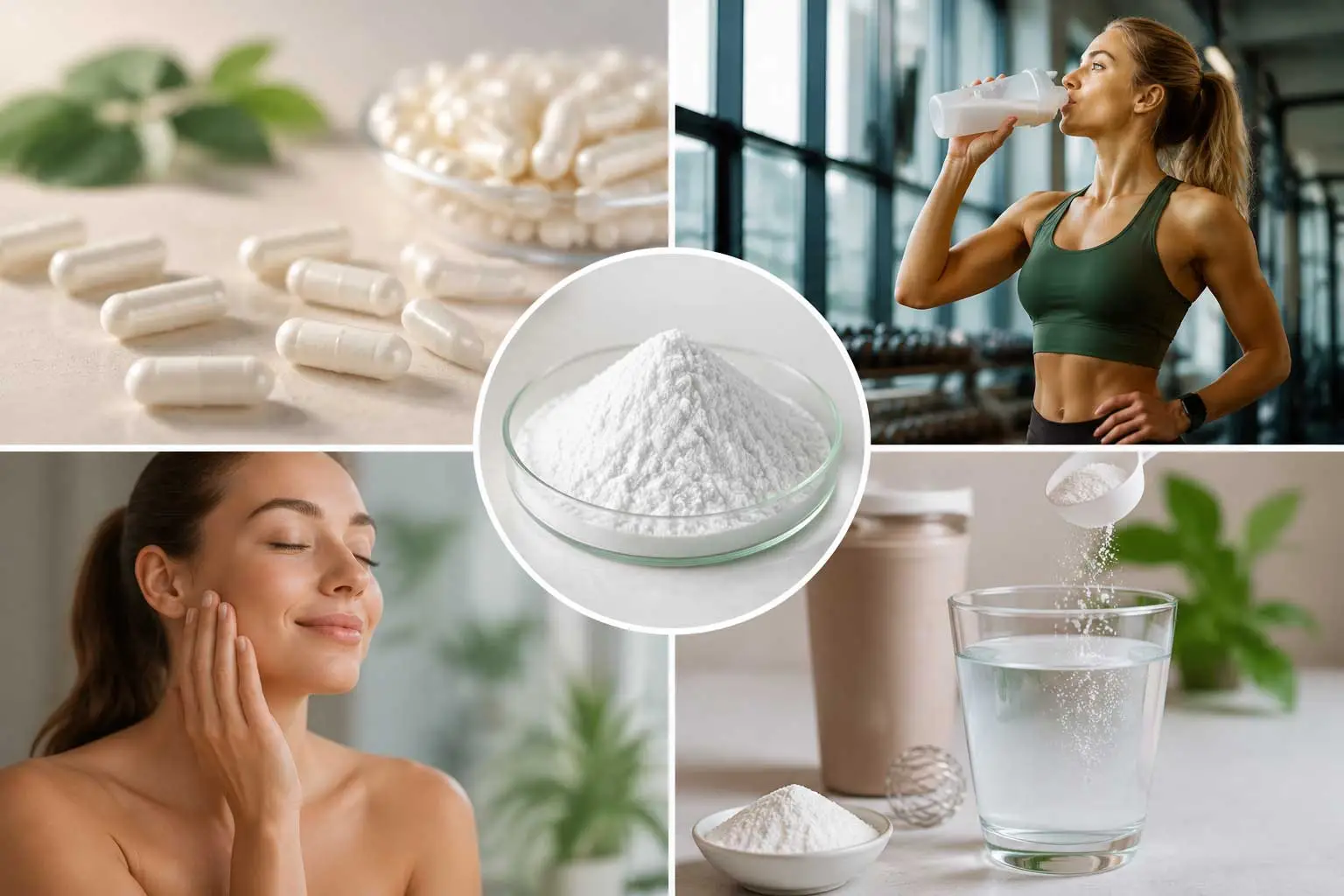
L-Carnosine powder is widely used in anti-aging formulations, cellular health supplements, and sports nutrition products due to its multifunctional antioxidant and anti-glycation properties. It is often incorporated into capsule blends, powder formulas, and functional food systems targeting oxidative stress support and long-term cellular protection.
Glutathione, on the other hand, is commonly used in formulations focused on detoxification and intracellular redox balance. Its application is particularly prevalent in high-potency antioxidant supplements and beauty-from-within products, where oxidative regulation is a key functional objective.
In recent years, demand for nutraceutical antioxidant ingredients has expanded significantly, leading manufacturers to seek stable and scalable raw material sources. This has increased reliance on bulk supplement ingredient suppliers capable of supporting both technical documentation and consistent production quality across different formulation categories.
As a result, ingredient selection is increasingly driven by application-specific requirements rather than single-mechanism performance alone.
8. Supplier Evaluation Criteria for Antioxidant Raw Materials
L-Carnosine vs Glutathione is often used as a reference framework when evaluating the reliability and capability of antioxidant raw material suppliers in global sourcing decisions.
In practice, formulators and procurement teams assess suppliers based on several key factors, including purity consistency, analytical validation, and documentation transparency. For L-Carnosine powder suppliers, HPLC verification, COA accuracy, and batch-to-batch reproducibility are critical indicators of manufacturing reliability.
Similarly, suppliers of glutathione are evaluated based on their ability to maintain stability throughout production and distribution, given the compound’s sensitivity to oxidation. This makes supplier qualification particularly important in antioxidant ingredient sourcing.
In addition to quality metrics, commercial factors such as MOQ flexibility, lead time stability, and long-term supply capability are also increasingly important. Companies sourcing from bulk amino acid manufacturers in China often prioritize suppliers that can provide both technical support and scalable production capacity.
This comprehensive evaluation framework ensures that ingredient selection aligns not only with formulation needs but also with long-term supply chain sustainability.
9. Strategic Decision: Selecting the Right Antioxidant for Formulation Needs
L-Carnosine vs Glutathione ultimately represents a strategic decision rather than a simple comparison of antioxidant strength, as formulation success depends on multiple interconnected factors including stability, application context, and manufacturing efficiency.
In practical formulation development, L-Carnosine powder is often selected for systems requiring higher stability, easier processing, and broader compatibility across different delivery formats. Its anti-glycation properties also make it particularly relevant in aging-related supplement categories.
Glutathione, while highly effective in redox regulation systems, is typically chosen for formulations where intracellular antioxidant activity is the primary objective, despite its more demanding handling requirements.
For manufacturers, the decision often comes down to balancing biological function with production feasibility. This is why many developers carefully evaluate antioxidant ingredient selection guides and rely on trusted raw material suppliers capable of providing consistent technical support and reliable bulk supply.
10. Conclusion: Future Trends in Antioxidant Ingredient Development
The continued evolution of antioxidant ingredient development indicates a clear shift toward multifunctional, stable, and industrially scalable raw materials. Within this landscape, L-Carnosine vs Glutathione will remain an important reference framework in formulation science, particularly as supplement developers seek more efficient solutions for oxidative stress management and cellular health support.
Market trends suggest that antioxidant amino acid ingredients will play an increasingly central role in next-generation nutraceutical systems. Formulators are placing greater emphasis not only on biological performance, but also on processing stability, regulatory documentation, and long-term supply chain reliability. As a result, ingredient selection is becoming a more integrated decision that combines scientific, technical, and commercial considerations.
From a supply perspective, collaboration with reliable bulk raw material manufacturers has become a critical factor in maintaining product consistency and market competitiveness. Companies capable of providing stable L-Carnosine powder supply, full COA documentation, and scalable production capacity are increasingly preferred in global sourcing strategies.
In practical terms, many formulation teams prefer working with suppliers who can provide direct technical communication regarding specification requirements, stability data, and formulation compatibility. For inquiries related to L-Carnosine powder (CAS 305-84-0), bulk pricing, COA documentation, or sample requests, technical communication is typically handled through direct manufacturer channels to ensure accurate and efficient information exchange.
Contact: admin@chenlangbio.com

Send Inquiry
Related Industry Knowledge
- How Luteolin Supports Heart Health: A Natural Approach to Cardiovascular Wellness
- High Purity Sialic Acid Benefits for Skin Hydration and Radiance
- What are the Benefits of Liposomal Coenzyme Q10?
- Can Calcium Alpha-Ketoglutarate Monohydrate Help with Muscle Recovery?
- What are the Storage and Handling Recommendations for D-Luciferin Sodium Salt?
- Is Cactus Extract Good for Hair?
- What is 4-Butylresorcinol Used for
- What is Ergothioneine Good for
- What is Hydroxypropyl Tetrahydropyrantriol in Skin Care
- What Benefits of the Acanthopanax Senticosus Root Extract Eleutheroside