
Is Centella Asiatica Extract Powder Better Than Vitamin C?
2025-12-31 14:24:09
In skin care formulation, few ingredient comparisons generate as much discussion as centella asiatica extract powder versus vitamin C. Both ingredients are widely used, well researched, and strongly associated with visible skin benefits. As a result, buyers and formulators often ask a very direct question: is centella asiatica extract powder better than vitamin C?
From our perspective at CHEN LANG BIO TECH, this question rarely has a one-size-fits-all answer. “Better” in skin care does not mean stronger or more popular—it means more suitable for a specific formulation goal, skin profile, and product positioning. Understanding the real differences between centella extract powder and vitamin C requires looking at how each ingredient behaves in formulations, what skin concerns they are commonly used for, and what practical constraints they introduce during development.
This article provides a formulation-focused, ingredient-led comparison designed to help buyers, product developers, and technical teams decide when Centella asiatica extract powder makes more sense than vitamin C—and when the opposite may be true.
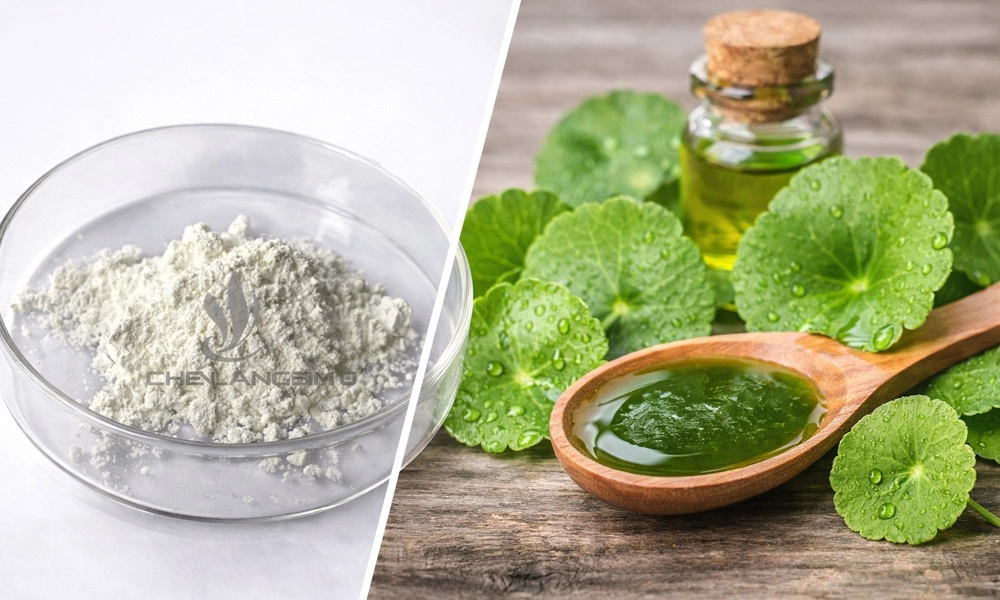
Quick Answer: Is Centella Better Than Vitamin C?
Is Centella better than vitamin C?
In practice, the answer depends on the primary goal of the product.
Centella asiatica extract powder is typically preferred for soothing, barrier support, and sensitive-skin–focused formulations.
Vitamin C is more commonly selected for brightening, antioxidant support, and uneven skin tone concerns.
Rather than competing ingredients, they often serve different roles within skin care systems. For many product concepts, the most effective solution is not choosing one over the other, but understanding which ingredient aligns best with the intended skin benefit and formulation constraints.
What Does “Better” Mean in Skin Care—Soothing, Brightening, or Barrier Support?
When customers ask whether Centella asiatica extract powder is better than vitamin C, the underlying question is usually about outcomes. Are they trying to calm visible redness? Improve overall comfort? Support the skin barrier? Or are they aiming to enhance radiance and antioxidant protection?
In professional formulation work, ingredients are evaluated based on:
♦Primary skin concern
♦Target user group (e.g., sensitive or reactive skin)
♦Tolerance profile
♦Stability and formulation complexity
Viewed through this lens, “better” is not absolute. It is contextual. Centella and vitamin C address different biological and formulation priorities, which is why both continue to be used extensively across global skin care markets.
What Is Centella Asiatica Extract Powder?
Centella asiatica extract powder is a botanical ingredient derived from the leaves and stems of centella asiatica, also known as gotu kola. In cosmetic applications, it is typically standardized based on its triterpenoid content, including compounds such as madecassoside, asiaticoside, asiatic acid, and madecassic acid.
Searches like what is centella asiatica extract powder and gotu kola extract powder reflect growing interest in plant-derived ingredients that support skin comfort and resilience. Unlike single-molecule actives, centella extract powder provides a multi-component phytochemical profile, which is often valued in formulations targeting sensitive or stressed skin.
From a formulation standpoint, standardized centella extract powders offer:
Broad compatibility with common cosmetic systems;
Moderate formulation flexibility;
A well-established history of use in dermocosmetic products;
These characteristics make centella extract powder a frequent choice for calming and repair-oriented skin care concepts.
What Is Vitamin C in Skin Care (and Which Type Matters)?
In contrast, vitamin C in skin care is not a single ingredient but a category that includes multiple chemical forms. The most recognized is L-ascorbic acid, while other commonly used derivatives include sodium ascorbyl phosphate, magnesium ascorbyl phosphate, and ascorbyl glucoside.
Search terms such as what type of vitamin C is best for skin and L-ascorbic acid vs vitamin C derivatives highlight a key point: the performance and tolerability of vitamin C depend heavily on its form.
From a formulation perspective, vitamin C is associated with:
♦Antioxidant activity;
♦Brightening and tone-evening concepts;
♦Increased formulation complexity due to stability concerns;
Different forms of vitamin C vary widely in terms of pH requirements, oxidation sensitivity, and skin tolerance, which has important implications for product design.
Centella Extract vs Vitamin C: Side-by-Side Comparison
To clarify the practical differences between Centella asiatica extract powder vs vitamin C, the following comparison highlights key formulation-relevant attributes:
|
Aspect |
Centella Asiatica Extract Powder |
Vitamin C |
|
Primary role |
Soothing, comfort, barrier support |
Antioxidant, brightening |
|
Ingredient type |
Botanical extract (multi-component) |
Single active or derivative |
|
Stability |
Generally stable in cosmetic systems |
Often sensitive to oxidation |
|
pH constraints |
Flexible |
Form-dependent, often narrow |
|
Irritation potential |
Low to moderate |
Form- and dose-dependent |
|
Typical skin focus |
Sensitive, reactive, stressed skin |
Dull, uneven tone, photo-exposed skin |
This table illustrates why centella extract powder vs vitamin C is not a simple competition. Each ingredient excels in different application scenarios.
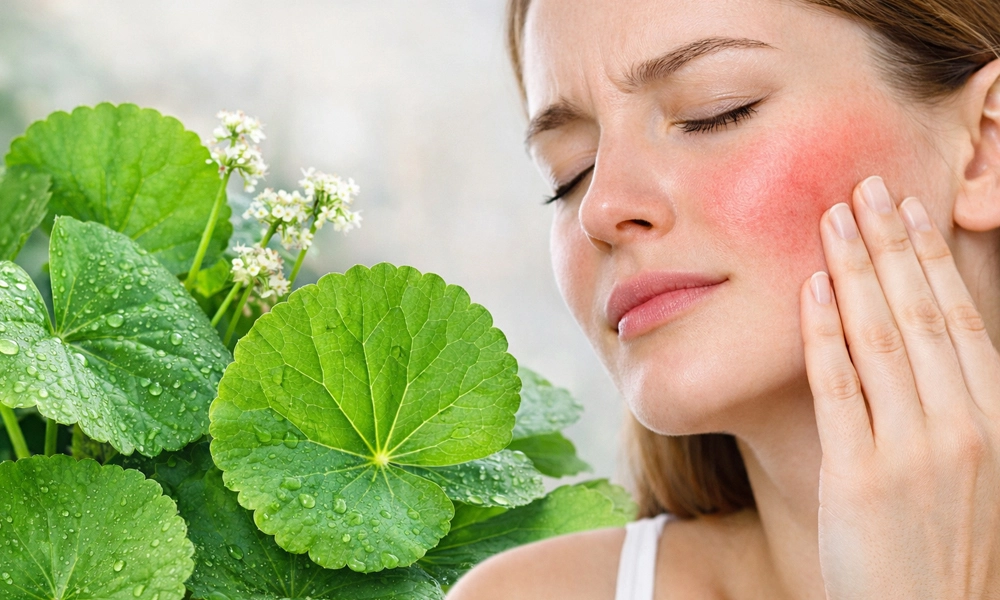
Which Is Better for Sensitive Skin: Centella or Vitamin C?
For many buyers, the most important question is which is better for sensitive skin: Centella or vitamin C?
In general, Centella asiatica extract powder is more frequently selected for sensitive-skin formulations. Its long history of use in calming and barrier-support products, combined with relatively low irritation potential, makes it a reliable option for this segment.
Vitamin C, while highly effective, can be challenging for sensitive skin depending on its form and concentration. Searches such as vitamin C for sensitive skin and does vitamin C irritate sensitive skin reflect this concern. In practice, vitamin C can be used in sensitive-skin products, but it requires careful selection of derivatives, controlled concentrations, and supportive formulation design.
Which Is Better for Brightening and Uneven Tone?
When the primary goal is brightening or improving uneven skin tone, vitamin C typically plays a more direct role. It is widely associated with antioxidant activity and visual radiance, which explains frequent searches like vitamin C for dark spots and brightening ingredients comparison.
Centella asiatica extract powder, by contrast, is not usually positioned as a primary brightening ingredient. Instead, it is valued for supporting skin comfort, which can indirectly improve overall appearance by reducing visible stress responses.
This distinction is important for procurement decisions: choosing the right ingredient depends on whether the formulation objective is correction or support.
Understanding Stability: Why Vitamin C Is More Challenging to Formulate Than Centella Asiatica Extract Powder
One of the most important practical differences between Centella asiatica extract powder and vitamin C lies in their formulation stability requirements, particularly during long-term storage and real-world use.
From a formulation perspective, vitamin C stability is highly dependent on its chemical form. L-ascorbic acid, the most biologically active form of vitamin C, is inherently unstable in aqueous systems. It is sensitive to oxidation, light exposure, elevated temperature, and pH, which means even small deviations in formulation conditions can lead to rapid degradation and discoloration.
To maintain stability, L-ascorbic acid typically requires:
•A narrow, acidic pH range
•Minimal exposure to oxygen
•Carefully selected antioxidant systems
•Protective packaging, such as airless or opaque containers
These requirements increase both formulation complexity and development cost, and they also raise the risk of instability during transportation and shelf life. This is why many searches related to why vitamin C oxidizes and how to stabilize vitamin C in skincare come from formulators facing real-world challenges rather than theoretical concerns.
In contrast, Centella asiatica extract powder—when properly standardized—is generally more forgiving in formulation systems. As a botanical extract containing multiple triterpenoid components, it does not rely on a single highly reactive molecule for performance. This makes centella extract less sensitive to moderate pH variation and oxygen exposure in typical cosmetic formulations.
From a practical standpoint, centella extract powder:
Can be incorporated into a broader range of formulation pH values
Is compatible with most common emulsions, gels, and aqueous systems
Does not require specialized packaging solely for stability control
For buyers and formulators prioritizing robustness, ease of formulation, and reduced stability risk, these characteristics often make Centella asiatica extract powder a more practical choice—particularly for products targeting sensitive skin or longer shelf-life requirements.
Can You Use Centella and Vitamin C Together?
A frequent follow-up question is can you use Centella with vitamin C?
In many cases, the answer is yes.
From a formulation standpoint, centella extract powder can be used alongside vitamin C when the system is properly designed. Some formulations combine vitamin C for its brightening role with centella to support comfort and tolerance. Others separate the two ingredients into different products within the same routine.
The key is understanding compatibility, concentration, and formulation environment, rather than assuming inherent conflict between the ingredients.
Recommended Usage Levels (Typical Ranges) for Formulators
For procurement and formulation planning, typical usage ranges provide useful guidance:
|
Ingredient |
Common Cosmetic Range |
|
Centella asiatica extract powder |
0.1% – 2.0% (standardized extracts) |
|
Vitamin C (LAA) |
5% – 20% (formulation-dependent) |
|
Vitamin C derivatives |
0.5% – 5.0% |
Searches such as centella extract concentration in cosmetics and vitamin C percentage in skincare highlight the importance of dosage decisions. Final levels should always be determined based on formulation goals, regulatory requirements, and stability testing.
How to Choose: Centella Extract Powder or Vitamin C for Your Product Concept
From our experience supporting customers globally, the decision often becomes clearer when framed as a checklist:
Choose centella asiatica extract powder if your product focuses on soothing, comfort, or sensitive skin.
Choose vitamin C if your primary goal is antioxidant support or visible brightening.
Consider using both when your formulation strategy balances performance with tolerance.
This approach aligns with how professional formulators evaluate ingredient options rather than relying on trend-driven comparisons.
FAQ: Centella Extract Powder vs Vitamin C
1. Is centella asiatica extract Powder gentler than Vitamin C for daily skin care products?
In most cosmetic applications, Centella Asiatica extract powder is generally considered gentler than Vitamin C for daily skin care products, particularly those designed for long-term or continuous use. This is largely because centella-based ingredients are commonly associated with skin comfort and barrier-support concepts rather than direct exfoliating or oxidative activity.
Vitamin C—especially in the form of L-ascorbic acid—can be highly effective but may increase the risk of irritation when used daily, depending on concentration and formulation. As a result, many daily-use products aimed at sensitive or easily stressed skin favor centella extract powder as a more tolerance-oriented option.
2. Can centella asiatica extract Powder replace Vitamin C in sensitive skin formulations?
In sensitive skin formulations, Centella Asiatica extract powder can often serve as an alternative to Vitamin C, depending on the product’s intended function. When the primary goal is soothing, calming, or barrier support, centella-based ingredients are frequently selected over Vitamin C due to their generally favorable tolerance profile.
However, Vitamin C and centella extract powder are not functionally identical. Vitamin C is typically chosen for antioxidant and brightening-focused concepts, while centella extract powder is used to support comfort and skin resilience. For this reason, replacement decisions should be based on skin concern priorities rather than ingredient popularity.
3: Why do many calming and repair-focused products choose centella instead of Vitamin C?
Many calming and repair-focused products choose centella asiatica extract powder instead of Vitamin C because centella-derived ingredients align more closely with formulations designed to minimize irritation and support compromised skin.
From a formulation perspective, centella extract powder is easier to integrate into gentle systems and does not require the strict pH or oxidation controls often associated with Vitamin C. This makes it particularly suitable for products positioned around post-procedure care, sensitive skin, or barrier-repair concepts, where comfort and tolerance are prioritized over aggressive actives.
4: Which ingredient is more stable in cosmetic formulations, centella extract powder or Vitamin C?
In general, centella asiatica extract powder is more stable in cosmetic formulations than Vitamin C, especially when compared to L-ascorbic acid. Vitamin C is known for its sensitivity to oxygen, light, temperature, and pH, which can complicate formulation development and long-term stability.
Standardized centella extract powders, on the other hand, are typically more forgiving across a wider range of formulation conditions. This stability advantage often translates into simpler formulation processes, fewer packaging constraints, and reduced risk during storage and transportation.
5: Can centella asiatica extract powder and Vitamin C be used together in the same product?
Yes, Centella Asiatica extract powder and Vitamin C can be used together in the same product, provided that the formulation is carefully designed. Many modern formulations pair Vitamin C for its antioxidant or brightening role with centella extract powder to support overall skin comfort.
The key considerations include the form of Vitamin C used, pH compatibility, and the presence of stabilizing systems. In some cases, brands choose to separate the two ingredients into different products within the same routine to simplify formulation and maximize tolerance.
6: Is centella asiatica extract powder suitable for acne-prone or redness-prone skin compared to Vitamin C?
For acne-prone or redness-prone skin, Centella Asiatica extract powder is often considered a more suitable option than Vitamin C, particularly when irritation and reactivity are concerns. Centella-based ingredients are commonly used in formulations designed to calm visible redness and support skin comfort.
Vitamin C can still be used in acne-prone products, but its suitability depends on the specific form and concentration. In comparison, centella extract powder is frequently selected when the formulation goal is to minimize potential triggers while maintaining a gentle profile.
7: For formulators, when does centella asiatica extract powder make more sense than Vitamin C?
From a formulator’s perspective, centella asiatica extract powder makes more sense than Vitamin C when the product concept prioritizes tolerance, formulation stability, and broad skin compatibility. This is particularly relevant for sensitive skin lines, barrier-repair products, and long-term daily-use formulations.
Vitamin C is a powerful ingredient, but it introduces additional formulation challenges related to stability and irritation management. When development simplicity, robustness, and user comfort are key decision factors, centella extract powder is often the more practical choice.
Final Takeaway: “Better” Depends on the Goal—and Many Formulas Benefit from Both
So, is centella asiatica extract powder better than vitamin C?
In practice, the answer depends on what the formulation is designed to achieve.
Centella extract powder excels in comfort-focused, sensitive-skin applications. Vitamin C plays a stronger role in brightening and antioxidant strategies. Understanding these roles allows buyers and formulators to make informed, efficient decisions.
At CHEN LANG BIO TECH, we support customers sourcing both centella asiatica extract powder and related botanical actives, providing technical documentation, specifications, and formulation guidance to help ensure the right ingredient choice for each application.
Contact CHEN LANG BIO TECH
📧 Email: admin@chenlangbio.com
🌐 Website: https://www.chenlangbio.com
References
1. Brinkhaus, B., Lindner, M., Schuppan, D., & Hahn, E. G. (2000). Chemical, pharmacological and clinical profile of Centella asiatica. Phytomedicine, 7(5), 427–448.
2. James, J. T., & Dubery, I. A. (2009). Pentacyclic triterpenoids from Centella asiatica. Journal of Ethnopharmacology, 126(2), 181–187.
3. Barel, A. O., Paye, M., & Maibach, H. I. (2014). Handbook of Cosmetic Science and Technology. CRC Press.
4. Pullar, J. M., Carr, A. C., & Vissers, M. C. M. (2017). The roles of vitamin C in skin health. Nutrients, 9(8), 866.

Send Inquiry
Related Industry Knowledge
- How 5 Alpha Hydroxy Laxogenin Supports Muscle Growth and Recovery
- How Can Indole-3-methanol Enhance the Efficacy of Your Cosmetic Formulations?
- What Are the Benefits of Turkesterone Powder?
- Do Hops Have Antioxidants
- Why Red Wine Extract Powder is the New Superfood
- Is Bergenia Invasive
- What is Honokiol Good For?
- Bakuchiol: A “More Natural Retinol” That’s Equally Effective for Skin
- Who Shouldn't Consume Curcumin or Turmeric
- How to Use Troxerutin Powder