Hydroxypinacolone Retinoate vs Retinol vs Retinyl Retinoate: Which Retinoid Is Better Suited for Acne-Prone Skin?
2026-02-02 10:37:13
Introduction: Why Hydroxypinacolone Retinoate vs Retinol vs Retinyl Retinoate Matters for Acne-Prone Skin
When developing skincare products for blemish-prone and sensitive skin types, the choice of retinoid is one of the most critical formulation decisions. Comparisons such as hydroxypinacolone retinoate vs retinol vs retinyl retinoate are increasingly relevant as formulators look for retinoid solutions that balance efficacy positioning with stability, tolerance, and formulation control. For acne-prone skin in particular, ingredient selection must consider not only retinoid activity, but also irritation risk, compatibility with other actives, and long-term product performance.
From our perspective at CHEN LANG BIO TECH as a cosmetic raw material manufacturer and supplier, discussions around retinoids for acne-prone skin are rarely about a single “best” ingredient. Instead, they focus on how different retinoids behave within real formulation systems. Factors such as pH compatibility, solubility in oil phases, typical use levels, and interaction with exfoliating ingredients all influence whether a retinoid is suitable for acne-prone skin formulations.
In this article, we examine hydroxypinacolone retinoate for acne-prone skin, alongside retinol for acne-prone skin and retinyl retinoate for acne-prone skin, from a formulation and sourcing standpoint. Rather than making treatment claims, the goal is to provide clear, practical guidance on how these three retinoids differ, and how formulators and buyers can select the option that best fits their product concept, development constraints, and market positioning.
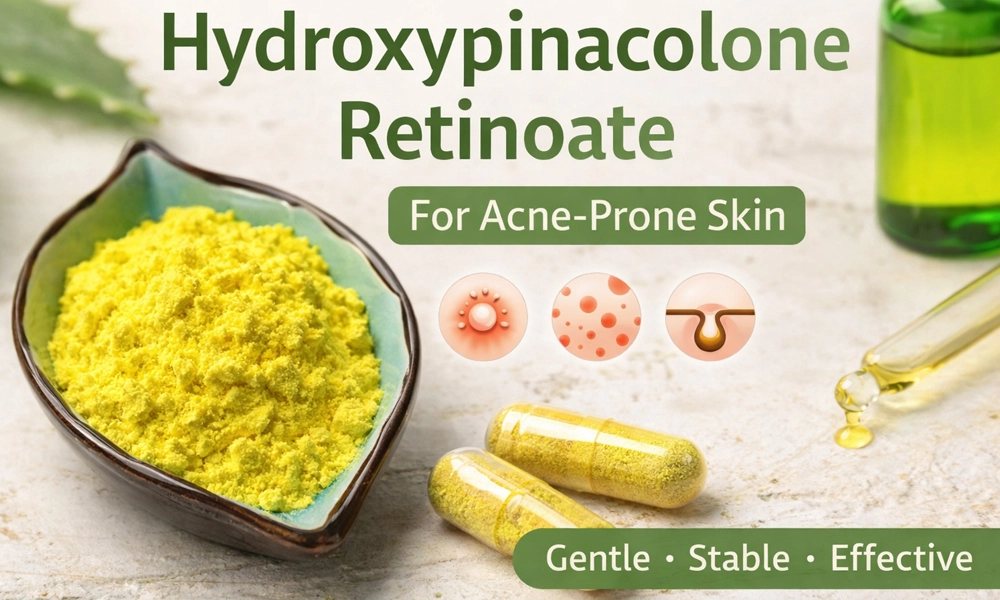
Which Retinoid Is Commonly Used for Acne-Prone Skin Formulations?
In formulation practice, there is no single retinoid that is universally “best” for acne-prone skin. Instead, formulators compare hydroxypinacolone retinoate vs retinol vs retinyl retinoate based on tolerance positioning, formulation stability, and compatibility with acne-focused systems.
In general, hydroxypinacolone retinoate for acne-prone skin is often considered when formulators prioritize predictable behavior, broader pH flexibility, and easier integration into multi-active products. Retinol for acne-prone skin remains widely used due to strong market familiarity, but it typically requires more careful stability management and irritation-control strategies. Retinyl retinoate for acne-prone skin is frequently positioned as a middle-ground option, offering retinoid identity with a more controlled activity profile than traditional retinol.
For formulators and sourcing teams, the key takeaway is that suitability depends less on the retinoid name and more on how each ingredient performs within a complete formulation. Understanding these practical differences helps development teams select a retinoid for acne-prone skin that aligns with product goals, regulatory considerations, and long-term manufacturing plans.
What Makes Acne-Prone Skin More Challenging for Retinoid Formulation?
From a formulation standpoint, acne-prone skin presents a more complex environment for retinoid use than normal or dry skin types. When evaluating retinoids for acne-prone skin, formulators must balance retinoid positioning with heightened sensitivity, barrier instability, and frequent use of complementary actives.
One of the primary challenges is irritation management. Acne-prone skin is often already compromised due to excess sebum, inflammation-prone conditions, or the concurrent use of exfoliating ingredients. As a result, the tolerance window for retinoids is narrower, making ingredient selection and dosage control especially important. This is why discussions around retinoid irritation in acne-prone skin are central to formulation strategy.
Another key factor is ingredient compatibility. Acne-focused products commonly include ingredients such as salicylic acid, niacinamide, zinc compounds, or mild exfoliating acids. Retinoids used in these systems must remain stable across the formulation’s pH range and coexist without accelerating degradation or increasing irritation potential. For this reason, formulators often assess retinoid formulation challenges early in development rather than treating retinoids as a simple add-on ingredient.
Finally, product usage patterns matter. Acne-prone skin formulations are often designed for regular or daily use, which places additional emphasis on formulation stability and controlled retinoid delivery. These considerations explain why formulators increasingly compare hydroxypinacolone retinoate vs retinol vs retinyl retinoate through a technical lens—focusing on how each retinoid integrates into acne-prone skin systems rather than relying on generalized performance assumptions.
Retinol for Acne-Prone Skin: Strengths and Formulation Limitations
Retinol for acne-prone skin remains one of the most widely recognized retinoid options in cosmetic formulations, largely due to its long history of use and strong market familiarity. From a formulation perspective, retinol is often selected when brands want to leverage established consumer awareness and well-documented retinoid positioning. However, when applied to acne-prone skin systems, retinol introduces several formulation challenges that must be carefully managed.
One key consideration is stability. Retinol is chemically sensitive to light, oxygen, and heat, which means acne-focused formulations containing exfoliating acids or sebum-regulating actives require additional stabilization strategies. Encapsulation technologies, antioxidant systems, and protective packaging are commonly used, but these measures increase formulation complexity and production cost. For formulators, this can limit flexibility when designing multi-active products.
Another important factor is tolerance positioning. Acne-prone skin is often more reactive, especially when products are used frequently. While retinol can be successfully formulated for this skin type, it typically requires lower initial use levels and carefully designed systems to minimize irritation risk. This is why retinol irritation in acne-prone skin is a recurring topic in formulation discussions and why retinol-based acne products often include usage guidance or phased introduction strategies.
From a sourcing standpoint, retinol remains readily available and well supported by global suppliers, making it attractive for large-scale production. However, when evaluating retinol for acne-prone skin, formulators and buyers must weigh its familiarity and accessibility against the additional formulation controls required to ensure stability, compatibility, and consistent performance in acne-focused cosmetic products.
Retinyl Retinoate for Acne-Prone Skin: A Balanced, Intermediate Option
When comparing hydroxypinacolone retinoate vs retinol vs retinyl retinoate, retinyl retinoate for acne-prone skin is often viewed by formulators as an intermediate solution between traditional retinol and newer-generation retinoid esters. Structurally, retinyl retinoate is a retinoid derivative designed to deliver retinoid positioning with a more gradual activity profile, which can be advantageous in formulations targeting blemish-prone or combination skin types.
From a formulation perspective, retinyl retinoate offers improved stability compared to retinol, while still maintaining a clear association with vitamin A chemistry. This makes it attractive for acne-prone skin products where formulators want to reduce some of the instability and irritation challenges commonly associated with retinol, without fully transitioning to next-generation retinoids. However, retinyl retinoate still requires careful formulation design, particularly with regard to antioxidant support and protection from light and oxygen.
In acne-focused systems, retinyl retinoate is often selected for products positioned around controlled retinoid exposure and long-term skin conditioning rather than aggressive activity. Its compatibility with oil-phase systems allows it to be incorporated into creams, lotions, and emulsions commonly used in acne-prone skincare routines. At the same time, formulators must still consider overall system complexity, especially when combining retinyl retinoate with exfoliating or sebum-regulating ingredients.
For sourcing teams, retinyl retinoate for acne-prone skin represents a compromise between familiarity and innovation. It offers a recognizable retinoid identity with a more manageable formulation profile than retinol, while still requiring reliable supplier documentation, clear specifications, and consistent batch quality to support stable product development and scale-up.
Hydroxypinacolone Retinoate for Acne-Prone Skin: Formulation-Friendly and Predictable
In the context of hydroxypinacolone retinoate vs retinol vs retinyl retinoate, hydroxypinacolone retinoate for acne-prone skin is increasingly evaluated by formulators for its formulation predictability and compatibility with complex skincare systems. As a newer-generation retinoid ester, HPR is designed to interact more directly with retinoid receptors, which allows formulators to focus on system design rather than managing extensive conversion pathways.
From a formulation standpoint, one of the key advantages of hydroxypinacolone retinoate is its stability profile. Compared with retinol and retinyl retinoate, HPR generally demonstrates better resistance to degradation caused by light and oxygen. This characteristic is particularly valuable in acne-prone skin formulations, which often combine multiple active ingredients and require consistent performance over regular use.
Another important consideration is tolerance positioning. Acne-prone skin frequently overlaps with sensitive or compromised barrier conditions, making irritation control a priority. While overall tolerance depends on the complete formulation, hydroxypinacolone retinoate is often selected for products positioned around gentler retinoid integration. Its predictable behavior allows formulators to design balanced systems that support daily-use or long-term skincare routines without relying on high inclusion levels.
In practical application, hydroxypinacolone retinoate for acne-prone skin is commonly incorporated into leave-on products such as serums and emulsions that also contain calming, barrier-supporting, or sebum-balancing ingredients. For procurement teams, sourcing HPR from a reliable supplier with clear specifications and consistent quality control is essential to ensure stable formulation outcomes and scalable production.
Side-by-Side Comparison: Hydroxypinacolone Retinoate vs Retinol vs Retinyl Retinoate for Acne-Prone Skin
To help formulators and sourcing teams evaluate these ingredients more clearly, the table below summarizes the key formulation-related differences between hydroxypinacolone retinoate, retinol, and retinyl retinoate when used in products designed for acne-prone skin. This comparison focuses on technical and practical factors rather than performance claims.
|
Aspect |
Hydroxypinacolone Retinoate (HPR) |
Retinol |
Retinyl Retinoate |
|
Retinoid type |
Retinoic acid ester |
Vitamin A derivative (pro-retinoid) |
Retinoid derivative / ester |
|
Conversion requirement |
Minimal conversion pathway |
Requires multi-step conversion in skin |
Gradual transformation in skin |
|
Stability in formulations |
Relatively high |
Sensitive to light, oxygen, heat |
Moderate; requires protection |
|
Typical pH range |
~4.5–7.0 |
~5.0–6.5 |
~5.0–6.5 |
|
Solubility |
Oil-soluble |
Oil-soluble |
Oil-soluble |
|
Compatibility with acne actives |
High compatibility with multi-active systems |
Requires careful compatibility control |
Moderate compatibility |
|
Tolerance positioning |
Often selected for gentler positioning |
Requires gradual introduction |
Balanced, controlled positioning |
|
Common product formats |
Serums, emulsions, creams |
Creams, serums with stabilization |
Creams, lotions, premium skincare |
From a formulation and sourcing perspective, this comparison highlights why hydroxypinacolone retinoate for acne-prone skin is frequently considered in modern skincare systems that include exfoliating acids or sebum-regulating ingredients. Retinol for acne-prone skin remains viable but demands more extensive formulation controls, while retinyl retinoate for acne-prone skin occupies a middle ground between stability and traditional retinoid identity.
For procurement teams, this table also underscores the importance of selecting suppliers that can provide clear specifications, stability guidance, and batch-level documentation. Understanding these technical differences helps ensure that retinoid selection aligns with formulation goals, production capabilities, and long-term product strategy.
Formulation and Sourcing Considerations for Acne-Focused Products
When developing products specifically positioned for acne-prone skin, formulators and procurement teams must evaluate retinoids not only on their theoretical activity, but also on how reliably they can be formulated, sourced, and scaled. In this context, comparing hydroxypinacolone retinoate vs retinol vs retinyl retinoate from both a formulation and supply-chain perspective is essential.
From a formulation standpoint, acne-focused products often include ingredients such as salicylic acid, niacinamide, zinc compounds, or soothing agents. Retinoids used in these systems must tolerate broader pH ranges, remain stable in the presence of multiple actives, and maintain consistent performance over repeated use. This is why formulators increasingly assess retinoid formulation for acne-prone skin early in development, rather than treating retinoids as interchangeable components.
From a sourcing perspective, raw material quality and documentation play a critical role. Retinoids are sensitive ingredients, and variations in purity, carrier systems, or handling conditions can directly affect formulation outcomes. Buyers should evaluate whether suppliers can provide clear specifications, batch-level Certificates of Analysis (COA), stability guidance, and consistent supply for both pilot and commercial-scale production.
For modern acne-oriented formulations, ingredients that offer predictable formulation behavior, stable supply, and transparent technical support are often preferred. This is one reason why hydroxypinacolone retinoate for acne-prone skin is frequently considered alongside more established options such as retinol and retinyl retinoate. Ultimately, aligning formulation requirements with reliable sourcing helps reduce development risk and supports long-term product success.
FAQs: Retinoids and Acne-Prone Skin — Common Questions from Formulators & Buyers
Below are frequently asked questions we receive from formulators and sourcing teams when evaluating hydroxypinacolone retinoate vs retinol vs retinyl retinoate for acne-prone skincare products.
Which retinoid is most commonly used for acne-prone skin formulations?
There is no single standard choice. In practice, hydroxypinacolone retinoate for acne-prone skin is often selected for modern formulations due to its stability and predictable behavior. Retinol for acne-prone skin is still widely used but typically requires more formulation controls, while retinyl retinoate for acne-prone skin is positioned as a balanced, intermediate option.
Is hydroxypinacolone retinoate less irritating than retinol?
Irritation depends on the complete formulation, not just the retinoid. However, from a formulation perspective, hydroxypinacolone retinoate is frequently chosen for products positioned around improved tolerance, as it allows more controlled integration into multi-active systems commonly used for acne-prone skin.
Can retinoids be combined with salicylic acid or niacinamide?
Yes, but compatibility must be evaluated carefully. Acne-focused products often combine retinoids with exfoliating or calming ingredients. In these systems, formulators often assess retinoid formulation for acne-prone skin early to ensure stability, pH compatibility, and controlled overall activity.
Is retinyl retinoate suitable for acne-prone skin?
Retinyl retinoate can be suitable when formulations aim for controlled retinoid positioning with improved stability compared to retinol. It is commonly used in premium skincare products where formulation design and packaging are optimized to support retinoid stability.
Which retinoid is easier to formulate in multi-active acne systems?
From a technical standpoint, hydroxypinacolone retinoate is often considered easier to integrate into complex formulations due to its stability profile and broader pH tolerance. Retinol and retinyl retinoate may require additional stabilization strategies in multi-active systems.
Can these retinoids be used in daily-use acne products?
Daily-use suitability depends on formulation design, overall active load, and product positioning. Many formulators evaluate retinoids for acne-prone skin with an emphasis on controlled delivery and long-term use rather than high inclusion levels.
Can different retinoids be used across the same product line?
Yes. Many brands use retinol, retinyl retinoate, and hydroxypinacolone retinoate across different product tiers to support varying formulation goals and market positioning. Understanding their differences helps maintain coherence across acne-oriented skincare portfolios.
Conclusion
Selecting the right retinoid for acne-prone skin is not about identifying a single “best” ingredient, but about understanding how different retinoids behave within a formulation. As shown in the comparison of hydroxypinacolone retinoate vs retinol vs retinyl retinoate, each option offers distinct advantages depending on stability requirements, tolerance positioning, and formulation complexity. Aligning retinoid choice with product design and sourcing strategy helps ensure consistent performance and scalable production.
As a manufacturer and supplier of hydroxypinacolone retinoate, retinyl retinoate, and other cosmetic active ingredients, CHEN LANG BIO TECH supports formulators and procurement teams with clear specifications, batch-level quality control, and reliable supply. In addition to retinoid ingredients, we offer a broad portfolio of cosmetic raw materials to support modern skincare development.
For technical information, specifications, or sourcing inquiries, please contact us:
Email: admin@chenlangbio.com
WhatsApp / WeChat: +86-17782478823

Send Inquiry
Related Industry Knowledge
- Shilajit: A Natural Phytocomplex with Potential Procognitive Activity
- 4 Key Applications of Asiaticoside Powder in Wellness
- How Can 3,3, DIIDOLYLMETHANE Aid in Detoxification?
- How Does Ascorbyl Tetraisopalmitate compare to other forms of Vitamin C?
- What are the Primary Uses of Sodium Methylesculetin Acetate?
- What is Dimethylmethoxy Chromanyl Palmitate Used for
- What is Praziquantel Tablet Used For
- What is the Most Effective Skin Whitening Sepiwhite Powder MSH
- What is the difference between cinnamon powder and Pure Cinnamon Bark Extract
- What Are the Benefits of Hops Extract Xanthohumol