
How to Use Phycocyanin Powder in Gummies, Desserts, and Functional Foods?
2026-01-27 12:01:33
Introduction: Why Phycocyanin Is Popular—but Not Always Easy to Use
As demand grows for clean-label products, more brands are turning to phycocyanin powder to create eye-catching blue concepts without relying on synthetic dyes. Whether you’re developing gummies, desserts, or modern wellness blends, phycocyanin offers a rare combination of “natural sourcing” and strong visual impact—making it one of the most in-demand options for natural blue food coloring in today’s market.
At the same time, formulators quickly learn that working with phycocyanin is not the same as working with a standard pigment. Questions like how to use phycocyanin powder usually come up after the first trial batch—when the shade looks perfect in the lab, but starts to shift during production, storage, or transportation. In many cases, the challenge is not the ingredient itself, but how it reacts to heat, acidity, and light, which is why topics like phycocyanin powder stability and why phycocyanin fades matter so much in real applications.
In this guide, we’ll break down the key factors that affect color performance and share practical ways to use phycocyanin successfully in phycocyanin powder for gummies, phycocyanin in desserts, and phycocyanin in functional foods—with formulation tips that are actually useful for commercial-scale production.
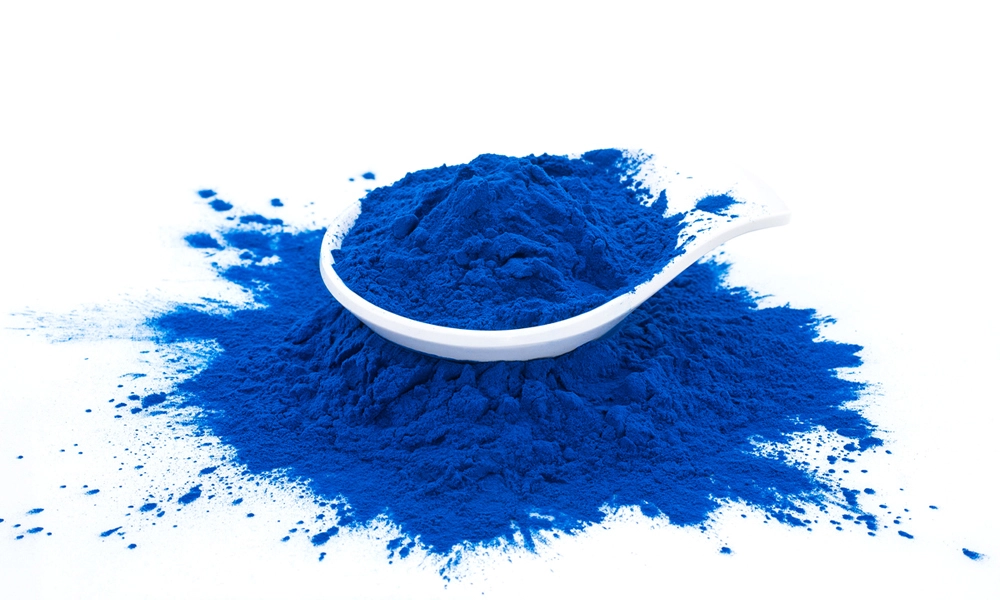
What Is Phycocyanin Powder?
From a formulation standpoint, understanding what is phycocyanin starts with its role inside spirulina. Phycocyanin is the blue pigment-protein complex naturally present in spirulina, and phycocyanin extracted from spirulina is the fraction responsible for the clean blue shade that brands want in finished products. Once isolated and standardized, it is supplied as phycocyanin powder, a format preferred in industrial use because it supports accurate dosing, easier handling in blending lines, and more controlled storage and transportation compared with liquid concentrates.
In commercial sourcing, “blue spirulina” is often used as a market-friendly name. You may see blue spirulina powder listed as if it were a separate ingredient, but in most cases it refers to spirulina-derived phycocyanin. The key point for buyers is that “blue spirulina” is not always standardized the same way across suppliers—differences in purification level and specification targets can affect shade clarity, dispersion behavior, and stability performance in real formulations.
That’s why procurement teams working on color-sensitive products (such as gummies, drink mixes, and dessert concepts) often purchase based on measurable performance parameters rather than terminology alone. In practical terms, the ingredient name is only the starting point—the specification is what determines whether the blue stays clean, consistent, and production-ready.
Where Phycocyanin Works Best?
In commercial product development, phycocyanin powder works best when it has a clear job to do: deliver a clean, vivid blue shade while supporting a naturally sourced ingredient story. That combination is exactly why many brands choose it for natural blue food coloring—especially in categories where visual identity directly influences perceived quality.
Phycocyanin is particularly well suited for products that rely on a “blue concept” as part of the brand message. This includes modern wellness formats like drink mixes, blue gummies, and high-visual desserts, where the final color needs to look intentional and premium rather than muted or inconsistent. In these projects, buyers often treat color as a specification-driven requirement, not an optional feature, which is why early-stage trials and stability checks are usually part of the sourcing process.
Another strong fit is phycocyanin in functional foods, where brands want a natural ingredient that adds both shelf appeal and marketing value without complicating the label. In powder blends and lifestyle nutrition products, phycocyanin can help create a recognizable “blue superfood” look while keeping the formulation aligned with clean-label expectations.
The most successful formulations tend to start with a simple decision: set a realistic color target for the product format, then choose a grade that can meet that target consistently in production. Once that’s defined, it becomes much easier to decide where phycocyanin adds real value—and where a different color strategy might be more cost-effective.
Key Factors That Affect Blue Color Performance
In real manufacturing, phycocyanin is less like a “standard dye” and more like a performance ingredient. It can produce a beautiful blue, but the result depends on the formulation environment and processing conditions. If your goal is consistent commercial output—not just a good-looking bench sample—these are the factors that determine whether the color stays clean and stable.
Heat: What phycocyanin heat stability really means
Phycocyanin is often sensitive to elevated temperatures because it is a pigment-protein complex rather than an inorganic colorant. In practical terms, heat exposure can reduce color intensity, shift the shade, or make the blue look dull. The risk is highest in processes involving heating, hot holding, pasteurization, or hot filling.
For product developers, “heat stability” is not a yes/no property—it’s a processing window. A phycocyanin grade that performs well in cold-mix beverage powders may not behave the same way in cooked candy systems. This is why many experienced teams test the ingredient under their actual time–temperature conditions instead of relying only on appearance in room-temperature water. If your application requires heating, the most reliable strategy is to validate color retention in pilot batches and define the best point of addition based on your process flow.
pH: Why phycocyanin pH stability determines whether your blue stays blue
Acidity is one of the most common reasons blue shades change over shelf life. In beverages and functional foods, acids are everywhere—citric acid, malic acid, ascorbic acid, fruit concentrates, fermentation byproducts—each can influence how the blue looks over time. When buyers ask why phycocyanin fades, pH is often part of the explanation, either directly (shade shift) or indirectly (accelerated degradation under storage).
From a formulation perspective, the key is to treat pH as a design parameter. If the product sits in an acidic range, you should expect that the color may require optimization through ingredient selection, processing control, and packaging. The goal is not to “force” phycocyanin to behave like a synthetic dye, but to design the system so a naturally derived blue can perform predictably.
Light and oxygen: The hidden drivers behind phycocyanin powder stability
Even if your processing is gentle and your pH is acceptable, storage conditions can still influence final appearance. Exposure to light—especially in transparent packaging or strong retail lighting—can gradually reduce color vibrancy. Oxygen exposure can also accelerate quality changes in some systems, particularly over longer shelf life or when packaging has higher permeability.
This is why stability is not only a raw material question. Packaging choices and storage recommendations often determine whether a product keeps the same blue tone at month one and month six. For brands that build identity around a clean blue color, stability evaluation should include real packaging trials, not just open-cup lab tests.
Dispersion and system interactions: Why “specks” and uneven color happen
In many projects, color inconsistency is caused by dispersion rather than ingredient quality. If phycocyanin powder is not fully dispersed, the result can be speckling, streaking, or shade variation from unit to unit. This becomes more noticeable in high-solid systems like gummies and dessert mixes where water availability is limited and mixing conditions vary.
In addition, functional food formulas often contain minerals, acids, sweeteners, proteins, and plant extracts that interact with color appearance. That’s one reason formulation trials matter: the same phycocyanin powder can look different in plain water versus a real product base. Understanding the full system—ingredients, process, and packaging—is the difference between a good prototype and a production-ready blue product.
How to Use Phycocyanin Powder in Gummies
Gummies are one of the fastest-growing applications for natural blue concepts, but they are also one of the most challenging systems for phycocyanin. The reason is simple: gummy production combines heat exposure, concentrated solids, and tight sensory expectations. If you want a clean, uniform blue at scale, phycocyanin powder for gummies needs to be handled with a process mindset—not just a “mix and hope” approach.
Below are practical formulation guidelines that buyers and manufacturers commonly use when developing blue gummy products.
Define whether you need “blue” or “blue-green”
Before you start, set the color target clearly. Some brands want a vivid sky-blue, while others accept a natural blue-green tone. This matters because the closer you push toward a pure blue, the more you will rely on stable specs and careful process control. If the product is marketed as “blue spirulina,” a slightly more natural hue may actually fit the positioning better.
Plan around heat exposure
Gummies often involve heating and holding steps that can stress the pigment. This is where phycocyanin heat stability becomes critical. A common best practice is to avoid long high-temperature exposure and to evaluate the best point of addition within the process—especially if the gummy base is cooked before color is introduced.
For many manufacturers, pilot testing under real production conditions is the fastest way to confirm whether the color remains bright and consistent through cooking, depositing, and cooling.
Ensure complete dispersion before scaling
Uneven color in gummies is frequently caused by dispersion issues rather than pigment strength. Because gummies are high-solid systems, incomplete dispersion can lead to specks, streaking, or shade variation between pieces. This is why teams working on how to use phycocyanin powder in gummies often prioritize a controlled pre-dispersion step, using an appropriate amount of liquid phase before incorporating it into the gummy mass.
Watch acidity and flavor system interactions
Many gummy formulas include acids for taste and shelf stability. Acidic systems can influence phycocyanin pH stability, which may result in a weaker blue or gradual shade shift during storage. If the flavor profile requires a lower pH, it’s important to validate color stability in the real formula—not just in water—because sweeteners, fruit ingredients, and actives can all affect the final appearance.
Validate stability in real packaging, not just in open-air tests
For retail gummies, shelf life is part of the product promise. Light exposure, oxygen permeability, and storage temperature can all impact phycocyanin powder stability over time. If the blue color is a key part of the product identity, the most reliable method is to run stability checks in the final packag
How to Use Phycocyanin Powder in Desserts (Ice Cream, Yogurt, Bakery, etc.)
Desserts are one of the most visually driven categories in food development, which is exactly why phycocyanin in desserts has become a popular solution for natural blue concepts. When it works well, the result is a clean, premium blue shade that feels modern and “naturally derived.” When it’s used without considering process conditions, however, the color can lose brightness or shift during storage.
The key is to match phycocyanin to dessert formats where it can deliver stable results.
Ice cream and frozen desserts
Frozen systems are often considered a strong match because they typically avoid high-heat processing after color addition and benefit from low-temperature storage. This is why phycocyanin powder for ice cream is commonly used in blue-themed frozen products and functional dessert concepts. In practice, the main focus is achieving uniform dispersion and maintaining the desired shade through mixing and freezing.
Yogurt and dairy-style applications
Dairy products can be highly attractive for blue concepts, but they require more attention to formulation conditions. Many yogurt systems are mildly acidic, and acidity can influence phycocyanin pH stability over shelf life. For developers using phycocyanin powder for yogurt, the most reliable approach is to test the ingredient directly in the final base (including flavor system and sweeteners) and evaluate color retention under real storage conditions rather than assuming stability from a water test.
Creams, mousse, and dessert mixes
Cream-based or cold-prepared dessert formats often allow more flexibility because color can be introduced at lower temperatures. These systems are frequently used for premium visual concepts, where the goal is a bright blue tone with a clean-label positioning. Here, consistent dispersion and avoiding unnecessary heat exposure are usually the main success factors.
Bakery and heat-processed desserts (use with caution)
Baked products are more challenging. Heat exposure during baking can reduce color intensity, which is why phycocyanin heat stability becomes the limiting factor in many oven-processed applications. If a dessert concept involves baking, phycocyanin may still be used strategically in toppings, fillings, coatings, or post-bake decorative elements—where the color is added after the primary high-heat step.
Across dessert applications, stable results come from treating color as part of the process design. Phycocyanin performs best when it is introduced under controlled conditions, fully dispersed, and protected from unnecessary stress factors such as high heat and prolonged light exposure.
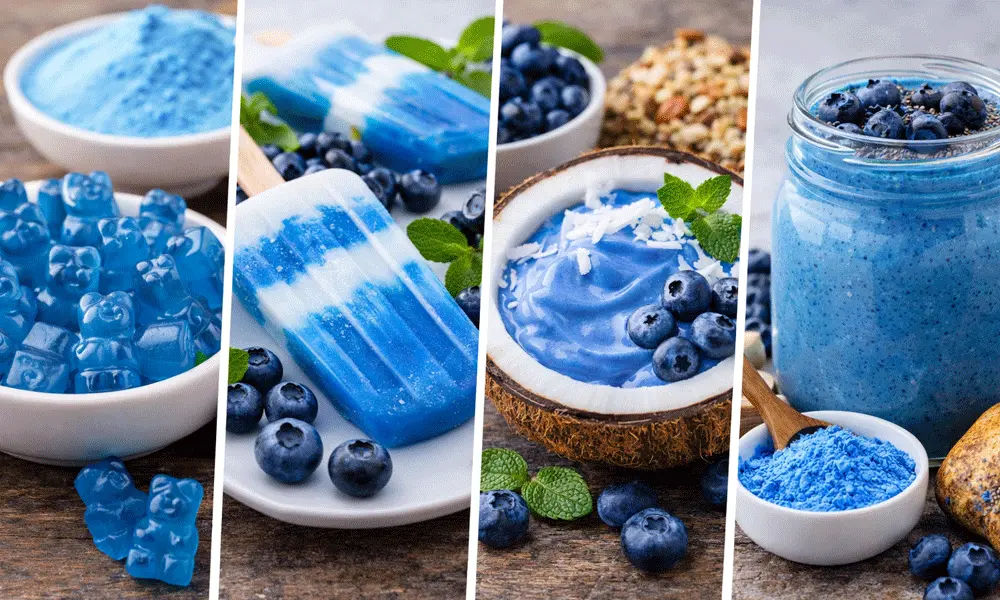
How to Use It in Functional Foods (Powder Blends & Nutrition Products)
Compared with gummies and desserts, functional foods—especially powder-based formats—are often one of the most practical and scalable applications for phycocyanin. In these systems, phycocyanin in functional foods is typically used to create a “blue wellness” identity while keeping the ingredient list clean and recognizable.
Powder blends and sachet products
Drink powders, daily wellness mixes, and lifestyle nutrition blends are common use cases because they allow better control over processing conditions. Since the product is not exposed to high temperatures during manufacturing, formulators can focus on uniform blending and color consistency rather than worrying about severe thermal stress. This is also why phycocyanin works well in superfood-style mixes where visual differentiation is part of the branding strategy.
Ready-to-mix beverages and blue nutrition drinks
In powdered or instant formats, phycocyanin powder for drinks is frequently selected to achieve a clear blue shade once dissolved. In many cases, performance depends on how well the ingredient disperses in the final system and whether the formula contains acids or minerals that could influence color appearance. When the blue shade is a key selling point, stability validation in the real base formula is usually more valuable than testing in plain water.
Functional bars and dry-mix applications
For nutrition bars and other dry systems, phycocyanin is mainly used for appearance and marketing value rather than “functional activity.” In these formats, the primary concerns are color uniformity, compatibility with other powders, and storage protection. Moisture control becomes important, because humidity can affect the appearance of the finished product over time.
Storage and supply chain considerations
In functional food manufacturing, long-term stability is strongly linked to packaging and storage. Even when the formula is dry, phycocyanin powder stability can still be influenced by moisture pickup and light exposure during distribution. For bulk handling, sealed packaging and cool, dry storage conditions remain the standard approach to protect color quality.
In short, functional foods offer a strong commercial fit for phycocyanin powder because they combine high visual impact with relatively manageable processing conditions—making it easier to deliver consistent blue performance at scale.
Common Formulation Problems (And How to Fix Them)
When phycocyanin is used at commercial scale, most issues fall into a few predictable patterns. For product developers, the fastest way to improve results is to troubleshoot based on symptoms: what you see in the finished product usually points directly to the cause.
Below is a practical checklist used by many teams working with phycocyanin powder in gummies, desserts, and functional foods.
Problem 1: The blue looks weak or “not blue enough”
What it usually means: the pigment level or color strength is not matching the target shade.
Common causes:
♦the selected grade has lower color intensity than expected
♦dispersion is incomplete, so the color is not fully expressed
♦the formula base is masking the shade (high solids, opacity, competing colors)
What to do:
♦confirm supplier specs (color strength and consistency)
♦improve pre-dispersion and mixing uniformity
♦test in the real product base, not only in water
Problem 2: The color fades during processing or storage
What it usually means: stability limits are being exceeded.
Common causes:
♦excessive heat exposure during processing (phycocyanin heat stability limitation)
♦acidic formulation environment affecting phycocyanin pH stability
♦light exposure during shelf life
What to do:
♦reduce time at elevated temperature and validate the best point of addition
♦test the ingredient in the target pH range and storage condition
♦evaluate packaging that better protects color stability
Problem 3: The shade shifts (turns dull, grey, or “muddy”)
What it usually means: the blue pigment is interacting with the formulation system.
Common causes:
♦incompatible pH range or strong acid system
♦mineral content or complex ingredient interactions
♦oxidation during storage or processing
What to do:
♦run stability trials using the complete formula matrix
♦compare performance across different grades or supplier specs
♦validate the product under real shelf conditions
Problem 4: Specks, streaking, or uneven color distribution
What it usually means: dispersion is insufficient for the system.
Common causes:
♦phycocyanin powder added too late or without enough hydration
♦inadequate mixing energy in high-solid systems (gummies, thick dessert bases)
♦powder agglomeration due to moisture pickup
What to do:
♦pre-disperse the ingredient in an appropriate liquid phase
♦confirm mixing parameters for scale-up batches
♦keep raw material sealed and protected from humidity
Problem 5: Batch-to-batch color inconsistency
What it usually means: supplier standardization or internal process control is not stable.
Common causes:
♦variation in raw material quality or specification targets
♦inconsistent blending and dosing accuracy
♦insufficient incoming QC verification
What to do:
♦confirm consistent specifications and batch documentation from the supplier
♦verify incoming materials with internal QC checks
♦purchase based on measurable specs rather than name alone
Buyer Checklist: What to Ask Your Supplier Before Bulk Orders
When the formula is ready to scale, procurement priorities change. At this stage, the main goal is not “finding a blue ingredient,” but securing repeatable performance across every shipment. For most manufacturers, sourcing bulk phycocyanin powder without clear specification alignment is one of the fastest ways to create avoidable quality issues later.
Below is a practical checklist many buyers use when qualifying a phycocyanin supplier for long-term commercial supply.
1) Confirm the correct grade for your market and application
Start with the fundamentals. For beverages, gummies, and nutrition products, buyers typically require food grade phycocyanin with appropriate microbiological control and compliance documentation. If the ingredient will be used in personal care concepts, some customers prefer a cosmetic-grade specification, depending on formulation needs and market requirements.
Buyer takeaway: grade selection is not a marketing term—it defines quality targets, testing scope, and documentation requirements.
2) Request a clear specification sheet (not just a product name)
Two products can both be called “blue spirulina” or “phycocyanin powder,” yet perform differently in production. A reliable supplier should provide measurable indicators that match your use case, such as color strength, dispersibility expectations, moisture control, and batch consistency.
Buyer takeaway: purchase against specs, not terminology.
3) Ask for batch documentation and traceability
For stable production planning, you need traceable supply. Buyers should request standard documentation such as COA, along with batch identification and basic traceability support. This helps internal QA teams approve materials faster and reduces risk in long-term orders.
At CHEN LANG BIO TECH, we provide batch-specific documentation for every shipment, including a COA for each lot. Third-party testing data can also be offered upon request. Before delivery, all products go through strict quality verification to ensure they meet agreed specifications and remain consistent from batch to batch.
Buyer takeaway: consistent paperwork is a strong indicator of consistent manufacturing control.
4) Validate performance with application-relevant sampling
Because color performance depends on processing conditions, many experienced buyers run a short pilot trial before confirming a bulk purchase. This is especially important for products sensitive to heat, acidity, or storage conditions. Real performance data in your own system is more valuable than lab-only demonstrations.
Buyer takeaway: a small validation run can prevent large-scale reformulation later.
5) Confirm packaging and storage recommendations for shipping stability
Even a high-quality material can underperform if storage and transportation are not managed correctly. Ask how the product should be packed, protected from moisture, and stored during transit and warehousing. This becomes more important when supplying multiple regions or seasonal shipping routes.
Buyer takeaway: stability is part of the supply chain—not only the formulation.
Conclusion
Phycocyanin offers a practical way to develop clean-label blue products across multiple categories, but consistent results depend on matching the ingredient to the process. When used with the right formulation strategy, phycocyanin powder can deliver premium-looking blue gummies, visually distinctive desserts, and scalable functional food concepts—without relying on synthetic dyes.
For most commercial projects, success comes down to a few fundamentals: selecting the right grade, validating performance under real processing conditions, and sourcing from a supplier that can provide stable specifications and repeatable batches.
CHEN LANG BIO TECH supports global customers with spirulina-derived blue ingredient solutions, including technical documentation and bulk supply for commercial production.
Contact CHEN LANG BIO TECH
Email: admin@chenlangbio.com
WhatsApp / WeChat: +86-17782478823
Website: http://www.chenlangbio.com
Quick Inquiry (Sample & Quotation Request)
To request a quotation or samples for phycocyanin powder, please share:
♦your target application (gummies / desserts / functional foods)
♦your preferred grade and specification requirements
♦your estimated order quantity and destination market

Send Inquiry
Related Industry Knowledge
- Unlocking the Pharmacological Potential of Myricetin Against Various Pathogenesis
- 5 Benefits of High-Purity Lycopene Powder
- 7 Key Benefits of Palmitoylethanolamide Powder You Should Know
- What Are the Key Applications of Milk Thistle Extract in Modern Herbal Medicine?
- Is Diosmin Safe for Hemorrhoids
- Top 5 Applications of Meglumine Powder in Medicine
- Benefits of Saccharomyces Ferment Lysate Filtrate
- What Is Lufenuron Used For
- Is Ecdysterone And Turkesterone Superior To Hyaluronic Acid Powder?
- Can Pure Fisetin Reverse Aging