Ginseng Root Extract vs Leaf Extract: Which One Is Better for Supplement Manufacturing?
2026-03-02 14:31:42
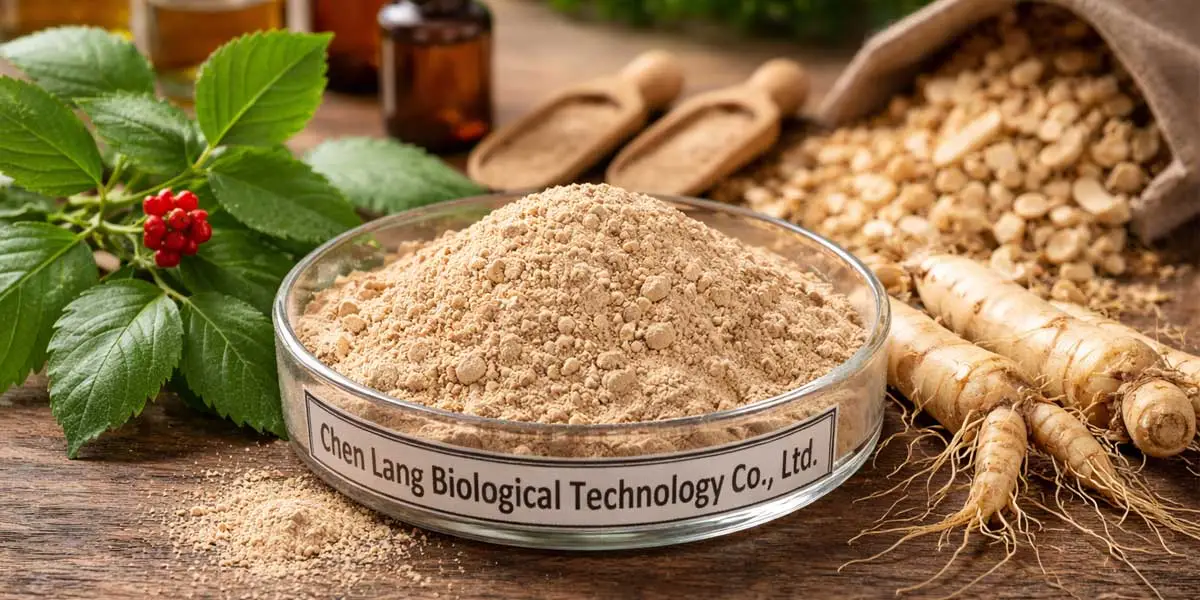
For supplement manufacturers evaluating ginseng extract for commercial production, the distinction between root extract and leaf extract is not merely botanical — it is strategic. Ginseng root extract powder has traditionally been regarded as the premium raw material in the global nutraceutical industry. It is closely associated with heritage use, standardized ginsenoside profiling, and high-end supplement positioning. However, ginseng leaf extract has emerged as a cost-efficient and scalable alternative, often containing higher total ginsenoside percentages and offering stronger price flexibility for bulk purchasing.
From a manufacturing standpoint, the decision typically revolves around three core variables:
•Active compound composition and standardization potential
•Cost structure and supply stability
•Brand positioning and label strategy
For brands developing capsules, tablets, powdered blends, or functional beverage systems, choosing between root and leaf extract requires a balance between phytochemical profile, procurement economics, and long-term supply planning.
International buyers sourcing bulk ginseng extract powder should therefore evaluate both extracts through a technical and commercial lens rather than relying solely on traditional perception.
Understanding the Agricultural and Structural Distinction
Panax ginseng is a perennial botanical species cultivated primarily in Northeast Asia. While both the root and aerial parts contain ginsenosides, their biological role within the plant differs — and this difference influences extraction outcomes and commercial dynamics.
1. Growth Cycle and Harvest Timing
|
Parameter |
Ginseng Root |
Ginseng Leaf |
|
Cultivation Period |
4–6 years before harvest |
Harvestable annually after maturity |
|
Biomass Yield |
Limited per plant |
Higher annual biomass output |
|
Harvest Impact |
Plant is removed entirely |
Plant may continue growing |
|
Agricultural Investment |
High long-term input |
Lower cycle risk |
The long maturation cycle of ginseng root directly contributes to its higher raw material price in global trade. By contrast, leaves regenerate annually, allowing for more predictable agricultural output and scalable extraction volume.
For supplement manufacturers requiring stable multi-batch procurement, understanding this agricultural cycle is critical when selecting a reliable ginseng extract supplier.
2. Raw Material Availability and Supply Chain Stability
Because root harvest terminates the plant, large-scale root extract production depends heavily on long-term cultivation planning and inventory management. This naturally introduces greater exposure to:
•Climate variability
•Agricultural disease risk
•Price fluctuations during low-yield seasons
Leaf extraction benefits from shorter harvest cycles and more flexible agricultural scheduling, often resulting in:
•Greater raw material turnover
•More consistent yearly supply
•Improved bulk pricing stability
For buyers negotiating annual contracts or evaluating wholesale ginseng extract supply, these structural differences can significantly impact cost forecasting and procurement planning.
Active Compound Distribution: Root vs Leaf
The functional value of ginseng extract is largely determined by its ginsenoside composition. However, the concentration and ratio of these compounds vary between plant parts.
Below is a structured comparison relevant to supplement formulation:
|
Technical Parameter |
Ginseng Root Extract |
Ginseng Leaf Extract |
|
Total Ginsenoside Content (Typical Standardization Range) |
5% – 80% (customizable) |
Often naturally higher baseline percentage |
|
Dominant Ginsenosides |
Rg1, Rb1, Rg3 |
Re, Rd (often higher proportion) |
|
Traditional Reference in Pharmacopoeia |
Strong historical documentation |
Less traditional but increasing research interest |
|
Extraction Ratio |
4:1 – 20:1 common |
4:1 – 20:1 common |
|
Commercial Positioning |
Premium, heritage-focused |
Cost-efficient, high-claim potential |
Standardization Strategy for Bulk Buyers
For international supplement brands, standardized extract selection typically involves:
•Defining target ginsenoside percentage;
•Confirming HPLC testing methodology;
•Reviewing chromatographic fingerprint consistency;
•Comparing cost per kg at equivalent standardization.
Below is a simplified cost-efficiency consideration framework:
|
Scenario |
Recommended Option |
|
Premium retail capsule line |
Root extract (standardized 10–20%) |
|
High-ginsenoside marketing claim |
Leaf extract (higher baseline %) |
|
Entry-level mass-market product |
Leaf extract |
|
Heritage/traditional branding strategy |
Root extract |
Functional Performance in Supplement Formulation
When evaluating ginseng extract for supplement manufacturing, phytochemical data alone is not sufficient. The extract must also perform reliably in real production environments—whether in capsules, tablets, stick packs, or beverage powders.
From a formulation perspective, both root and leaf extracts can be standardized to specific ginsenoside levels. However, their matrix characteristics and processing behaviors may differ depending on extraction technology and purification level.
1. Powder Flowability and Encapsulation Efficiency
For capsule manufacturing, flowability and bulk density are critical. Poorly flowing powders can lead to weight variation, reduced filling speed, and production inefficiencies.
In general:
•Moderately standardized root extracts (e.g., 10–20% ginsenosides) often demonstrate stable flow properties.
•Highly concentrated extracts (50%+)—whether root or leaf—may require additional excipient optimization due to increased stickiness or hygroscopicity.
When sourcing bulk ginseng extract powder, experienced buyers typically request:
•Particle size distribution data;
•Bulk density values;
•Moisture content specification;
•Flowability test reports.
These parameters directly affect capsule filling accuracy and production yield.
2. Tablet Compression and Excipient Compatibility
Tablet manufacturing introduces additional mechanical considerations. Compressibility, cohesion, and compatibility with binders or disintegrants influence final tablet hardness and surface smoothness.
In practical production scenarios:
Root extract is often chosen for premium tablet lines emphasizing traditional positioning.
Leaf extract may be preferred in cost-sensitive formulations where maintaining high ginsenoside claims at lower raw material input is advantageous.
However, performance depends heavily on processing method. Spray-dried extracts typically exhibit improved compressibility compared to coarse milled extracts.
A professional ginseng extract manufacturer should be able to provide guidance on:
•Recommended excipient pairing;
•Suggested inclusion rate;
•Stability under compression force;
•Hygroscopic behavior during storage.
These details are particularly important for contract manufacturers and brands planning large-volume production runs.
3. Application in Functional Beverages and Powder Blends
In beverage or instant drink systems, solubility and dispersibility become primary selection criteria.
Lower to mid-range standardized extracts often disperse more uniformly in powdered blends. Highly concentrated extracts, especially those rich in specific saponins, may require solubility testing to ensure visual clarity and taste stability.
Leaf extract sometimes offers commercial flexibility in beverage applications due to its cost-to-standardization ratio, allowing brands to maintain active compound claims while optimizing formulation budgets.
For buyers developing ready-to-mix systems or sachet products, requesting small pilot samples before confirming bulk purchase contracts is considered best practice.
Cost Analysis and Manufacturing Economics
Beyond formulation performance, the most decisive factor for many supplement companies remains cost structure and margin control.
Understanding how root and leaf extracts differ economically helps buyers negotiate more effectively with suppliers and plan long-term sourcing strategies.
1. Raw Material Cost Drivers
|
Cost Factor |
Root Extract |
Leaf Extract |
|
Cultivation Time |
4–6 years |
Annual harvest cycle |
|
Agricultural Risk |
Higher (long-term exposure) |
Lower (shorter cycle) |
|
Biomass Yield |
Limited |
Higher per season |
|
Market Demand |
Traditionally strong |
Growing industrial demand |
|
Price Stability |
More sensitive to harvest cycles |
Typically more stable |
Because of its extended growth cycle, root raw material commands a structurally higher price in the agricultural supply chain. This cost is reflected in wholesale ginseng root extract pricing, especially at higher standardization levels.
Leaf extract benefits from faster turnover and scalable agricultural output, often allowing suppliers to offer more competitive quotations for bulk contracts.
2. Standardization Level vs Cost per Kilogram
It is important to compare extracts at equivalent ginsenoside percentages rather than comparing base prices alone.
For example:
A 10% standardized root extract may carry a premium due to raw material cost.
A 10% leaf extract may be priced lower due to agricultural efficiency.
A 50%+ extract—regardless of plant part—will involve additional purification cost.
Procurement managers evaluating bulk ginseng extract supplier quotations should calculate:
Cost per kg at target standardization
Inclusion rate per finished unit
Impact on finished product margin
Forecasted annual consumption volume
This structured evaluation often reveals that leaf extract can significantly improve margin in mid-market product lines, while root extract supports higher retail positioning in premium segments.
3. Long-Term Contracting and Supply Reliability
For supplement brands scaling internationally, supply reliability can outweigh minor price differences.
Direct cooperation with a ginseng extract factory rather than trading intermediaries often provides:
More stable annual pricing agreements
Transparent raw material traceability
Flexible batch production scheduling
Customizable ginsenoside specifications
At CHEN LANG BIO TECH, for example, bulk buyers typically request:
Customized standardization (5%–80%)
Pilot sample validation
Batch-specific COA and HPLC verification
Scalable production capacity for annual contracts
For companies planning multi-ton procurement volumes, establishing direct relationships with a qualified ginseng extract manufacturer and supplier helps mitigate supply risk and improve long-term cost predictability.
4. Margin Strategy: Premium vs Cost-Efficient Lines
From a commercial perspective, the decision often aligns with product portfolio segmentation:
|
Product Strategy |
Recommended Extract Type |
|
High-end adaptogenic capsule |
Root extract |
|
Mass-market immune support tablet |
Leaf extract |
|
Functional beverage line |
Leaf extract (cost-flexible) |
|
Heritage-positioned formula |
Root extract |
|
High-ginsenoside claim product |
Leaf extract |
Stability, Processing, and Formulation Compatibility
In large-scale supplement manufacturing, ingredient stability is often underestimated during early sourcing discussions. Yet in practice, stability directly affects shelf life, batch consistency, and long-term brand reputation.
1. Hygroscopicity and Storage Behavior
Both ginseng root and leaf extracts contain saponins that can exhibit moderate hygroscopic tendencies depending on concentration and drying method.
Highly purified extracts—especially those standardized above 50% total ginsenosides—may absorb moisture more readily if not properly spray-dried and stabilized. This can influence:
•Powder caking during storage
•Capsule shell softening in high-humidity regions
•Tablet hardness variability
For brands distributing across North America, Europe, and Southeast Asia, evaluating extract moisture limits and packaging specifications is essential.
Professional manufacturers should provide:
•Moisture specification (typically ≤5%)
•Recommended storage conditions
•Stability testing data
•Shelf-life validation
When sourcing bulk quantities, these parameters matter just as much as active compound percentage.
2. Compatibility in Multi-Ingredient Formulas
Ginseng extract is rarely used as a single-ingredient supplement. It is commonly blended with:
•Vitamins (B-complex, C)
•Minerals (magnesium, zinc)
•Other botanicals (ashwagandha, rhodiola)
•Amino acids or adaptogenic blends
In multi-ingredient systems, interaction between botanical extracts can influence color stability, odor development, and moisture migration.
Mid-range standardized extracts (10–20%) often integrate more smoothly into complex blends. Extremely high concentrations may require additional excipient balancing to maintain uniform dispersion.
For contract manufacturers and brand formulators, requesting pilot-scale blending trials before finalizing bulk purchase agreements reduces production risk.
A technically capable ginseng extract supplier should be able to discuss excipient compatibility and offer guidance based on previous manufacturing experience.
Regulatory and Market Positioning Considerations
Regulatory frameworks vary by region, but botanical extracts must meet documentation standards regardless of plant part.
1. Documentation and Compliance
For export-oriented supplement production, buyers typically require:
•Certificate of Analysis (COA) per batch
•HPLC chromatographic fingerprint
•Heavy metal testing (Pb, Cd, Hg, As)
•Pesticide residue screening
•Microbiological compliance
•MSDS documentation
These documents are not merely formalities—they are essential during customs clearance, third-party audits, and regulatory inspections.
2. Labeling and Consumer Perception
In Western markets, labeling transparency influences purchasing behavior.
“Panax Ginseng Root Extract” typically aligns with traditional expectations and may support premium positioning.
“Panax Ginseng Leaf Extract” can be marketed transparently as a sustainable botanical alternative with standardized ginsenoside content.
The strategic decision depends on brand narrative:
•Heritage-focused product lines may prefer root labeling.
•Cost-conscious or innovation-driven brands may embrace leaf extract positioning.
•Neither choice is inherently superior; each serves different commercial objectives.
Decision Framework for Supplement Buyers
Rather than framing the discussion as root versus leaf in absolute terms, procurement professionals often evaluate according to structured decision criteria.
Step 1: Define Product Tier
Premium adaptogenic line → Consider root extract.
Mass-market vitality supplement → Evaluate leaf extract for margin efficiency.
Step 2: Determine Target Ginsenoside Percentage
Higher percentage does not automatically equate to better product performance. It should align with formulation intent and label claim strategy.
Step 3: Assess Annual Volume Forecast
Large annual demand favors working with suppliers capable of stable agricultural sourcing and scalable production capacity.
Step 4: Compare Cost per Finished Unit
Rather than focusing solely on price per kilogram, calculate:
•Inclusion rate
•Capsule or tablet count per batch
•Margin impact
This financial modeling often clarifies which extract best supports overall business goals.
The Strategic Value of Working with a Direct Manufacturer
In the global nutraceutical supply chain, price transparency and production control are increasingly important.
Partnering directly with a ginseng extract factory offers several structural advantages:
•Greater visibility into raw material sourcing
•More flexible customization of standardization levels
•Direct communication with technical teams
•Improved production scheduling for recurring bulk orders
•Reduced intermediary cost layers
At CHEN LANG BIO TECH, our role as a direct manufacturer allows us to provide:
•Customizable ginsenoside specifications (5%–80%)
•Batch-specific HPLC testing
•Consistent spray-dried powder quality
•Scalable bulk packaging options
•Long-term supply agreements for international supplement companies
For buyers seeking stable cooperation rather than one-time transactions, direct factory partnership improves both cost efficiency and quality assurance.
Frequently Asked Questions
Is ginseng leaf extract stronger than root extract?
Not necessarily. Leaf extract may contain higher total ginsenoside percentages, but strength depends on the specific ginsenoside profile and intended formulation goal.
Why is ginseng root extract usually more expensive?
Root cultivation requires several years before harvest, increasing agricultural cost and limiting annual yield.
Can leaf extract replace root extract in capsule manufacturing?
In many formulations, yes. However, branding strategy and consumer perception should also be considered.
What is the typical ginsenoside percentage for commercial supplements?
Common standardized levels range from 5% to 20%, though higher concentrations are available for specialized formulations.
How should bulk ginseng extract be stored?
In sealed, moisture-resistant packaging under cool, dry conditions, typically below 25°C and protected from direct sunlight.
Conclusion
Selecting between ginseng root extract powder and leaf extract is ultimately a matter of strategic alignment. Root extract supports premium positioning, traditional branding, and heritage-driven product narratives. Leaf extract offers cost efficiency, scalable supply, and flexibility for high-ginsenoside standardization. Both can serve the supplement industry effectively—when sourced from a manufacturer that understands not only extraction chemistry, but also commercial realities.
At CHEN LANG BIO TECH, we operate as a direct manufacturer and bulk supplier of Panax ginseng root extract and leaf extract powder. Our production systems are designed to support international supplement manufacturing standards, with controlled extraction processes and full technical documentation for export markets.
Whether you are developing a premium adaptogenic formula or optimizing a cost-efficient supplement line, our team can provide technical data sheets, samples for formulation validation, and competitive bulk quotations tailored to your annual volume requirements.
If you are currently evaluating a reliable ginseng extract manufacturer and supplier for long-term cooperation, we welcome the opportunity to support your project.
Please contact our sales and technical team email: admin@chenlangbio.com to discuss specifications, pricing, and sample requests. We look forward to building a stable and professional partnership with your company.

Send Inquiry
Related Industry Knowledge
- Unlocking Radiance: The Science Behind 3-O Ethyl Ascorbic Acid
- Top 5 Benefits of Using Copper PCA in Cosmetics
- How Can Evodiamine Powder Enhance Your Product Line's Effectiveness?
- Can I Use Kojic Acid Dipalmitate with Vitamin C or Other Actives?
- Can PQQ be Combined with Other Supplements?
- Was Your Tetrahydrocurcumin Product Colored the Same as Curcumin
- Can Loratadine Cause Weight Gain
- Does Alpha-GPC Affect the Liver
- Can Hyaluronic Acid Powder Be Used in DIY Skincare
- What's Different Between Honokiol Powder and Magnolol