
Does Centella Asiatica Remove Dark Spots
2026-01-05 13:14:53
When buyers and formulators ask does centella asiatica remove dark spots, they are usually looking for a clear, practical answer—not marketing claims. In today’s skin care market, “dark spots” and “uneven skin tone” are among the most searched concerns, but not every ingredient associated with calming or repair plays the same role in pigmentation management.
As a manufacturer and supplier of centella asiatica extract powder, we often clarify this question for international customers. The short answer is that centella asiatica is not a classic depigmenting active, but it plays a meaningful supporting role in modern brightening and sensitive-skin formulations. Understanding how and where it fits allows brands and procurement teams to use it correctly—without overpromising and without mispositioning their products.
This article explains what centella asiatica can and cannot do for dark spots, how it is commonly used in formulations targeting hyperpigmentation, and how buyers can evaluate and source the right centella extract specification for these applications.
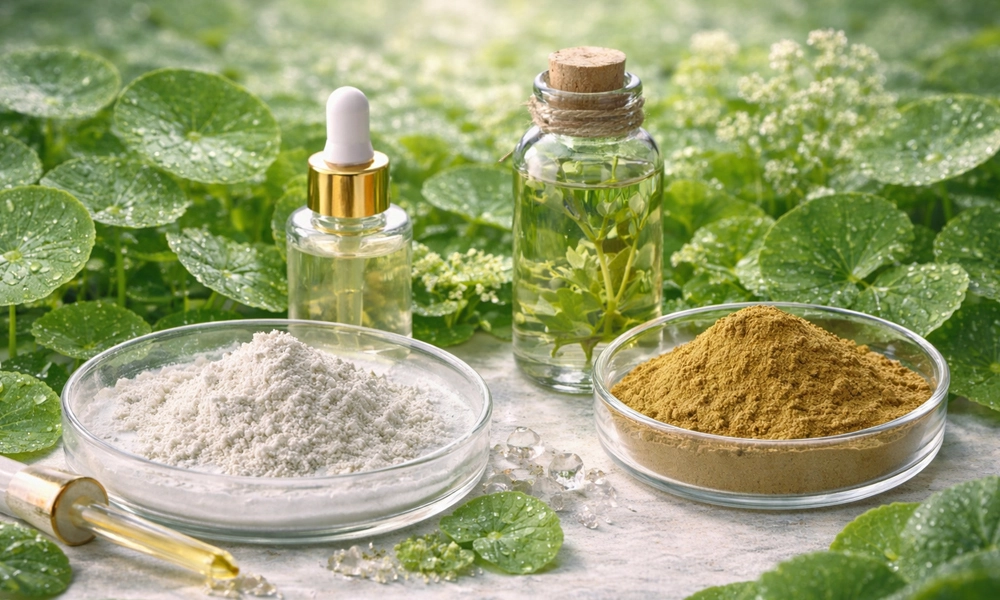
Quick Answer: Does Centella Asiatica Actually Remove Dark Spots?
To address the question directly: centella asiatica does not “remove” dark spots in the same way that classic brightening actives do. Ingredients such as vitamin C, niacinamide, tranexamic acid, or alpha arbutin directly target melanin production or distribution. Centella asiatica works differently.
In skin care formulations, centella asiatica for dark spots is most often used as a supportive ingredient. It helps improve skin comfort, reduce visible redness, and support barrier function—factors that are especially important in post-inflammatory hyperpigmentation (PIH) and sensitive-skin brightening routines.
This is why many formulations designed for uneven skin tone in sensitive skin include Centella extract alongside proven brightening actives. Centella does not replace these actives, but it helps create a formulation environment where they can be used more comfortably and consistently.
What Counts as a “Dark Spot”? (PIH vs Sun Spots vs Melasma)
Before evaluating whether Centella asiatica helps with dark spots, it is important to define what type of pigmentation is involved. From a formulation and procurement perspective, not all dark spots are the same.
Post-inflammatory hyperpigmentation (PIH)
PIH develops after inflammation, such as acne, irritation, or cosmetic procedures. In this context, calming inflammation and supporting barrier recovery are critical. This is where Centella-based ingredients are most relevant, which explains searches like centella for PIH and centella for post-acne marks.
Sun-induced dark spots
These are typically associated with UV exposure and long-term melanin accumulation. Brightening actives are usually the core of these formulas, while Centella may be added to support tolerance and daily use.
Melasma
Melasma is a complex condition influenced by hormonal and environmental factors. Cosmetic ingredients alone cannot fully address it. In such cases, Centella is sometimes used to support skin comfort in adjunctive care routines, rather than as a primary solution.
For buyers, this distinction matters because ingredient selection should align with the biological mechanism of the pigmentation, not just the visible symptom.
Where Centella Fits in a Brightening Strategy (What It Can and Can’t Do)
In modern cosmetic formulation, centella asiatica for uneven skin tone is not positioned as a standalone brightening solution. Instead, it is valued for how it supports the overall system.
Centella-derived triterpenoids are commonly associated with:
•soothing stressed or irritated skin
•supporting skin comfort in sensitive or reactive skin types
•helping maintain a healthy skin barrier
These properties are particularly valuable in brightening products because many effective depigmenting actives can increase irritation risk. From a formulation standpoint, irritation can lead to inconsistent usage, higher complaint rates, and, paradoxically, worsening of PIH.
This is why centella for sensitive skin brightening has become a common positioning strategy. It allows brands to offer brightening benefits while maintaining a gentle, tolerance-focused product profile—especially important in global markets where consumer sensitivity levels vary widely.
What Is Centella Asiatica Extract Powder?
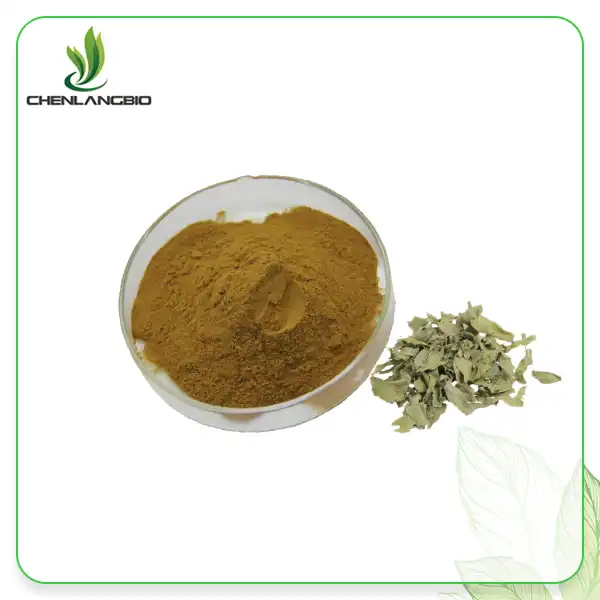
Centella asiatica extract powder is a standardized botanical ingredient derived from the aerial parts of centella asiatica (gotu kola), widely used in cosmetic and dermocosmetic formulations. Rather than being a single active compound, centella extract powder contains a group of naturally occurring triterpenoids, most notably madecassoside, asiaticoside, asiatic acid, and madecassic acid.
In skin care applications, centella asiatica extract powder is primarily valued for its skin-soothing, comfort-supporting, and barrier-friendly properties, especially in formulations designed for sensitive or irritation-prone skin. It does not function as a direct depigmenting agent; instead, it is commonly used to support skin tolerance and recovery in products targeting uneven skin tone or post-inflammatory discoloration, often in combination with proven brightening actives.
Key Bioactive Components in Centella Asiatica Extract Powder
|
Component |
Category |
Functional Role in Skin Care |
Why It Matters to Buyers |
|
Madecassoside |
Triterpenoid saponin |
Commonly associated with skin comfort, calming formulations, and barrier-support concepts |
Often used as a marker compound; higher content supports sensitive-skin positioning |
|
Asiaticoside |
Triterpenoid saponin |
Linked to skin recovery–focused formulations and post-stress skin care concepts |
Used as an individual marker or part of marker-sum standardization |
|
Asiatic Acid |
Triterpenoid aglycone |
Contributes to overall Centella triterpenoid profile and formulation performance |
Important for full-spectrum Centella characterization |
|
Madecassic Acid |
Triterpenoid aglycone |
Supports balanced triterpenoid composition in standardized extracts |
Indicates extraction completeness and quality consistency |
|
Total / Marker-Sum Triterpenoids |
Composite specification |
Represents the combined presence of key Centella actives |
Preferred for scalable cosmetic applications with batch consistency |
Understanding the composition and standardization of centella asiatica extract powder is essential when evaluating its role in formulations targeting dark spots or uneven skin tone.
What the Research Suggests: Centella and the Appearance of Post-Blemish Marks
Scientific literature often links Centella asiatica to skin recovery and inflammation management. While Centella is not classified as a direct melanin inhibitor, research suggests that its role in supporting skin recovery can influence the appearance of post-inflammatory marks over time.
This explains why centella frequently appears in formulations addressing post-acne discoloration and PIH-prone skin. By helping calm the skin and support barrier repair, Centella may contribute indirectly to a more even-looking complexion—particularly when pigmentation is linked to prior inflammation.
From a compliance standpoint, it is important to frame this correctly. Centella is not marketed as a depigmenting drug, but as a cosmetic ingredient that supports skin comfort and recovery. This distinction is critical for international brands navigating different regulatory environments.
Can Centella Be Combined with Brightening Actives?
One of the most common formulation questions is can Centella be used with vitamin C or niacinamide. In most cosmetic systems, the answer is yes.
Centella extract powder is frequently combined with:
♦Niacinamide;
♦vitamin C derivatives;
♦tranexamic acid;
♦alpha arbutin.
In these combinations, centella helps support skin comfort and reduces the likelihood of irritation-related complaints. This makes it especially valuable in daily-use brightening products and routines designed for long-term application.
For buyers, this compatibility expands formulation options and allows centella extract powder to be positioned as a risk-reduction ingredient rather than a single-claim active.
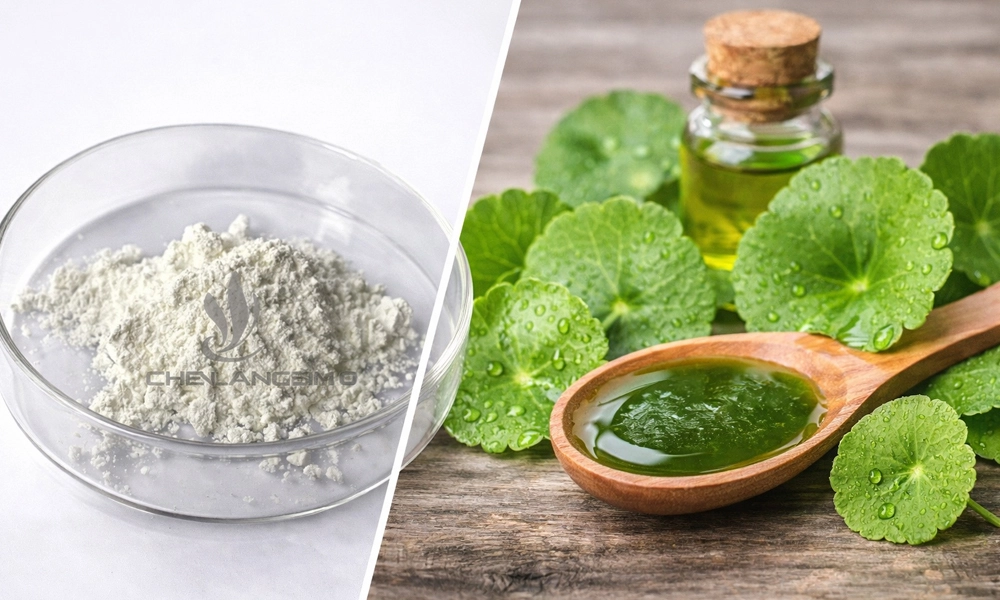
Centella vs Vitamin C vs Niacinamide for Dark Spots
Procurement teams often compare Centella vs vitamin C for dark spots or niacinamide vs Centella for hyperpigmentation. Each ingredient serves a different role in formulation strategy.
Vitamin C is commonly used for its antioxidant and brightening properties. It directly targets oxidative stress and uneven tone but may increase irritation risk in sensitive skin.
Niacinamide supports barrier function and overall tone uniformity and is widely used across skin types.
Centella asiatica supports comfort, tolerance, and recovery, particularly in formulations designed for sensitive or compromised skin.
For many brands, the most effective approach is not choosing one ingredient over another, but combining them thoughtfully. Centella is often included to help balance formulas that contain stronger brightening actives.
Which Ingredient Fits Which Type of Dark Spot?
|
Dark Spot Type |
Vitamin C |
Niacinamide |
Centella Asiatica Extract Powder |
|
Post-Inflammatory Hyperpigmentation (PIH) |
⚠️ Effective but may increase irritation if skin is compromised |
✔️ Helps improve tone uniformity over time |
✔️✔️ Strongly supportive for comfort and recovery |
|
Sun-Induced Dark Spots (UV-related) |
✔️✔️ Commonly used as a primary brightening active |
✔️ Supports overall tone balance |
◯ Supportive role, not a primary depigmenting agent |
|
Sensitive-Skin–Related Uneven Tone |
⚠️ Requires careful formulation and stabilization |
✔️ Generally suitable at controlled levels |
✔️✔️ Highly suitable for tolerance-focused formulas |
|
Acne-Related Dark Marks |
◯ Can be used, depends on skin tolerance |
✔️ Common in oil-balance and tone-care products |
✔️✔️ Frequently used to support post-acne comfort |
|
Maintenance / Daily Brightening |
✔️✔️ Effective but stability must be managed |
✔️✔️ Widely used in daily-care products |
✔️ Ideal for long-term tolerance and routine support |
When to Choose Which Ingredient
When to Choose Vitamin C?
Choose vitamin C when your product concept:
•Targets visible brightening or radiance as a primary claim
•Focuses on sun-induced dark spots or dull skin tone
•Is positioned as a performance-driven serum or treatment
•Can support controlled pH, oxidation protection, and suitable packaging
📌 Procurement note: Vitamin C requires careful handling in formulation and supply chain. Stability, packaging, and batch consistency should be reviewed in detail.
When to Choose Niacinamide?
Choose niacinamide when your formulation:
•Needs a multi-functional core ingredient (tone, barrier, oil balance)
•Is designed for daily, long-term use across broad skin types
•Prioritizes formulation flexibility and cost efficiency
•Targets uneven skin tone without aggressive brightening claims
📌 Procurement note: Pay attention to usage level, formulation pH, and compatibility to minimize flushing or sensory complaints in sensitive-skin segments.
When to Choose Centella Asiatica Extract Powder?
Choose Centella Asiatica extract powder when your product:
•Targets post-inflammatory dark marks or sensitive-skin discoloration
•Is positioned around comfort, calming, or barrier-support concepts
•Includes stronger actives that may increase irritation risk
•Needs to support long-term tolerance and user compliance
📌 Procurement note: Focus on standardization method (total triterpenoids vs marker-sum), analytical method (HPLC/UPLC), and batch-to-batch consistency.
When to Combine Two or Three Ingredients?
Many successful products do not rely on a single ingredient. Consider combination strategies when:
♦You want strong brightening performance without sacrificing tolerance
♦Your product line includes both treatment and maintenance items
♦You aim to reduce customer complaints linked to irritation or overuse
A common structure is:
Vitamin C or Niacinamide as the primary tone-care driver
Centella Asiatica extract powder as the tolerance and recovery support
This layered approach reflects how modern brightening systems are designed in practice—not as single-ingredient solutions, but as balanced, consumer-friendly routines.
Formulation Notes for Buyers: Solubility, pH Range, and Stability
When evaluating ingredients for dark spot or uneven tone formulations, buyers should look beyond marketing claims and focus on solubility behavior, workable pH range, and formulation stability. These parameters directly affect development cost, processing complexity, and long-term product performance.
Below is a practical formulation comparison of centella asiatica extract powder, Vitamin C, and Niacinamide, based on common cosmetic-grade materials used in international markets.
Formulation Characteristics Comparison (Buyer & Formulator Reference)
|
Parameter |
Centella Asiatica Extract Powder |
Vitamin C |
Niacinamide |
|
Ingredient Type |
Botanical extract (multi-component triterpenoids) |
Single active (L-ascorbic acid or derivatives) |
Single active (vitamin B3) |
|
Solubility |
Commonly water-soluble or readily dispersible, depending on carrier and standardization |
L-ascorbic acid: water-soluble but oxidation-prone; derivatives vary |
Highly water-soluble |
|
Recommended pH Range |
Typically pH 5.0–7.0 (formulation-dependent) |
L-ascorbic acid: pH 2.5–3.5; derivatives allow broader range |
Generally pH 5.0–7.5 |
|
pH Sensitivity |
Low to moderate; tolerant of common cosmetic systems |
High for L-ascorbic acid; moderate for derivatives |
Low |
|
Thermal Stability |
Stable under normal cosmetic processing; avoid prolonged high heat |
Sensitive to heat, light, and oxygen |
Stable under typical processing conditions |
|
Oxidation Sensitivity |
Low |
High (especially L-ascorbic acid) |
Low |
|
Processing Flexibility |
Can be added in water phase or cool-down stage |
Often requires controlled processing and packaging |
Easy to process; flexible addition points |
|
Packaging Requirements |
No special packaging required solely for stability |
Often requires airless or opaque packaging |
Standard cosmetic packaging sufficient |
|
Long-Term Storage Stability |
Generally good when stored dry and protected from moisture |
Can degrade over time if not stabilized |
Generally good |
FAQ: Centella Asiatica and Dark Spots
1. Can centella asiaticaextract powder be used as the main ingredient in dark spot products?
Centella asiatica extract powder is not typically used as the primary depigmenting ingredient in dark spot products. Instead, it is most often included as a supportive component to improve skin comfort, tolerance, and formulation balance. In brightening systems, Centella works best alongside proven actives rather than replacing them.
2. Is centella asiatica more suitable for post-inflammatory hyperpigmentation (PIH) than sun spots?
Yes, centella asiatica is generally more relevant for post-inflammatory hyperpigmentation (PIH) than for sun-induced dark spots. PIH is closely linked to inflammation and barrier disruption, where Centella’s soothing and recovery-support role is particularly valuable. For sun spots, Centella is usually used in a supportive rather than primary role.
3. What type of centella extract works best for dark spot–related formulations (total triterpenoids vs single markers)?
For most cosmetic applications, standardized centella extracts based on total or marker-sum triterpenoids are preferred because they offer better batch consistency and scalability. Single-marker materials may be used in active-led formulations, but broader standardization is often more practical for commercial brightening products. Buyers should choose based on formulation goals and documentation needs.
4. Can centella asiatica extract powder help reduce the risk of irritation when using strong brightening actives?
Yes, centella asiatica extract powder is commonly used to support skin tolerance in formulations containing stronger brightening actives. By helping maintain skin comfort, it can reduce irritation-related complaints and improve long-term user compliance. This makes it especially valuable in sensitive-skin or daily-use brightening products.
5. Is centella asiatica extract powder suitable for long-term daily use in brightening products?
Centella asiatica extract powder is well suited for long-term daily use when properly formulated and sourced from a standardized supplier. Its compatibility with gentle systems and broad pH ranges makes it suitable for routine application. This is one reason it is widely used in maintenance and sensitive-skin brightening products.
Final Takeaway: Centella Doesn’t Erase Dark Spots Alone—But It Plays an Important Role
So, does centella asiatica remove dark spots? On its own, it is not a depigmenting solution. But in modern cosmetic formulations, Centella asiatica for dark spots plays a valuable supporting role—especially in sensitive-skin and PIH-focused products.
For brands and procurement teams, centella extract powder offers:
•improved formulation tolerance
•enhanced comfort for daily brightening routines
•compatibility with proven depigmenting actives
At CHEN LANG BIO TECH, we supply centella asiatica extract powder with clear specifications and technical documentation to support its use in global cosmetic applications. If you would like to review specifications, request samples, or discuss formulation positioning, please contact our team.
📧 Email: admin@chenlangbio.com
🌐 Website: https://www.chenlangbio.com

Send Inquiry
Related Industry Knowledge
- Grape Seed Extract and Collagen: The Perfect Skin Duo
- Can Tranexamic Acid be Used for Melasma or Dark Spots?
- How Does Calcium Alpha-Ketoglutarate Monohydrate Support Bone Health?
- How Long Does It Take to See Results with Minoxidil?
- Pro-xylane Powder in DIY Beauty Products
- How Can Pure Fisetin Enhance Cognitive Function and Support Brain Health
- Does Sodium Copper Chlorophyllin Increase Potassium Levels
- What is EGCG Green Tea Extract Used for
- What is Beta Carotene Good For
- Why Should Put Pure Fisetin Powder in My Diet