
Chondroitin Sulfate 90% vs 95%: Which Grade to Choose for Bulk Supply and Manufacturing?
2026-04-22 16:48:54
Executive Overview: Why Grade Selection Matters in Bulk Chondroitin Sulfate Sourcing
In industrial procurement, selecting the right specification is often as important as selecting the right supplier. This is particularly true when sourcing chondroitin sulfate bulk supply, where differences in purity can directly affect formulation strategy, cost structure, and product positioning.
For many buyers, the choice between chondroitin sulfate 90% vs 95% may initially appear to be a straightforward quality decision. However, in practice, this selection involves a more nuanced evaluation of application requirements, manufacturing processes, and market expectations.
From a formulation perspective, different purity levels influence how the material integrates into supplement blends or cosmetic systems. From a commercial standpoint, they impact pricing, scalability, and long-term sourcing strategies. As a result, experienced buyers rarely choose a grade based on purity alone.
At CHEN LANG BIO TECH, we often see that customers evaluating chondroitin sulfate raw material are not simply comparing specifications—they are balancing performance, cost efficiency, and supply reliability. This is especially relevant for manufacturers developing products for different market segments, where formulation flexibility and consistent quality are critical.
Understanding the practical differences between 90% and 95% grades is therefore essential for making informed sourcing decisions in both supplement manufacturing and skincare formulation.
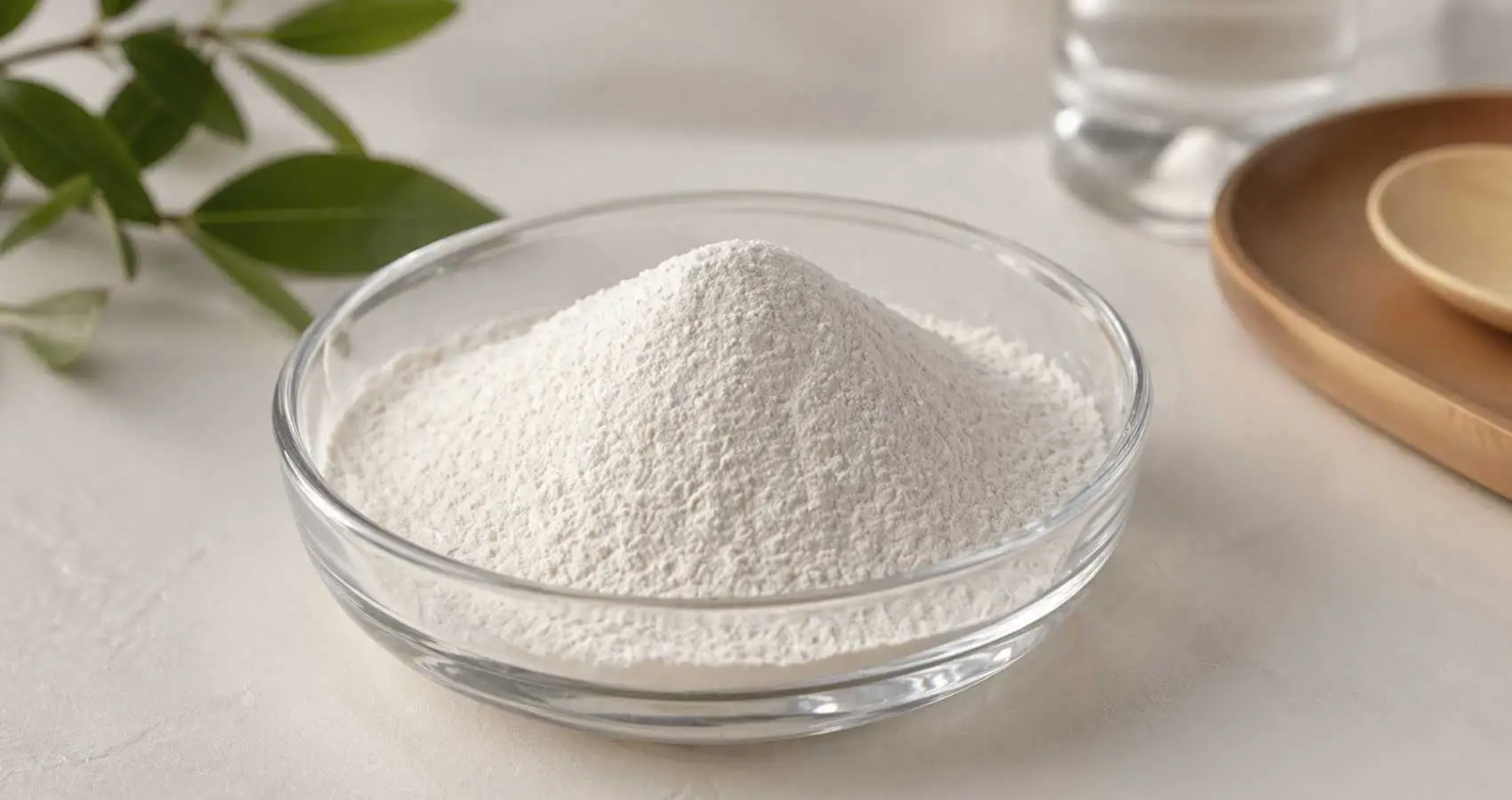
Understanding Chondroitin Sulfate Purity: What Does 90% and 95% Actually Mean?
When discussing chondroitin sulfate purity, it is important to understand what these percentages represent in an industrial context.
Definition of Purity and Assay
The stated purity of chondroitin sulfate raw material—such as 90% or 95%—generally refers to the assay value of active chondroitin sulfate within the material. This means that in a 90% grade, approximately 90% of the material consists of the target compound, while the remaining portion may include moisture, salts, or other naturally occurring components from the extraction and purification process.
It is important to note that a lower percentage does not necessarily indicate inferior quality. Instead, it reflects a different balance between purity and processing considerations, which may be suitable for specific applications.
How Purity Is Verified in Industrial Supply
In commercial transactions, chondroitin sulfate specification is typically confirmed through a Certificate of Analysis (COA), which provides:
•Assay values
•Physical characteristics
•Basic quality indicators
For procurement teams, reviewing COA data is a standard step when evaluating a chondroitin sulfate supplier, as it ensures that the material meets expected quality parameters for production use.
Why Purity Differences Matter in Manufacturing
In practical terms, the difference between chondroitin sulfate 90% vs 95% becomes relevant in how the material is used within a formulation.
Higher purity may offer:
More precise control over active content
Greater consistency in high-spec formulations
At the same time, slightly lower purity grades can provide:
•Improved cost efficiency
•Adequate performance for many standard applications
For manufacturers, this creates a trade-off between formulation precision and cost optimization, rather than a simple “higher is always better” decision.
Key Differences Between Chondroitin Sulfate 90% and 95%
When comparing chondroitin sulfate 90% vs 95%, the differences extend beyond numerical purity. Buyers should evaluate how each grade aligns with their specific product requirements and business model.
Factor 90% Grade 95% Grade Buyer Consideration
Purity Moderate Higher Required potency level
Cost More cost-effective Higher cost Budget and pricing strategy
Application General formulations High-spec products Product positioning
Formulation flexibility Suitable for blends More precise control Manufacturing requirements
Market positioning Mass-market products Premium products Target consumer segment
Cost and Procurement Strategy
One of the most immediate differences between the two grades is cost. Chondroitin sulfate bulk at 95% purity typically carries a higher price due to additional processing and tighter quality control.
For manufacturers operating in cost-sensitive markets, 90% grade often provides a practical balance between functionality and budget.
Application Suitability
From a formulation standpoint, both grades can be used in supplement and cosmetic applications. However:
Chondroitin sulfate 95% is often selected for formulations requiring higher active concentration
Chondroitin sulfate 90% is commonly used in combination products where multiple ingredients contribute to overall functionality
This distinction is particularly relevant in multi-ingredient systems, where the role of each component must be considered in context.
Market and Product Positioning
In many cases, the choice between chondroitin sulfate 90% vs 95% is influenced by how the final product is positioned in the market.
Premium products may emphasize higher purity specifications
Standard products may prioritize cost efficiency and formulation balance
For distributors and contract manufacturers, offering both options allows greater flexibility in meeting different customer needs.
Which Grade Is Better for Dietary Supplements?
For supplement manufacturers, selecting the appropriate chondroitin sulfate for supplements depends on formulation goals, target market, and pricing strategy.
When 95% Grade Is Preferred
Higher purity chondroitin sulfate 95% is typically used in formulations where:
•Precise dosage control is required
•The ingredient is positioned as a key active component
•The product is targeted at premium market segments
In these cases, higher purity can simplify formulation calculations and support product differentiation.
When 90% Grade Is Sufficient
In many commercial formulations, chondroitin sulfate 90% provides sufficient functionality, particularly when used alongside other ingredients such as:
•Glucosamine
•Collagen
•MSM
For combination products, the overall formulation design often matters more than maximizing the purity of a single ingredient. As a result, 90% grade is widely used in cost-effective supplement lines.
Market Positioning and Product Strategy
From a commercial perspective, the decision between chondroitin sulfate raw material grades is closely tied to product positioning.
Premium formulations may justify higher input costs
Mass-market products often require tighter cost control
At CHEN LANG BIO TECH, we typically see that supplement manufacturers choose between 90% and 95% based on their target market segment rather than purity alone. This approach allows for more efficient product development and pricing alignment.
Which Grade Works Better for Skincare Formulations?
While chondroitin sulfate is traditionally associated with supplements, its use in cosmetic formulations has expanded, particularly in products focused on hydration and skin conditioning.
From a formulation perspective, the choice between chondroitin sulfate 90% vs 95% in skincare applications is less about maximizing purity and more about compatibility, stability, and overall formulation design.
Formulation Compatibility
In cosmetic systems, chondroitin sulfate in skincare is typically used alongside multiple functional ingredients, including humectants, polymers, and emulsifiers.
In this context:
•Chondroitin sulfate 90% is often sufficient for most formulations
•It integrates well into multi-ingredient systems
•It provides flexibility without significantly increasing formulation cost
Higher purity does not necessarily translate into improved performance in topical applications.
Stability and Functional Role
In skincare products, chondroitin sulfate is generally used as a supportive ingredient within a broader formulation system.
Its role may include:
•Contributing to hydration systems
•Supporting texture and skin feel
•Enhancing formulation balance
For these functions, both 90% and 95% grades can be suitable, depending on formulation priorities.
Cost Efficiency in Cosmetic Development
For many cosmetic manufacturers, cost efficiency is a key factor when selecting raw materials.
Because skincare formulations often include multiple active and functional components, using chondroitin sulfate 90% can provide a more balanced cost-performance ratio, especially in large-scale production.
For most skincare applications, chondroitin sulfate 90% is widely considered sufficient, as formulation compatibility and system balance are more important than maximum purity.
Cost vs Performance: How to Balance Budget and Product Quality
In bulk sourcing, the decision between chondroitin sulfate 90% vs 95% is often driven by the relationship between cost and functional performance.
Understanding Cost Differences
Higher purity grades typically require additional processing and tighter control, which leads to:
•Increased production cost
•Higher bulk pricing
As a result, chondroitin sulfate 95% is generally more expensive than 90% grade.
Performance Considerations
In practical applications:
•The performance gap between 90% and 95% may not always be significant
•Many formulations achieve the desired outcome without requiring the highest purity
This is especially true in multi-ingredient systems where overall formulation design plays a larger role.
Balancing Cost and Application Needs
For procurement teams, the key question is not:
“Which grade is better?”
But rather:
“Which grade delivers the required performance at the right cost?”
In most commercial applications, chondroitin sulfate 90% offers a cost-effective solution, while 95% grade is typically reserved for higher-spec or premium formulations.
Common Mistakes Buyers Make When Choosing Between 90% and 95%
When sourcing chondroitin sulfate raw material, buyers—especially those new to the category—often make decisions based on incomplete criteria.
Focusing Only on Purity
A common misconception is that higher purity automatically means better performance.
In reality:
•Application requirements should guide grade selection
•Over-specifying purity can increase cost without clear benefit
Ignoring Formulation Context
Another mistake is evaluating chondroitin sulfate 90% vs 95% in isolation.
In practice:
•The ingredient functions within a broader system
•Compatibility with other components is equally important
Overlooking Supply Stability
Choosing a supplier based only on price or specification can introduce risks related to:
•Batch variability
•Delayed supply
•Inconsistent documentation
The most effective sourcing decisions consider application, cost, and supplier reliability—not purity alone.
How to Choose the Right Grade for Your Product
Selecting the appropriate chondroitin sulfate raw material requires a structured approach.
•Step 1: Define the Application
Supplements → focus on dosage and positioning
Skincare → focus on compatibility and stability
•Step 2: Define Product Positioning
Premium product → consider 95%
Cost-sensitive product → consider 90%
•Step 3: Evaluate Supplier Capability
A reliable chondroitin sulfate supplier should provide:
•Consistent quality
•Clear specifications
•Responsive communication
The right grade depends on application, market positioning, and supplier reliability—not purity alone.
Bulk Supply Options for Different Grades
From a sourcing perspective, both grades are typically available in standard commercial formats.
At CHEN LANG BIO TECH, we provide:
Chondroitin sulfate 90% and 95%
Raw materials derived from bovine and poultry (including chicken) sources
MOQ starting from 1 kg, suitable for testing and development
Packaging options including:
•1 kg aluminum foil bags
•25 kg paper drums
This structure allows customers to scale from initial evaluation to bulk procurement efficiently.
Choosing a Reliable Chondroitin Sulfate Supplier
When selecting a chondroitin sulfate manufacturer, experienced buyers typically focus on:
•Consistency of product quality
•Transparency of raw material sourcing
•Availability of COA and specifications
•Communication and response efficiency
A supplier that can support both technical and commercial requirements is better suited for long-term cooperation.
Supplier reliability and consistency are often more important than small differences in specification or price.
Final Recommendation: Which Grade Should You Choose?
There is no single “best” option when comparing chondroitin sulfate 90% vs 95%.
Instead, the optimal choice depends on:
•Product application
•Market positioning
•Cost considerations
For many commercial applications, 90% grade provides sufficient performance, while 95% grade is more suitable for premium formulations or cases requiring higher precision.
Choose the grade that aligns with your formulation needs and business strategy, rather than defaulting to the highest purity.
Frequently Asked Questions About Chondroitin Sulfate 90% vs 95%
1. What is the difference between chondroitin sulfate 90% and 95%?
The main difference between chondroitin sulfate 90% vs 95% lies in the purity level of the active compound.
•90% grade contains approximately 90% active chondroitin sulfate
•95% grade contains a higher concentration of the active ingredient
In practice, the choice depends on application requirements, formulation design, and cost considerations rather than purity alone.
2. Is chondroitin sulfate 95% always better than 90%?
Not necessarily. While chondroitin sulfate 95% offers higher purity, it is not always required.
•95% is typically used in premium or high-spec formulations
•Chondroitin sulfate 90% is widely used in standard formulations and combination products
For many applications, 90% grade provides sufficient performance with better cost efficiency.
3. Which grade is more suitable for dietary supplements?
Both grades are used in supplements, but selection depends on product positioning.
•Chondroitin sulfate 95% is preferred for products requiring precise dosage or premium positioning
•Chondroitin sulfate 90% is commonly used in cost-effective or multi-ingredient formulations
Manufacturers often choose based on formulation strategy and target market.
4. Which grade is better for skincare formulations?
In most cosmetic applications, chondroitin sulfate 90% is sufficient.
Skincare formulations focus more on:
•Compatibility with other ingredients
•Stability within the formulation system
Higher purity does not necessarily provide additional functional benefit in topical applications.
5. How does purity affect the price of chondroitin sulfate?
Purity has a direct impact on cost.
Chondroitin sulfate 95% is generally more expensive due to additional processing
90% grade offers a more cost-effective option for large-scale production
Buyers typically balance purity requirements with budget constraints.
6. What should buyers consider when choosing between 90% and 95%?
When selecting chondroitin sulfate raw material, buyers should evaluate:
Application (supplement vs skincare)
Product positioning (premium vs standard)
Cost-performance balance
Supplier reliability
These factors are often more important than purity alone.
7. What is the typical MOQ for chondroitin sulfate bulk supply?
MOQ depends on the supplier. Some manufacturers offer flexible options.
For example, chondroitin sulfate bulk supply can start from:
•1 kg for sample or R&D testing
•Larger quantities for commercial production
This flexibility allows buyers to test materials before scaling up.
8. What packaging options are available for bulk chondroitin sulfate?
Standard packaging for chondroitin sulfate powder bulk typically includes:
•1 kg aluminum foil bags for small quantities
•25 kg paper drums for bulk orders
These formats are designed for safe storage and international shipping.
Request Samples or Bulk Quote
If you are evaluating chondroitin sulfate bulk supply for supplement or skincare applications, selecting the right grade is only part of the process.
At CHEN LANG BIO TECH, we support customers with:
Chondroitin sulfate 90% and 95% options
Raw materials from bovine and poultry sources
Low MOQ starting from 1 kg
Standard bulk packaging and export-ready supply
Our team can provide:
•Specification sheets and COA
•Sample support for testing
•Bulk quotation based on your requirements
👉 Contact us Email: admin@chenlangbio.com to discuss your project or request a sample.

Send Inquiry
Related Industry Knowledge
- Choosing the Right Insecticide: The Benefits of Natural Pyrethrin Over Synthetics
- How Should D-Luciferin Potassium Salt be Stored?
- How Does PQQ Support Mitochondrial Function?
- Health Benefits of Pelargonium Sidoides Extract
- Benefits of Water Soluble Coenzyme Q10
- Top 5 Benefits of Witch Hazel Leaf Extract for Skin
- Unlocking the Skin Benefits of Paeoniflorin 80%
- What Happens If a Human Takes Praziquantel
- What Does Fisetin Do For The Body?
- What is Melatonin Extract Powder