
Berberine HCl HPLC Testing: Assay, Identification and Purity
November 9, 2026
Berberine HCl HPLC testing is used to evaluate the identity, quantitative content, and chromatographic impurity profile of berberine hydrochloride raw materials. However, these analytical objectives are not interchangeable. Identification establishes whether a sample is consistent with the expected substance, quantitative assay measures its content using an appropriate calibration procedure, and impurity analysis evaluates specified related substances under defined chromatographic conditions.
For dietary supplement manufacturers, a reported purity of 98% has limited meaning unless the analytical method, reference standard, calculation procedure, and reporting basis are understood. In particular, HPLC peak-area percentage should not automatically be interpreted as weight-based purity.
This guide explains the technical principles behind berberine HCl purity testing, including method validation, chromatogram interpretation, and supplier verification. It also provides practical guidance for evaluating berberine HCl raw material testing before approving samples or commercial production lots.
What Berberine HCl HPLC Testing Can Establish About Raw Material Quality
High-performance liquid chromatography separates sample components according to their interactions with the stationary phase and mobile phase. When combined with a suitable detector, it can support several important aspects of berberine HCl quality control.
However, the reliability of the result depends on whether the berberine HCl HPLC method is appropriate for the intended analytical purpose.
Berberine HCl Identification, Quantitative Assay and Impurity Analysis
Three analytical objectives should be distinguished during raw material qualification.
|
Analytical Objective |
What HPLC Can Establish |
Important Limitation |
|
Identification |
Chromatographic behavior consistent with an authenticated reference |
Retention time alone is not conclusive structural identification |
|
Quantitative assay |
Amount of a defined analyte using an appropriate calibration procedure |
Does not establish the absence of all impurities |
|
Related-substance analysis |
Presence or level of detectable impurities within the method's scope |
Cannot detect substances outside the method's analytical capability |
For berberine HCl quantitative analysis, the method must produce a reliable relationship between detector response and analyte concentration.
By contrast, an identification method may rely on comparison with a reference standard, while a related-substance method requires adequate separation and sensitivity for relevant impurities.
Limitations of Berberine HCl HPLC Testing in Supplier Quality Control
HPLC is not a comprehensive safety test.
A satisfactory chromatogram does not establish compliance with elemental contaminant, residual solvent, or microbiological specifications. Those attributes generally require different analytical approaches.
Similarly, an HPLC method developed to quantify berberine may not be sufficiently selective or sensitive to measure every related alkaloid.
Therefore, buyers should assess HPLC results within the broader raw material specification rather than treating a single chromatographic result as proof of overall ingredient quality.
Berberine HCl Identification by HPLC: Retention Time and Reference Standards
Correct chemical identification should precede quantitative assay. An accurately measured concentration is of little value if the analytical method has not adequately established the identity of the substance being measured.
Berberine HCl Identification Test Using an Authenticated Reference Standard
A suitable berberine HCl identification test commonly involves comparing the chromatographic behavior of a prepared sample with that of an authenticated reference material.
Berberine chloride, CAS 633-65-8, has an anhydrous molecular formula of C₂₀H₁₈ClNO₄ and a molecular weight of approximately 371.81 g/mol. However, commercial materials may differ in hydration state, which must be considered when interpreting assay results.
A qualified berberine HCl reference standard should have documented identity, assigned content or potency where relevant, appropriate storage conditions, and suitable traceability.
During testing, the laboratory should prepare the reference and sample solutions using controlled procedures. Their chromatographic behavior can then be compared under the same analytical conditions.
Where appropriate, UV or diode-array detection may provide additional spectral information to support identification.
Nevertheless, the evidence must be interpreted according to the selectivity and limitations of the method.
Why HPLC Retention Time Alone Cannot Confirm Berberine HCl Identity
Retention time describes when a component elutes from the chromatographic system under specified conditions.
It can change with mobile-phase composition, flow rate, column temperature, stationary-phase characteristics, and other operating parameters.
More importantly, different compounds may exhibit similar retention times or coelute.
Consequently, a matching retention time is supportive evidence rather than absolute proof of chemical identity.
When additional confirmation is necessary, laboratories may use orthogonal analytical techniques, such as mass spectrometry or appropriate spectroscopic methods.
For buyers reviewing a berberine HCl HPLC chromatogram, the essential question is whether the identification procedure provides sufficient specificity for the material and its potential interferences.
Berberine HCl HPLC Assay: Quantitative Analysis and Calibration
A quantitative berberine HCl HPLC assay determines the amount of a specified analyte in the sample.
Unlike simple peak-area normalization, quantitative analysis requires a calibrated relationship between detector response and analyte concentration, together with appropriate corrections for sample preparation and reference standard potency.
Berberine HCl HPLC Calibration Curve and External Standard Quantification
External standard calibration is a commonly used approach in quantitative chromatography.
A laboratory prepares reference solutions of known concentration and measures their chromatographic responses. Depending on the method, quantification may use a validated single-point external standard procedure or a multipoint calibration model.
For a linear calibration, the relationship can be expressed as:
A=mC+b
Where:
A= measured chromatographic peak area
m= calibration slope
C= analyte concentration
b= calibration intercept
The sample concentration can then be calculated as:
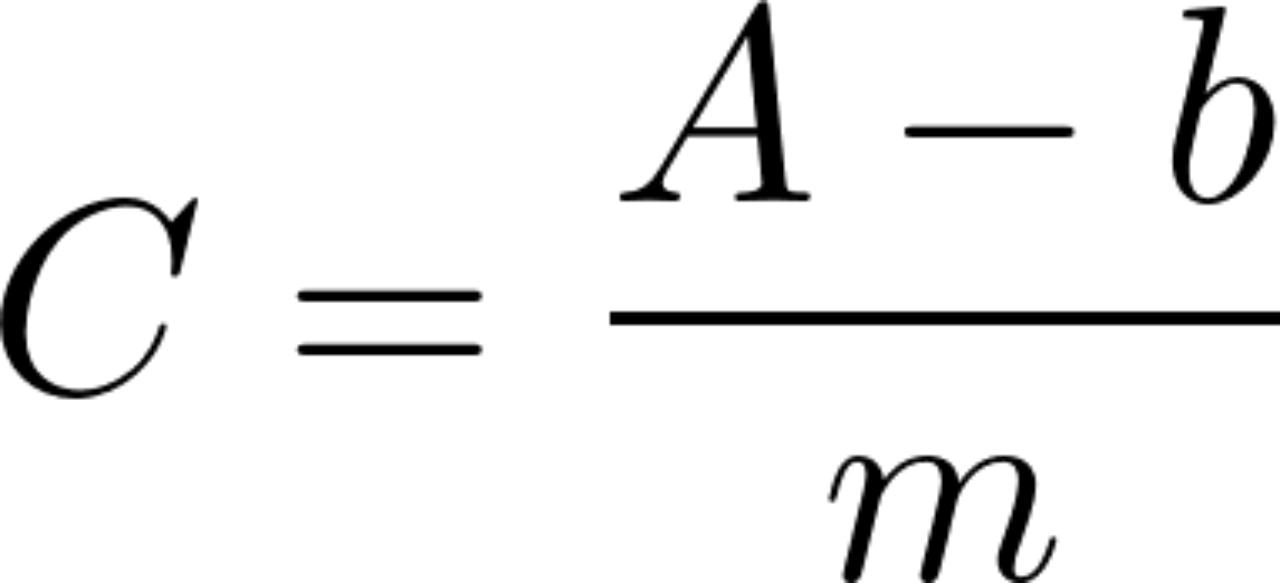
The berberine HCl HPLC calibration curve must be suitable for the expected concentration range. A strong correlation coefficient alone does not establish that the entire analytical procedure is accurate.
Calibration performance should be considered alongside appropriate validation evidence, including accuracy, precision, specificity, and the established working range.
Berberine HCl Assay Calculation: Sample Weight, Dilution and Standard Potency
A defensible berberine HCl assay method must account for the actual sample mass, solution volume, dilution factors, and reference standard assignment.
The calculation also needs to reflect whether the reported analyte is berberine chloride, a hydrate, or another defined chemical basis.
Consider an illustrative example.
A laboratory weighs 10.00 mg of powder. After appropriate calibration, dilution corrections, and standard potency adjustments, the calculated mass of the specified analyte is 9.80 mg.
The berberine HCl assay calculation is:

This simplified example assumes that the analyte mass and sample mass are expressed on compatible bases.
In actual laboratory practice, analysts must also consider weighing uncertainty, sample preparation recovery, standard purity, dilution accuracy, and any required moisture or molecular-form correction.
For procurement teams, the key requirement is not to reproduce the laboratory calculation independently, but to confirm that the supplier's reported assay is based on a scientifically appropriate and documented quantitative procedure.
Berberine HCl HPLC Peak Area vs Actual Assay Purity
One of the most important distinctions in berberine HCl HPLC testing is the difference between chromatographic peak-area percentage and quantitative assay.
These measurements can produce similar numerical values while representing fundamentally different analytical information.
Why Berberine HCl HPLC Peak Area Percentage Is Not Weight-Based Purity
Peak-area normalization expresses the area of a selected chromatographic peak as a proportion of the total integrated peak area.

Suppose a chromatogram contains a berberine peak representing 98% of the integrated detector response.
This does not necessarily establish that 98% of the powder's mass consists of berberine hydrochloride.
Different substances may produce different detector responses at the selected wavelength. Some impurities may not be detected, while others may fall below the method's reporting threshold.
Water, inorganic salts, and residual solvents may also be absent from the chromatographic result.
Therefore, berberine HCl peak area vs assay is not simply a matter of terminology.
A 98% HPLC peak area does not necessarily mean 98% Berberine HCl by weight.
A quantitative assay must use an appropriate calibration and reporting procedure to establish mass-based content.
Berberine HCl Purity on an As-Is Basis vs Dried Basis
Another common source of confusion is the reporting basis.
An as-is assay describes analyte content relative to the original sample mass. A dried-basis assay expresses content after correcting for the specified mass loss or moisture contribution, according to the method.
For example, consider a material with a dried-basis assay of 98.0% and an assumed moisture content of 2.0%.
Under the appropriate correction assumptions:


The difference is substantial when comparing commercial specifications.
This example is illustrative. Loss on drying may include volatile substances other than water, so it should not automatically be treated as identical to a water-specific measurement.
For meaningful berberine HCl purity testing, buyers should confirm whether the result is reported on an as-is, dried, or another explicitly defined basis.
Berberine HCl HPLC Method Validation: Accuracy, Precision and Specificity
An HPLC method can produce reproducible chromatograms without necessarily providing accurate results. For this reason, berberine HCl HPLC method validation should demonstrate that the analytical procedure is suitable for its intended purpose.
Berberine HCl HPLC Method Validation Under ICH Q2(R2) Principles
ICH Q2(R2), Validation of Analytical Procedures, provides a recognized framework for evaluating analytical method performance.
The relevant validation characteristics depend on whether the procedure is intended for identification, quantitative assay, or impurity determination.
|
Validation Characteristic |
Technical Significance |
Buyer-Relevant Question |
|
Specificity / Selectivity |
Ability to assess the analyte in the presence of relevant interferences |
Can related alkaloids interfere with the result? |
|
Accuracy |
Agreement with an accepted reference value |
Has quantitative recovery been adequately demonstrated? |
|
Repeatability |
Variation under the same operating conditions |
Are repeated results sufficiently consistent? |
|
Intermediate precision |
Variation across relevant laboratory conditions |
Is performance maintained across analysts or days? |
|
Response / Calibration |
Relationship between analyte amount and measured signal |
Is the calibration model appropriate? |
|
Range |
Concentrations over which performance is suitable |
Does the sample concentration fall within the validated range? |
|
Robustness |
Sensitivity to deliberate variations in method parameters |
Can the method tolerate relevant operating variations? |
Not every characteristic is evaluated in the same way for every analytical procedure.
For example, a quantitative assay requires appropriate evidence of accuracy and precision, while a limit test may place greater emphasis on selectivity and detection capability.
Method-specific acceptance criteria should be scientifically justified. A single universal recovery percentage or relative standard deviation limit should not be imposed without considering the procedure and its intended use.
Berberine HCl HPLC System Suitability and Analytical Reliability
System suitability testing evaluates whether the chromatographic system is performing adequately before or during analysis.
Depending on the method, relevant parameters may include peak-area repeatability, retention behavior, peak symmetry, theoretical plates, and resolution between critical components.
For an impurity method, adequate resolution may be particularly important when berberine must be separated from structurally related alkaloids.
For a quantitative assay, injection precision and stable detector response may be central to reliable measurement.
A method can be validated yet still produce unreliable results if the system fails its suitability requirements during a particular analytical run.
Therefore, berberine HCl HPLC testing accuracy should be evaluated through both method performance evidence and appropriate routine system controls.
Berberine HCl Related Alkaloids and HPLC Impurity Analysis
Berberine is found in several medicinal plants alongside other alkaloids. Depending on the botanical source and purification process, related compounds may remain in the finished ingredient.
Berberine HCl Related Alkaloids: Palmatine, Coptisine and Other Components
Potential berberine HCl related alkaloids include palmatine and coptisine, which have been identified in berberine-containing botanical materials.
Their presence and relative concentrations depend on the plant species, raw material composition, extraction conditions, and purification process.
Because these compounds have structural similarities to berberine, their chromatographic behavior deserves attention.
A method designed exclusively for berberine quantification may not provide sufficient information about all related substances.
For this reason, buyers should distinguish between a quantitative assay specification and a separate impurity-profile requirement.
Berberine HCl Impurity Analysis and Chromatographic Separation
Effective berberine HCl impurity analysis requires appropriate separation of relevant components and adequate detection capability.
A minor peak should not be assigned to a specific alkaloid solely because its retention time resembles a published value.
Reliable identification may require authenticated standards, spectral evidence, or additional analytical techniques.
Similarly, a chromatogram with few visible peaks does not establish the absence of nonchromophoric contaminants or substances outside the method's detection range.
For commercial raw material qualification, the impurity method should be evaluated against the supplier's manufacturing process, the purchaser's specifications, and the risks associated with the intended application.
How Supplement Buyers Should Evaluate Berberine HCl HPLC Test Results
A technically credible berberine HCl certificate of analysis should provide sufficient information for the buyer to understand what was measured, how the result was obtained, and whether it meets the agreed specification.
Berberine HCl Certificate of Analysis: HPLC Method and Result Verification
When reviewing berberine HCl supplier testing, procurement and quality teams should verify the following information.
|
Review Item |
What Buyers Should Confirm |
|
Material identification |
Correct chemical form and batch number |
|
Analytical method |
Defined method or suitable method reference |
|
Reference standard |
Appropriate identity, assigned content and qualification |
|
Assay result |
Quantitative result rather than unexplained peak-area percentage |
|
Reporting basis |
As-is, dried basis, or another defined basis |
|
Acceptance criteria |
Agreement with the approved specification |
|
Method suitability |
Evidence appropriate to the analytical purpose |
|
Batch traceability |
Correspondence between the report and supplied material |
A complete berberine HCl HPLC chromatogram may provide additional information, but its interpretation requires knowledge of the method, detector conditions, integration settings, and sample preparation.
Buyers should request supporting analytical information when results are ambiguous, inconsistent, or critical to supplier approval.
Berberine HCl Third Party Testing for Raw Material Qualification
Independent berberine HCl third party testing can provide additional confidence during supplier qualification, particularly when establishing a new source or investigating discrepancies.
However, results from different laboratories are not necessarily directly comparable.
Differences in sample preparation, reference standards, analytical methods, and reporting bases can produce apparent disagreements.
Before drawing conclusions, the laboratories should establish whether they measured the same analyte using comparable procedures.
For berberine HCl sample testing, representative sampling and clear acceptance criteria are as important as selecting a competent laboratory.
Berberine HCl Supplier Testing and Batch Consistency for Bulk Orders
A satisfactory laboratory sample is an important starting point, but long-term berberine HCl batch consistency requires evidence across commercial production lots.
Berberine HCl Batch Consistency and Commercial Lot Verification
Buyers should confirm whether the qualification sample represents the material that will be supplied commercially.
Subsequent batches should be evaluated against the same approved specifications using appropriate analytical procedures.
Changes in botanical sourcing, purification, analytical methods, or production arrangements may require additional assessment.
Where sufficient data are available, reviewing assay and impurity trends across multiple lots can help identify emerging variability before it results in a specification failure.
Berberine HCl Bulk Quality Control Before Supplier Approval
For a berberine HCl raw material supplier, dependable quality means more than achieving a high assay result on one occasion.
Effective berberine HCl bulk quality control should support consistent specifications, traceable batch records, appropriate change management, and timely investigation of deviations.
Buyers should evaluate these capabilities alongside manufacturing capacity and delivery reliability.
Berberine HCl Bulk Purchasing: Samples, Specifications and Quotation Requirements
When buyers buy berberine HCl powder in bulk, technical specifications should be established before commercial quotations are compared.
Berberine HCl Sample Testing Before Commercial Orders
A representative sample of bulk berberine HCl powder allows manufacturers to evaluate identity, assay, impurity requirements, and formulation suitability before committing to larger quantities.
For berberine HCl powder for supplement manufacturing, sample qualification should follow the purchaser's approved testing requirements rather than relying exclusively on supplier-reported purity.
Berberine HCl Price per kg, MOQ and Bulk Quotation
The berberine HCl price per kg should be evaluated alongside assay specifications, analytical documentation, packaging, and delivery conditions.
A berberine HCl wholesale supplier should be able to clarify available grades, documentation, and purchasing arrangements.
Before requesting a berberine HCl bulk quotation, buyers should provide their required specification, estimated quantity, destination market, and documentation requirements.
The berberine HCl MOQ and final commercial terms should be confirmed against current availability.
Berberine HCl Powder Supply and Quality Documentation from CHEN LANG BIO TECH
At CHEN LANG BIO TECH, we understand that reliable ingredient sourcing requires more than a stated purity percentage. Supplement manufacturers and distributors need clearly defined specifications, appropriate analytical documentation, and dependable commercial supply arrangements.
If you are evaluating a high purity berberine HCl supplier, our team can discuss available specifications, current batch documentation, sample requirements, and purchasing conditions.
As a berberine HCl powder manufacturer and ingredient supplier, we welcome technical inquiries from customers who need to qualify raw materials before commercial production.
Contact us Email: admin@chenlangbio.com with your target assay, required documentation, estimated purchasing volume, and destination market.
Frequently Asked Questions About Berberine HCl HPLC Testing
What does Berberine HCl HPLC testing measure?
Berberine HCl HPLC testing can support identification, quantitative assay, and related-substance analysis. Each objective requires a suitable analytical procedure, and the resulting data should be interpreted according to the method's validated scope.
Can HPLC confirm Berberine HCl identity?
HPLC can support identification through comparison with an authenticated reference standard. However, retention time alone is not conclusive structural evidence. Additional spectral or orthogonal analytical information may be necessary.
Is 98% HPLC peak area the same as 98% assay purity?
No. Peak-area percentage represents relative detector response among integrated peaks, whereas quantitative assay measures analyte content using an appropriate calibration procedure. Different detector responses and undetected components can make these values substantially different.
What reference standard is used for Berberine HCl HPLC assay?
A suitable, qualified berberine chloride reference standard with documented identity and assigned content should be used. The specific standard and any required potency or molecular-form corrections depend on the analytical procedure.
Should supplement buyers request independent Berberine HCl testing?
Independent testing can be valuable when qualifying new suppliers, confirming critical specifications, or investigating inconsistent results. The decision should reflect applicable requirements, ingredient risk, supplier qualification status, and the manufacturer's quality procedures.
Conclusion — Berberine HCl HPLC Testing and Reliable Ingredient Sourcing
Reliable berberine HCl HPLC testing requires more than a chromatogram and a reported purity percentage.
Identification depends on suitable reference evidence. Quantitative assay requires appropriate calibration, sample preparation, and calculation. Impurity analysis must demonstrate adequate selectivity for relevant substances.
For supplement manufacturers, these technical considerations should form part of a broader supplier qualification process that includes representative samples, batch-specific documentation, and consistent specifications.
Before approving a commercial ingredient source, buyers should confirm that the analytical evidence supports the quality claims being made and that the supplier can maintain those requirements across future shipments.
References
1. International Council for Harmonisation (ICH). Q2(R2): Validation of Analytical Procedures. Final guideline, 2023.
2. International Council for Harmonisation (ICH). Q14: Analytical Procedure Development. Final guideline, 2023.
3. United States Pharmacopeia (USP). General Chapter <621>: Chromatography.
4. United States Pharmacopeia (USP). General Chapter <1225>: Validation of Compendial Procedures.
5. International Organization for Standardization. ISO/IEC 17025:2017 — General Requirements for the Competence of Testing and Calibration Laboratories.
6. U.S. Food and Drug Administration. 21 CFR Part 111 — Current Good Manufacturing Practice in Manufacturing, Packaging, Labeling, or Holding Operations for Dietary Supplements.
7. Snyder, L. R., Kirkland, J. J., and Dolan, J. W. Introduction to Modern Liquid Chromatography. 3rd edition. Wiley, 2010.
8. Dong, M. W. Modern HPLC for Practicing Scientists. Wiley-Interscience, 2006.

Send Inquiry
You may like