
What is Trans-resveratrol Used For
2025-12-11 13:19:01
As more brands explore what trans-resveratrol is used for across dietary supplements, skincare, and functional nutrition, one thing has become clear: the purity and origin of this ingredient determine its real value. Trans-resveratrol is widely recognized for its antioxidant properties, its role in longevity formulations, and its growing presence in anti-aging skincare and functional food products. From cardiovascular support to inflammation management, the ingredient has earned a stable position in today’s natural health market.
As a manufacturer specializing in high quality control trans-resveratrol for over a decade, we work closely with formulators, brand owners, and purchasing teams who want to understand not only the benefits of trans-resveratrol but also how to choose the right grade for their finished products. Whether a customer is developing a longevity supplement, a whitening or anti-aging serum, or a functional beverage, the questions tend to be the same: How stable is the ingredient? What purity is ideal? What makes one supplier more reliable than another?
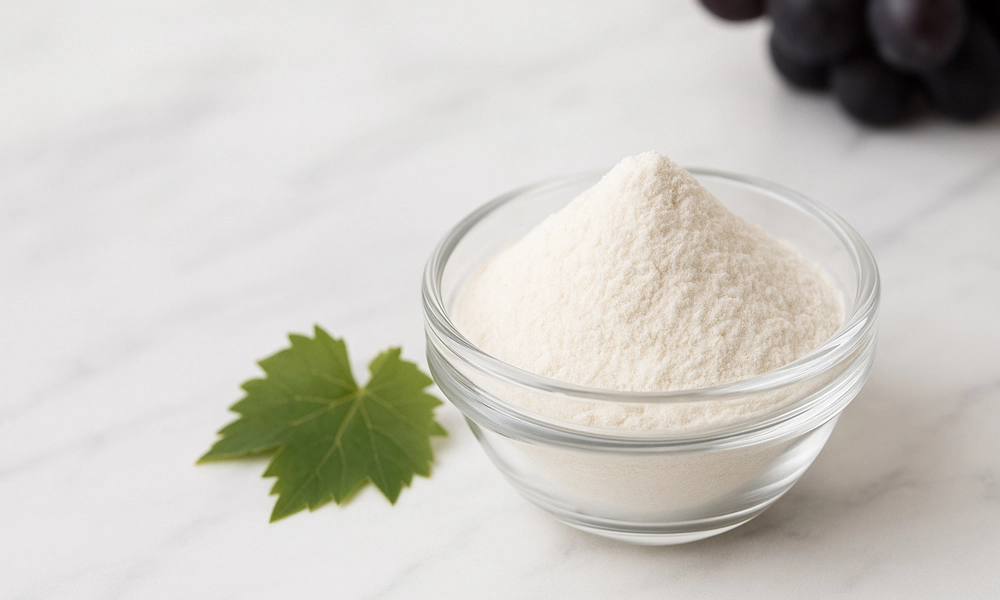
In this guide, we share a practical overview from a producer’s perspective—covering the most common applications of trans-resveratrol, the science behind its benefits, formulation considerations, and market trends influencing today’s demand for natural antioxidants. Our goal is to help you evaluate which type of trans-resveratrol best fits your product line and how to source it with confidence.
Understanding Trans-Resveratrol – Benefits Backed by Research
When discussing the practical value of trans-resveratrol, it helps to first understand what sets this molecule apart. Trans-resveratrol is the bioactive form of resveratrol—the configuration most recognized for its stability and biological activity. Thanks to its strong antioxidant properties, it has become a preferred ingredient in formulas targeting cellular protection, healthy aging, and metabolic support.
Much of the interest from supplement brands comes from research on how trans-resveratrol interacts with pathways related to longevity, inflammation, and oxidative stress. These mechanisms explain why it appears so frequently in formulations designed for cardiovascular support and overall well-being. Consumers today aren’t just looking for general antioxidants; they want ingredients with measurable purity and scientifically supported functionality. This is where trans-resveratrol shows clear advantages.
From a production standpoint, we see how purity directly influences performance. High-purity material offers more predictable results in finished products—whether it’s improved stability in capsules or consistent color in cosmetic formulations. Brands often ask why trans-resveratrol is preferred over other plant-derived polyphenols. Beyond its research foundation, it offers a rare combination of potency, versatility, and compatibility with a wide range of delivery formats.
For formulators working in skincare, trans-resveratrol is valued for its ability to help protect the skin against photoaging and environmental stress. Its role in brightening and anti-aging formulations has grown steadily, particularly as consumers shift toward natural ingredient profiles. For supplement developers, the ingredient’s adaptability makes it suitable for standalone capsules, blends with NMN or quercetin, and functional powders targeting active or wellness-focused lifestyles.
⭐ What Trans-Resveratrol Is Used For in Dietary Supplements
In the supplement industry, trans-resveratrol has become a core ingredient for brands focusing on healthy aging and metabolic wellness. Its growing demand is driven by research-supported applications, especially in formulas designed for longevity, cardiovascular support, and inflammation management. These consumer health priorities explain why the search volume for terms like trans-resveratrol for longevity, trans-resveratrol for cardiovascular support, and trans-resveratrol for inflammation continues to rise across global markets.
One of the reasons formulators prefer trans-resveratrol is its ability to support pathways linked to cellular renewal and oxidative balance. In many of the projects we support, brand owners pair trans-resveratrol with synergistic ingredients such as NMN, quercetin, grape seed extract, or NAD+ boosters. These combinations allow formulators to create more sophisticated blends targeting energy, recovery, and long-term wellness—all areas where trans-resveratrol aligns naturally.
Another important application is its role in active lifestyle formulas. Whether positioned for metabolic balance, exercise recovery, or antioxidant protection, the ingredient’s versatility makes it suitable for capsules, tablets, effervescent powders, and ready-to-mix blends. Because of its consistent performance and high stability when handled correctly, trans-resveratrol remains one of the most reliable polyphenols used in premium supplement lines.
From our perspective as a manufacturer, product developers often care most about two factors: purity and consistency. A higher assay ensures a more accurate dose in the final product, which is especially important when positioning formulas around performance claims. This is why many customers ultimately choose high-purity versions such as 98% trans-resveratrol—offering both scientific credibility and formulation efficiency.
⭐ How Trans-Resveratrol Is Used in Skincare Formulations
It has earned a strong position in modern skincare, particularly in formulas targeting environmental protection, brightening, and visible signs of aging. As consumer demand shifts toward naturally derived actives, more cosmetic brands are incorporating this ingredient for its proven ability to help defend the skin against oxidative stress and UV-related damage. These functions explain the rising interest in trans-resveratrol for skin whitening and trans-resveratrol for anti-aging skincare across both professional and retail markets.
In topical formulations, trans-resveratrol works through multiple mechanisms. Its antioxidant capacity supports the skin’s natural repair processes, which can help improve radiance and maintain an even-toned complexion. At the same time, its influence on pathways related to pigmentation makes it a valuable addition to brightening serums and multifunctional anti-aging products. Many formulators today use it to enhance the performance of ingredients like niacinamide, vitamin C derivatives, hyaluronic acid, and botanical brightening agents.
From a technical standpoint, stability and appearance matter greatly in cosmetics. Because trans-resveratrol can be sensitive to light and oxygen, choosing the right grade and particle size ensures better compatibility with emulsions, gels, and serum bases. This is one of the reasons why cosmetic developers seek out material with controlled impurities and a clean, light appearance—qualities that directly affect the finished product’s clarity and color. As suppliers, we support formulators by providing consistent batches that blend smoothly and maintain uniform aesthetics throughout the production run.
Applications extend beyond facial skincare. We increasingly see trans-resveratrol used in body lotions, sun-care boosters, and premium “skin-barrier support” lines, where its protective properties align with consumer expectations for long-term results. The trend toward resveratrol cosmetic applications continues to rise, especially as brands look for plant-based actives with a strong scientific foundation and versatile formulation potential.

⭐ Functional Beverages and Food Applications
The use of trans-resveratrol in functional foods and beverages has expanded rapidly in recent years, driven by consumers seeking convenient ways to support healthy aging and daily antioxidant intake. Many brand owners now view this ingredient as a premium addition to nutritional powders, functional drinks, and wellness-oriented snacks. This trend is reflected in the growing demand for trans-resveratrol in functional foods and resveratrol for healthy aging beverages, especially in markets where clean-label and plant-based innovations are gaining momentum.
From a formulation standpoint, trans-resveratrol offers several advantages for food and beverage developers. It blends well into powdered drink mixes, effervescent sachets, collagen blends, and superfruit beverages. Because the ingredient is potent even at low doses, it allows formulators to maintain light flavors while enhancing the antioxidant profile of the final product. We’ve worked with customers developing berry-based drinks, daily wellness powders, and nutritional bars—each benefiting from trans-resveratrol’s stability and broad consumer appeal.
However, functional food applications require careful attention to particle size, dispersibility, and sensory impact. Although trans-resveratrol has a naturally mild bitterness, selecting the right mesh size helps ensure smooth integration into beverages without visible residue. For brands that prioritize visual appearance, this is particularly important for clear or lightly colored drinks. As a manufacturer, we provide customizable specifications to support these requirements, allowing developers to achieve both aesthetic consistency and functional performance.
Another key advantage is its compatibility with other popular wellness ingredients. In beverages targeting active lifestyles or longevity support, trans-resveratrol pairs well with collagen, electrolytes, antioxidants like vitamin C, and fruit extracts rich in polyphenols. This synergy not only strengthens the product’s positioning but also aligns with consumers’ preference for multifunctional formulas.
⭐ Why Many Brands Prefer High-Purity Trans-Resveratrol (98% & 99%)
For many formulators and procurement teams, choosing high purity trans-resveratrol 98% is not just about meeting a label claim—it’s about ensuring consistent performance across different product formats. Higher purity material contains fewer plant-derived residues and offers more predictable color, flowability, and stability. This is especially important for companies developing premium supplements or cosmetic formulations where clarity, texture, and dose precision matter. Because of this, requests for pharmaceutical grade resveratrol have grown significantly among brands that prioritize formulation efficiency and long-term market positioning.
When we work with customers comparing multiple grades, the same pattern often appears: lower-purity material may seem more cost-effective initially, but it can create challenges during production. For example, color variations may affect the aesthetic quality of tablets or skincare serums, while inconsistent particle size distribution can lead to processing inefficiencies. These issues reinforce why many experienced buyers eventually transition to high purity trans-resveratrol 98% or 99%—the improvement in batch-to-batch uniformity ultimately lowers overall production risk.
From a sourcing perspective, purity also influences regulatory compliance and global market acceptance. Many of our partners selling in North America and Europe require clean analytical profiles with low PAH, pesticide, and heavy-metal levels. A well-controlled, high-assay material supports these needs and simplifies documentation for audits or product registrations. It’s one of the reasons that established brands prefer to work directly with a resveratrol bulk powder supplier capable of providing full traceability and third-party test reports.
High-purity trans-resveratrol also performs better when blended with synergistic actives. In formulations combining resveratrol with NMN, quercetin, or botanical antioxidants, the cleaner profile ensures minimal interaction with other ingredients, preserving both stability and bioavailability. Skincare developers notice the same benefit—serums and emulsions maintain clearer appearance and improved oxidative resistance when formulated with high-purity material.
Ultimately, purity is more than a number on a COA. For many brands, it represents consistency, reliability, and confidence in scaling production. As a manufacturer focused on supplying stable, high-assay ingredients, we see firsthand how the right purity level supports product success from concept to finished form.
⭐ How to Choose a Reliable Trans-Resveratrol Supplier
Selecting the right partner for long-term sourcing goes far beyond comparing quotes. For many brands, working with a reliable trans-resveratrol bulk powder supplier determines not only the stability of production, but also the credibility of their finished products on international markets. A trusted supplier should provide consistent quality, transparent documentation, and the technical support needed to integrate trans-resveratrol smoothly into different formulations.
One of the first considerations is traceability. Manufacturers producing bulk trans-resveratrol powder should be able to clearly explain the origin of their raw materials, their extraction or fermentation process, and their quality control standards. This includes providing COAs, third-party test reports, and detailed specifications such as mesh size, impurity levels, and residual solvents. For brands selling in regulated markets, these documents are essential for ensuring regulatory alignment.
Another factor is production capability. A strong resveratrol supplier China should maintain stable output, consistent purity levels, and controlled batch variation—especially if you are formulating products that rely on high assay material. Customers often tell us they initially struggled with suppliers whose batches varied in color or odor, creating issues in tablet compression or cosmetic stability. These challenges highlight why experience and process control matter as much as the raw ingredient itself.
Technical support is equally important. Many formulators need guidance on dispersibility, carrier selection, or compatibility with other antioxidants. Suppliers experienced in resveratrol bulk powder can help optimize these aspects by sharing insights gained from working with different delivery systems—capsules, beverages, serums, and more. This type of support reduces development time and ensures that the ingredient performs consistently from R&D to commercial scale.
Finally, reliability is reflected in responsiveness and long-term cooperation. A supplier who understands your formulation goals, adjusts specifications when needed, and anticipates regulatory updates will provide far more value than a vendor focused solely on pricing. For brands planning steady global growth, partnering with a bulk trans-resveratrol manufacturer that prioritizes quality and communication often becomes a strategic advantage.
⭐ Application Dosage & Formulation Tips for Brand Owners
When developing products that include trans-resveratrol, a thoughtful approach to dosage and formulation is essential. Although usage levels vary by application, most brands follow established ranges based on global practices and scientific literature. For supplement developers evaluating trans-resveratrol dosage for supplements, it’s common to see serving sizes from 100 mg to 500 mg, depending on whether the ingredient is used alone or paired with synergistic compounds like quercetin, NMN, or grape seed extract. These combinations can enhance bioavailability and support complementary pathways, making them popular choices for advanced longevity and wellness formulas.
From a formulation perspective, trans-resveratrol is versatile but benefits from careful handling. When customers ask us how to formulate with resveratrol, we typically start by reviewing their delivery system—capsule, tablet, powder, or liquid—because each format has unique requirements. For capsules and tablets, particle size and flowability play a major role in achieving smooth production. In powdered drink mixes, dispersibility and color consistency are more critical to the consumer experience. For skincare formulations, stability against oxidation determines both the shelf life and the appearance of the final product.
Managing oxidation is one of the most important technical considerations. Even high-purity material is sensitive to light and air, which is why experienced formulators focus on packaging, antioxidants, or microencapsulation techniques when seeking resveratrol stability tips. With the right support ingredients and processing methods, it’s possible to maintain a clean, uniform appearance in serums, emulsions, or powdered blends without compromising the functional potency of trans-resveratrol.
Because formulation challenges vary from one product category to another, many brand owners rely on suppliers with hands-on experience across supplements, cosmetics, and functional beverages. Our technical team has guided customers through adjustments in mesh size, flow characteristics, or excipient selection to ensure that trans-resveratrol performs consistently at scale. These details, while often overlooked at the initial planning stage, can make a noticeable difference in product quality and manufacturing efficiency.
Ultimately, successful formulation requires a balance of efficacy, stability, and consumer-friendly presentation. By understanding practical dosage ranges and the ingredient’s behavior in different systems, brands can design products that deliver real, measurable value in the marketplace.
⭐ Market Trends – Growing Demand for Natural Antioxidant Ingredients
The global market for natural antioxidants has expanded steadily over the past decade, and trans-resveratrol remains one of the most recognized ingredients within this category. Across supplements, skincare, and functional beverages, brands are responding to consumer interest in clean-label formulations that deliver measurable benefits. This shift explains the rising search volume around resveratrol market trends and the increasing number of new product launches featuring polyphenol-rich actives.
One of the strongest drivers of growth is the broader movement toward healthy aging and long-term wellness. Consumers today are more informed about the role of oxidative stress in aging, skin appearance, and metabolic balance, which has boosted demand for ingredients with proven antioxidant capacity. As a result, many formulations built around natural antioxidants now highlight trans-resveratrol as a hero ingredient, thanks to its research-backed functionality and compatibility with a wide range of delivery formats.
In addition to consumer awareness, regulatory environments in major markets also influence ingredient adoption. Regions promoting transparency and high-quality sourcing have created favorable conditions for botanical actives like trans-resveratrol, reinforcing demand for consistent, high-purity materials. This dynamic contributes to the ongoing interest in anti-aging ingredient trends, particularly among brands developing premium capsules, serums, and lifestyle nutrition products.
Another factor shaping the market is the growing popularity of multifunctional products. Rather than relying on single-purpose formulas, consumers increasingly seek solutions that support energy, skin health, inflammation balance, and longevity in one product. Trans-resveratrol fits naturally into this direction, especially when combined with complementary antioxidants, collagen, or metabolic-support ingredients. These evolving consumer expectations further strengthen its presence in next-generation wellness and beauty formulations.
⭐ Conclusion – Choosing the Right Trans-Resveratrol for Your Product Line
As the market continues to evolve, choosing the right grade of trans-resveratrol becomes a strategic decision rather than a simple purchasing step. Whether your focus is on supplements, skincare, or functional nutrition, the quality of the raw material directly shapes product stability, consumer experience, and long-term brand positioning. Many of our partners began their sourcing journey by searching for bulk trans-resveratrol powder or comparing offers from different resveratrol supplier China listings, but ultimately realized that reliable performance comes from working with a manufacturer who understands both the technical requirements and the commercial pressures behind each formulation.
With demand rising across categories driven by natural antioxidants and healthy-aging trends, securing a dependable supply of high-purity material is more important than ever. A consistent, well-documented ingredient allows you to formulate confidently, maintain regulatory compliance, and support marketing claims without compromising on batch-to-batch uniformity. This is especially true for brands building premium lines or expanding into international markets where quality standards are closely monitored.
If you are evaluating specifications, comparing purities, or exploring new product concepts, our technical and sales teams are ready to provide detailed guidance—from ingredient selection to formulation considerations and application testing. Whether you need samples of bulk trans-resveratrol powder, custom mesh sizes, or full documentation for regulatory submissions, we can support your development process from early-stage planning to commercial-scale production.
We invite you to reach out for a tailored quotation, COA, or product consultation. A conversation with our team can help you determine which grade of trans-resveratrol best aligns with your goals and how to integrate it effectively into your next formulation. Contact us anytime—your next successful product may begin with the right raw material partner.
Email: admin@chenlangbio.com
Whatsapp: +86-17782478823

Send Inquiry
Related Industry Knowledge
- Can PQQ be Combined with Other Supplements?
- Can Kopexil Be Used with Other Hair Loss Treatments?
- Is Kopexil Effective for Treating Hair Loss?
- Where to Buy Quality Durian Fruit Powder
- Pure Fisetin: Benefits, Dosage, and Safety
- How Long Does 4-Butylresorcinol Take to Work
- Why is Green Tea Extract Bad for You
- Where to Buy High quality Argireline Powder
- Is Chaga Mushroom Extract Powder Bad for Your Liver
- What Pure Nature Raspberry Ketone Good For