
Pine Bark Extract vs Grape Seed Extract: Differences, Applications, and Buying Considerations
2026-06-03 16:13:27
Introduction: Why Pine Bark Extract vs Grape Seed Extract Is a Common Comparison for Ingredient Buyers
In the botanical extract market, both pine bark extract and grape seed extract are widely used for their antioxidant properties and high OPC (Oligomeric Proanthocyanidins) content. Manufacturers in the dietary supplement, functional beverage, and cosmetic industries frequently face the decision of which extract best suits their product requirements. Understanding the differences between pine bark extract vs grape seed extract is essential for making informed procurement decisions. While both extracts provide antioxidant support, they differ in:
•Botanical source
•OPC content and polyphenol profile
•Typical applications in supplements, beverages, and cosmetics
•Standardization and quality control requirements
For companies sourcing bulk botanical extracts, choosing the right ingredient depends not only on efficacy but also on supplier reliability, production capacity, and technical support. CHEN LANG BIO TECH, established in 1991, provides standardized extracts with GMP-compliant production, ISO certifications, and comprehensive documentation to support international buyers.
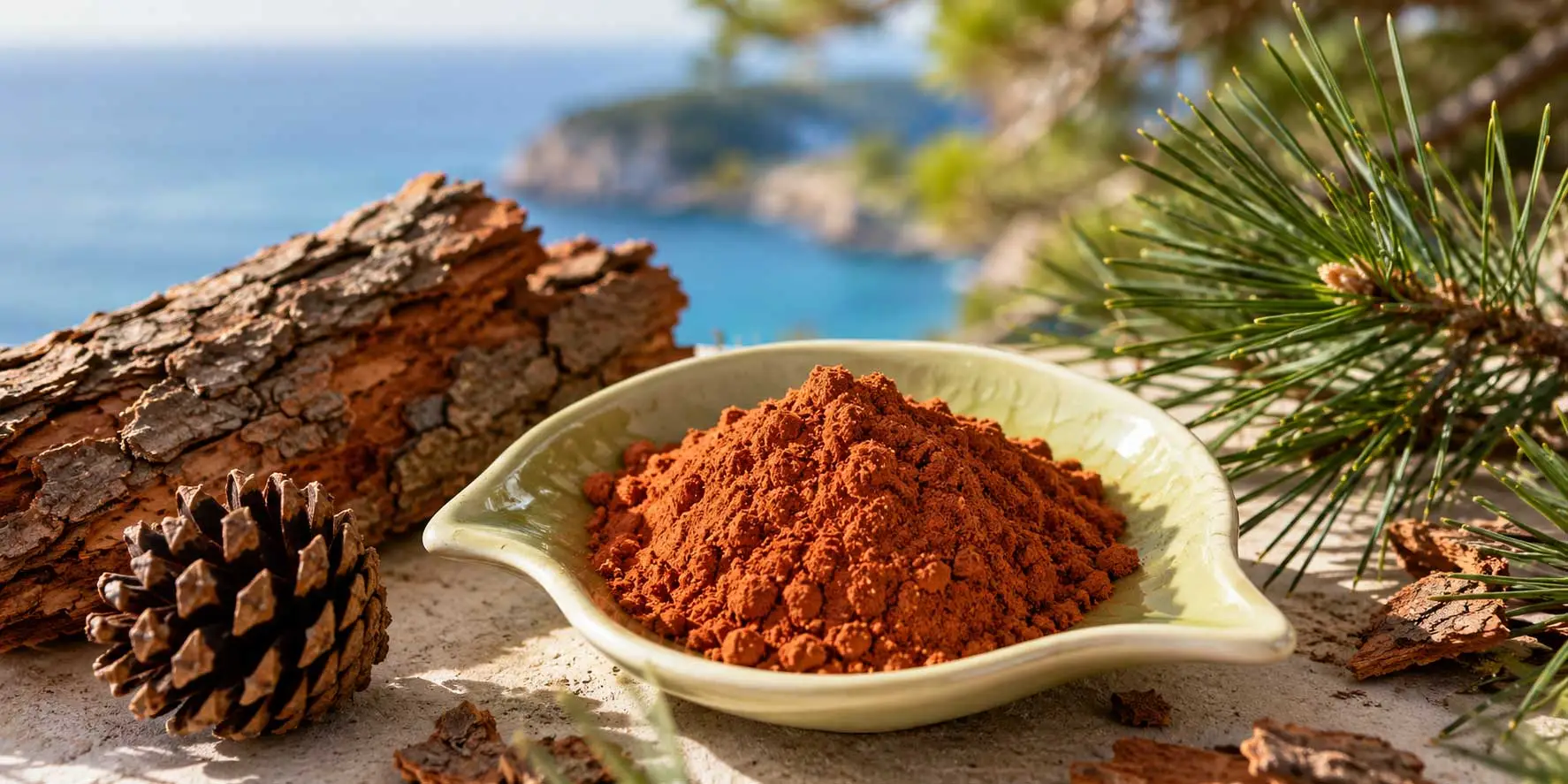
What Are Pine Bark Extract and Grape Seed Extract? Understanding Their Botanical Origins
Pine Bark Extract
Pinus pinaster, commonly referred to as maritime pine, is the source of pine bark extract. The extract is obtained from the bark of the tree through standardized water and ethanol extraction processes, yielding a product rich in OPCs, procyanidins, and polyphenols.
Key features:
|
Feature |
Pine Bark Extract |
|
Botanical Source |
Pinus pinaster (maritime pine) |
|
Standardization |
Typically 65%, 85%, or 95% OPC |
|
Key Actives |
OPCs, procyanidins, polyphenols, flavonoids |
|
Common Uses |
Supplements, beverages, cosmetic formulations |
This extract is valued for its consistency and compatibility with multiple product formats, allowing manufacturers to maintain precise active compound dosing across batches.
Grape Seed Extract
Grape seed extract, derived from the seeds of Vitis vinifera, is another potent botanical source of polyphenols and OPCs. Often a by-product of the wine and grape juice industry, grape seed extract undergoes purification to achieve standardized OPC levels.
Key features:
|
Feature |
Grape Seed Extract |
|
Botanical Source |
Vitis vinifera seeds |
|
Standardization |
Commonly 95% OPC, high polyphenol content |
|
Key Actives |
OPCs, procyanidins, flavonoids, polyphenols |
|
Common Uses |
Supplements, beverages, cosmetic products |
Both extracts share antioxidant functionality, but the botanical origin and specific polyphenol profile contribute to differences in solubility, taste, and application versatility.
Pine Bark Extract vs Grape Seed Extract OPC Content: Key Differences
One of the most critical factors in choosing between these two extracts is OPC concentration and standardization. OPCs serve as the primary active compounds and a measure of antioxidant potential.
|
Feature |
Pine Bark Extract |
Grape Seed Extract |
|
OPC Standardization |
65% – 95% |
95% commonly, up to 98% polyphenols |
|
Primary Polyphenols |
Procyanidins, OPCs, flavonoids |
Procyanidins, OPCs, flavonoids |
|
Batch Consistency |
Strong when standardized |
Strong when standardized |
|
Solubility |
Adjustable for beverage and cosmetic applications |
Water-soluble for beverages, compatible with supplements |
Why this matters: High-standardized OPC content allows precise dosing in nutraceuticals, functional beverages, and cosmetic formulations. Procurement teams should request Certificates of Analysis (COA) to confirm actual OPC levels and ensure batch-to-batch consistency.
Applications of Pine Bark Extract and Grape Seed Extract in Nutraceuticals, Beverages, and Cosmetics
Both extracts are versatile, but their suitability varies by application. Understanding these differences allows formulators to optimize product efficacy and consumer appeal.
Dietary Supplements
•Pine Bark Extract: Often used in capsules and tablets for antioxidant support, cardiovascular health, and healthy aging formulations.
•Grape Seed Extract: Commonly included in high-potency antioxidant supplements and polyphenol blends.
Functional Beverages
•Pine Bark Extract: Compatible with water-soluble blends for wellness drinks, beauty beverages, and powdered drink mixes.
•Grape Seed Extract: Frequently used in antioxidant-rich beverages due to its solubility and flavor neutrality.
Cosmetic and Nutricosmetic Products
•Pine Bark Extract: Supports topical creams, serums, and beauty-from-within formulations.
•Grape Seed Extract: Added to anti-aging and skin-conditioning products, particularly where high polyphenol content is required.
Key Specification Differences Buyers Should Evaluate Before Purchasing
When comparing pine bark extract vs grape seed extract, many buyers focus on OPC percentages first. While OPC content is important, experienced procurement teams know that ingredient quality cannot be evaluated by a single number alone. Two extracts may show similar active compound levels on a specification sheet but perform differently in manufacturing, formulation development, and final product applications.
For companies sourcing bulk pine bark extract or bulk grape seed extract, the goal is not simply to purchase an ingredient with the highest assay value. The objective is to secure a raw material that offers consistent quality, reliable documentation, regulatory compliance, and long-term supply stability.
Active Compound Standardization
One of the most important factors in the Pine Bark Extract vs Grape Seed Extract comparison is standardization.
Commercial Pine Bark Extract is commonly available in:
|
Product |
Common Specification |
|
Pine Bark Extract |
65% OPC |
|
Pine Bark Extract |
85% OPC |
|
Pine Bark Extract |
95% OPC |
Commercial Grape Seed Extract is often standardized to:
|
Product |
Common Specification |
|
Grape Seed Extract |
95% OPC |
|
Grape Seed Extract |
98% Polyphenols |
Although these numbers may appear similar, buyers should understand how each supplier defines and tests active compounds. Standardization methods, analytical procedures, and quality control systems can vary significantly among manufacturers.
This is why professional buyers routinely request a Certificate of Analysis (COA) and product specification sheet before approving a new supplier.
Solubility and Physical Characteristics
Another important consideration in the pine bark extract vs grape seed extract evaluation process is physical performance. Key factors include:
•Solubility
•Particle size
•Moisture content
•Powder appearance
•Flowability
For supplement manufacturers, powder consistency can influence encapsulation and tableting efficiency. Beverage manufacturers often prioritize dispersibility and solution clarity. Cosmetic formulators may focus on ingredient compatibility and stability within emulsions and serums.
A specification that works well in capsules may not necessarily perform well in functional beverages or cosmetic formulations.
Quality Testing Requirements
Regardless of whether buyers choose pine bark extract or grape seed extract, quality documentation should be considered a minimum requirement. A qualified botanical extract supplier should provide testing for:
•Active compound content
•Heavy metals
•Microbiological contamination
•Moisture levels
•Product identity
International brands increasingly require comprehensive testing documentation as part of supplier qualification procedures. For this reason, many procurement teams place greater emphasis on supplier quality systems than on minor differences in assay values.
Documentation Matters More Than Many Buyers Realize
One of the easiest ways to evaluate a potential pine bark extract supplier or grape seed extract manufacturer is to review the quality of their documentation. Reliable suppliers should be able to provide:
•COA
•Product Specification Sheet
•SDS
•Heavy Metal Reports
•Microbiological Reports
•Traceability Documentation
Well-prepared documentation often reflects a well-managed manufacturing system. For brands selling into regulated international markets, strong documentation support can simplify quality audits, customer reviews, and product registration processes.
Pine Bark Extract vs Grape Seed Extract: Which Is Better for Product Development?
One of the most common questions product developers ask is: Which is better, Pine Bark Extract or Grape Seed Extract? The answer depends entirely on formulation goals, product positioning, target consumers, and sourcing requirements. There is no universal winner in the Pine Bark Extract vs Grape Seed Extract comparison. Each ingredient offers unique advantages, and the best choice depends on the intended application.
When Pine Bark Extract May Be the Preferred Choice
Many manufacturers select pine bark extract when developing premium botanical formulations.
One reason is the availability of highly standardized specifications such as pine bark extract powder 95% OPC, which allows formulators to work with clearly defined active compound levels and consistent quality standards. Pine bark extract is commonly selected for:
•Premium dietary supplements
•Beauty-from-within products
•Healthy aging formulations
•High-end botanical blends
•Customized nutraceutical products
For brands focused on ingredient quality, traceability, and premium positioning, standardized pine bark extract often provides a strong competitive advantage.
When Grape Seed Extract May Be the Better Option
In other situations, grape seed extract may align more closely with formulation objectives. Because of its broad market recognition and established use in nutritional products, grape seed extract is frequently incorporated into:
•General wellness supplements
•Antioxidant formulas
•Functional beverage blends
•Daily nutritional products
For some manufacturers, grape seed extract may fit existing product concepts more naturally or align better with overall ingredient sourcing strategies.
Can Pine Bark Extract and Grape Seed Extract Be Used Together?
Yes. Many premium formulations combine pine bark extract and grape seed extract to create comprehensive botanical blends. This approach is commonly seen in:
•Beauty supplements
•Premium antioxidant formulations
•Healthy aging products
•Multi-ingredient nutraceuticals
Rather than viewing pine bark extract vs grape seed extract as an either-or decision, some formulators use both ingredients together to support broader product concepts and create stronger market differentiation.
The most successful product development decisions are usually based on formulation objectives, ingredient quality, and supplier reliability rather than on ingredient popularity alone.
How to Choose a Reliable Pine Bark Extract or Grape Seed Extract Supplier
Selecting the right ingredient is important, but choosing the right supplier is often even more critical. When evaluating pine bark extract vs grape seed extract, experienced buyers typically spend as much time assessing the manufacturer as they do comparing the ingredients themselves. A reliable supplier should be capable of supporting product quality, regulatory compliance, technical documentation, and long-term supply stability.
Manufacturing Experience Matters
In the botanical extract industry, manufacturing experience is often a strong indicator of consistency and reliability. Suppliers with decades of extraction expertise generally have:
•More mature production systems
•Better quality control procedures
•Stronger documentation processes
•Greater technical knowledge
These factors become increasingly important as projects move from product development into large-scale commercial production.

Production Capacity and Supply Stability
A supplier's ability to support future growth should never be overlooked. When sourcing bulk pine bark extract or bulk grape seed extract, buyers should evaluate:
•Production capacity
•Manufacturing infrastructure
•Inventory management
•Lead time consistency
•Supply chain stability
Established in 1991, CHEN LANG BIO TECH has specialized in botanical extraction and ingredient manufacturing for more than three decades. Our facilities include seven GMP-oriented production lines and a 100,000-class clean workshop, with annual processing capacity exceeding 3,000 tons of botanical extracts and fruit powders.
This production scale allows us to support both pilot projects and long-term commercial supply programs for customers worldwide.
Quality Systems and Certifications
A professional pine bark extract manufacturer should operate under documented quality systems. Many international buyers prioritize suppliers with:
•ISO9001 certification
•ISO22000 certification
•GMP-oriented production standards
•SC production licenses
•Traceability systems
These certifications help demonstrate that production processes are documented, controlled, and continuously monitored.
Technical Support Creates Long-Term Value
The most valuable suppliers do more than ship ingredients. They help customers:
•Select appropriate specifications
•Evaluate application suitability
•Review documentation requirements
•Solve formulation challenges
•Support product development
For manufacturers sourcing pine bark extract powder 95% OPC or premium Grape Seed Extract, technical support often plays an important role in reducing development risks and accelerating commercialization.
The strongest supplier relationships are built not only on product quality but also on trust, responsiveness, and long-term collaboration.
Frequently Asked Questions About Pine Bark Extract and Grape Seed Extract
What is the main difference between pine bark extract and grape seed extract?
The primary difference is botanical origin. Pine bark extract is derived from the bark of Pinus pinaster, while grape seed extract comes from the seeds of Vitis vinifera. Both contain OPCs and polyphenols but differ in composition, standardization methods, and formulation applications.
Which extract contains more OPCs?
Both ingredients are available in highly standardized grades. Commercial pine bark extracts are commonly standardized to 65%, 85%, or 95% OPC, while grape seed extracts are frequently standardized to 95% OPC or high polyphenol levels. Actual content should always be verified through a Certificate of Analysis.
Which ingredient is more commonly used in dietary supplements?
Both are widely used in dietary supplements. The choice depends on formulation goals, target consumers, ingredient positioning, and sourcing preferences.
Can these ingredients be used in functional beverages?
Yes. Both extracts can be incorporated into functional beverage formulations. Solubility, taste profile, processing conditions, and formulation compatibility should be evaluated during product development.
Are they suitable for cosmetic applications?
Yes. Both ingredients are used in cosmetic and nutricosmetic formulations, including beauty supplements, serums, creams, and other skincare products.
What documents should a supplier provide?
A professional supplier should provide:
•Certificate of Analysis (COA)
•Product Specification Sheet
•Safety Data Sheet (SDS)
•Heavy Metal Testing Reports
•Microbiological Testing Reports
•Traceability Documentation
How do I choose a reliable supplier?
Look for manufacturers with proven production experience, recognized quality certifications, strong technical support, and stable production capacity. Documentation quality and responsiveness are often good indicators of supplier reliability.
Can specifications be customized?
Yes. Many manufacturers can provide customized particle sizes, active compound levels, packaging options, and application-specific grades depending on project requirements.
Conclusion
Both maritime pine bark extract and grape seed extract are widely recognized botanical ingredients with established applications across dietary supplements, functional beverages, and cosmetic products. Rather than focusing solely on which ingredient is "better," manufacturers should evaluate which option best aligns with their formulation objectives, product positioning, and sourcing requirements.
Successful ingredient selection depends on more than active compound content alone. Standardization, manufacturing quality, documentation support, technical expertise, and supply stability all play important roles in long-term product success.
For brands seeking reliable sourcing partners, working directly with an experienced botanical extract manufacturer can help ensure consistent quality, regulatory compliance, and dependable commercial supply as product demand grows.
Looking for a Reliable Supplier of Pine Bark Extract or Grape Seed Extract?
Whether you are developing dietary supplements, functional beverages, cosmetic formulations, or customized botanical blends, our team can support your sourcing needs with:
•Product Specifications
•COA Documentation
•Technical Support
•Sample Requests
•Bulk Quotations
•Customized Manufacturing Solutions
Email: admin@chenlangbio.com
WhatsApp: +86-17782478823
By combining decades of extraction expertise, modern manufacturing capabilities, and comprehensive quality systems, we help customers bring high-quality botanical products to market with confidence.

Send Inquiry
Related Industry Knowledge
- Marine Fish Oligopeptide Powder vs Tuna Oligopeptide Powder: Key Differences for Supplement Manufacturers
- What are the Benefits of Ascorbyl Tetraisopalmitate in Skincare?
- How Does Ergothioneine Benefit Health?
- Is Kopexil Effective for Male and Female Pattern Baldness?
- Is Minoxidil Powder Effective for Hair Regrowth?
- How Long Does Nitenpyram Take to Work
- Is Ectoin Anti-inflammatory
- Is loratadine Hard on the Liver
- Can I Use Sodium Ascorbyl Phosphate with Niacinamide
- Cheaper Skin Whitening Sepiwhite Powder