Key Active Compounds in Olive Leaf Extract Powder: Oleuropein vs Hydroxytyrosol
2026-02-05 15:25:29
Introduction: Why This Comparison Matters for Ingredient Buyers
The functional value of olive leaf extract powder lies not in a single claimed benefit, but in its polyphenol composition and the way those compounds are standardized, measured, and controlled throughout manufacturing. Among these polyphenols, oleuropein and hydroxytyrosol are most frequently discussed—and most often misunderstood.
For formulators, quality managers, and procurement teams, the comparison between oleuropein and hydroxytyrosol is not an academic exercise. It directly affects ingredient specifications, dosage calculations, batch consistency, and long-term supply reliability. However, market discussions often oversimplify the topic by framing one compound as “better” than the other, without sufficient context.
From a manufacturer’s perspective, the real question is not which compound is superior, but how each compound functions within olive leaf extract powder as a standardized ingredient. Understanding their chemical relationship, stability characteristics, and analytical behavior allows buyers to make more informed sourcing decisions—especially when purchasing bulk olive leaf extract powder for regulated production environments.
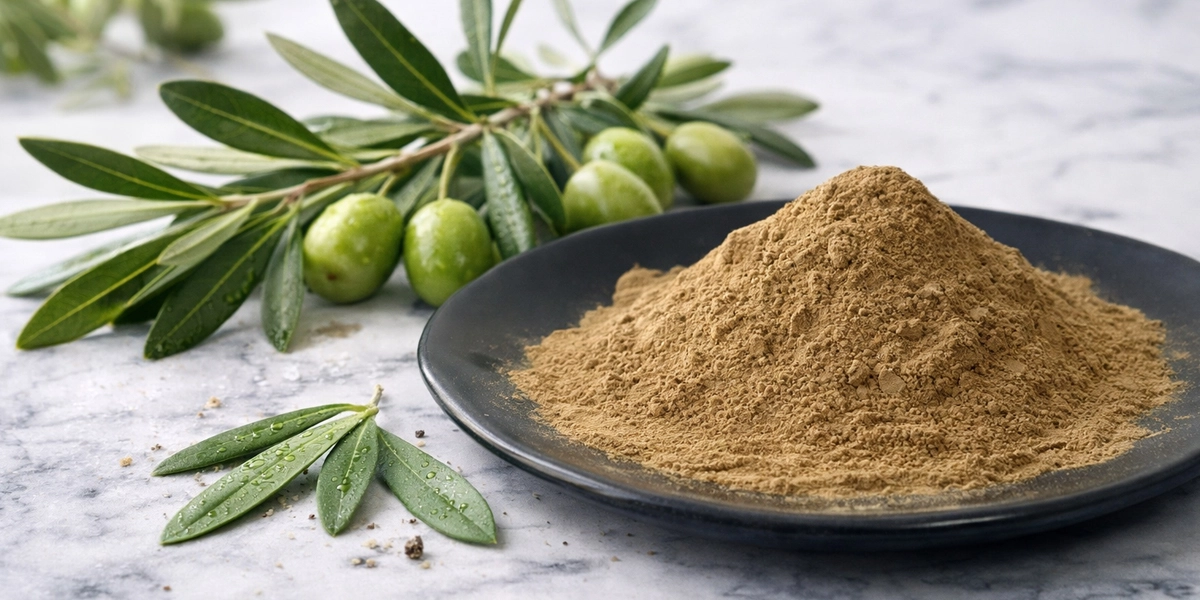
Oleuropein vs Hydroxytyrosol
What Is Oleuropein?
Oleuropein is a naturally occurring secoiridoid polyphenol found primarily in olive leaves. It is the most abundant phenolic compound in fresh olive foliage and serves as the primary marker compound in most commercial olive leaf extract powder specifications.
In ingredient manufacturing, oleuropein is widely used as a standardization reference because it is:
♦Structurally stable under controlled processing conditions
♦Readily quantifiable using validated analytical methods
♦Strongly correlated with overall extract potency
As a result, oleuropein percentage is commonly listed on COAs and technical data sheets.
What Is Hydroxytyrosol?
Hydroxytyrosol is a smaller phenolic compound that can occur naturally in olives and olive-derived materials. In olive leaf extracts, it is often present as:
♦A minor native component
♦A transformation product derived from oleuropein under specific conditions
While hydroxytyrosol receives significant attention due to its antioxidant profile, its concentration in olive leaf extract powder is typically much lower than oleuropein unless specifically enriched or produced through targeted processing.
A Practical Distinction
From a technical standpoint, oleuropein and hydroxytyrosol are not interchangeable indicators. Oleuropein reflects extract concentration and standardization, while hydroxytyrosol reflects a narrower subset of phenolic activity. Confusing these roles can lead to misaligned specifications during sourcing.
Where These Compounds Come From?
Oleuropein as a Primary Secoiridoid in Olive Leaves
Oleuropein is synthesized by the olive tree as part of its natural defense system and is most concentrated in the leaves rather than the fruit. Its natural abundance makes it an ideal reference compound for olive leaf extract powder.
However, oleuropein content is not fixed. It varies based on:
•Cultivar and growing conditions
•Leaf maturity
•Harvest timing
•Post-harvest handling
This variability highlights the importance of upstream raw material control, especially for manufacturers supplying standardized extracts at scale.
Hydroxytyrosol as a Transformation Product
Hydroxytyrosol can originate from the hydrolysis of oleuropein. This transformation may occur:
•During extraction under certain solvent or pH conditions
•During prolonged storage under unfavorable temperature or moisture levels
Understanding this biochemical relationship is essential when interpreting assay results. A higher hydroxytyrosol value does not necessarily indicate a higher-quality extract; in some cases, it may reflect partial oleuropein degradation.
Implications for Polyphenol Profiles
Olive leaf extract powder should be viewed as a polyphenol system, not a single-compound ingredient. Oleuropein and hydroxytyrosol exist within a broader matrix that includes flavonoids and related phenolics, all of which contribute to extract behavior in formulations.
Standardization: Which Marker Should You Specify—and Why?
Why Oleuropein Is Commonly Used for Standardization
In commercial ingredient supply, standardization is essential for consistency. Oleuropein is the most widely accepted marker because it offers:
•Reproducible measurement
•Clear correlation with extract concentration
•Compatibility with industry-standard analytical methods
For buyers sourcing standardized olive leaf extract powder, specifying oleuropein content simplifies communication across procurement, formulation, and quality teams.
When Hydroxytyrosol Specifications Are Relevant
In certain niche applications, hydroxytyrosol content may be specified, particularly when a formulation targets a narrowly defined antioxidant profile. However, such specifications require careful interpretation, as hydroxytyrosol levels alone do not represent total polyphenol integrity.
Avoiding Common Misinterpretations
A frequent sourcing mistake is assuming that higher hydroxytyrosol automatically indicates a superior extract. In practice, balanced polyphenol composition and stability are more relevant for most applications than maximizing a single compound.
Manufacturing Factors That Influence Oleuropein and Hydroxytyrosol Levels
Raw Material Control and Source Management
The quality of olive leaf extract powder begins with the leaves themselves. At CHEN LANG BIO TECH, olive leaves are sourced from our own cultivation base, allowing control over planting, harvesting, and initial handling. This upstream management reduces variability and supports consistent oleuropein input levels.
Extraction Parameters and Solvent Systems
Extraction conditions significantly influence polyphenol profiles. Solvent selection, temperature, and extraction time affect both oleuropein yield and hydroxytyrosol formation. Controlled extraction aims to preserve oleuropein while maintaining the natural polyphenol spectrum.
Drying, Stability, and Moisture Control
Post-extraction drying is a critical step. Excessive heat can degrade sensitive phenolics, while inadequate drying can compromise shelf life. Proper moisture control supports long-term stability and reduces the risk of unintended compound transformation.
Testing and Quality Control: Measuring What Matters
HPLC Analysis for Oleuropein and Hydroxytyrosol
High-performance liquid chromatography (HPLC) is the preferred method for quantifying oleuropein and hydroxytyrosol in olive leaf extract powder. HPLC provides:
High specificity
•Accurate quantification
•Reproducible results across batches
•COAs typically report oleuropein content as a percentage, with method references included for transparency.
Complementary Quality Parameters
Beyond active compound assays, comprehensive quality control includes testing for:
•Moisture and ash content
•Residual solvents
•Pesticide residues
•Heavy metals
•Microbiological limits
These parameters ensure suitability for use in dietary supplements, functional foods, and cosmetic formulations.
Supplier Perspective: What Buyers Should Evaluate Before Sourcing
From a supplier’s standpoint, sourcing bulk olive leaf extract powder should involve more than just a price comparison. Buyers need to ensure that the supplier can meet strict quality, traceability, and consistency requirements. Key factors to evaluate include:
How the extract is standardized: Ensure the supplier uses well-established methods for standardization, such as oleuropein content or hydroxytyrosol levels, depending on the application.
What analytical methods are used: Advanced testing methods, including HPLC for active compounds, UV spectrophotometry, and complete microbial and residual testing, ensure that the extract is of the highest quality.
Whether batch traceability is available: A transparent and traceable process from raw material to final extract ensures accountability and compliance with international standards.
How stability is validated: Make sure that the supplier provides detailed information on shelf-life, storage conditions, and long-term stability testing.
At CHEN LANG BIO TECH, we offer a distinct advantage in that we have our own 5,000-acre olive cultivation base, allowing us to have direct control over the quality of the raw materials right from the source. Our vertically integrated operation ensures complete traceability, from cultivation and harvest to extraction and final product delivery.
Furthermore, we are equipped with state-of-the-art analytical equipment, including high-performance liquid chromatography (HPLC), UV spectrophotometers, and advanced moisture and ash testing devices. This enables us to ensure that every batch of olive leaf extract powder meets the highest quality standards before it reaches our customers.
Working directly with a supplier like CHEN LANG BIO TECH, who manages every step of production—from planting to testing—provides clearer communication and long-term consistency. This approach not only guarantees product quality, but also establishes a trust-based relationship that is essential for businesses requiring reliable and scalable ingredient sourcing.
FAQ
Is oleuropein the same as hydroxytyrosol?
No. Oleuropein is a larger polyphenol and the primary standardization marker, while hydroxytyrosol is a smaller compound that may form from oleuropein.
Which compound is better for standardization?
For most applications, oleuropein provides clearer consistency and easier quality control.
How is oleuropein tested in olive leaf extract powder?
Oleuropein is typically quantified using HPLC and reported on the COA.
Can oleuropein degrade into hydroxytyrosol?
Yes, under certain processing or storage conditions.
What documents should suppliers provide?
A complete COA, MSDS, and traceability records are standard expectations.
Conclusion: Reliable Sourcing of Olive Leaf Extract Powder for Professional Applications
In summary, both oleuropein and hydroxytyrosol are key active compounds in olive leaf extract powder, each contributing unique benefits and functionalities depending on the intended application. Understanding the chemical relationships between these compounds, as well as the standardization methods used in the industry, is crucial for ensuring consistent performance in formulations.
As a trusted olive leaf extract powder manufacturer and bulk supplier, CHEN LANG BIO TECH takes pride in offering high-quality, standardized extracts. Our vertically integrated supply chain, which includes a 5,000-acre olive cultivation base and advanced analytical testing equipment, ensures full traceability and consistent product quality. We are committed to providing reliable ingredients that meet the stringent demands of the dietary supplement, functional food, and personal care industries.
For further information on our olive leaf extract powder offerings or to request a customized quote, please feel free to contact us. Our dedicated team is available to answer any questions, provide detailed product specifications, and assist with your sourcing needs.
Contact Us:
Email: admin@chenlangbiotech.com
Phone: +1-17782478823
Website: www.chenlangbiotech.com

Send Inquiry
Related Industry Knowledge
- Avenanthramides vs Centella asiatica Which Ingredient Offers Better Comfort for Reactive and Red-Prone Skin?
- Is Pomegranate Extract Good for Erectile Dysfunction?
- How Can Acetylcysteine Powder Improve Your Respiratory Health Formulations?
- What is Chondroitin Sulfate Powder Used for?
- Are There Any Side Effects of Cactus Extract Powder?
- How to Make Centella Asiatica Extract?
- What is 5-Aminolevulinic Acid Used For
- Can Quaternium 73 Cause Skin Irritation
- Are Ecdysterone and Turkesterone the Same
- Can Dihydromyricetin Dispel the Effects of Alcohol