
How Is Ergothioneine Powder Manufactured? A Guide to Modern Fermentation Production
2026-06-10 15:16:30
Why Manufacturing Methods Matter for Ergothioneine Quality
When sourcing bulk ergothioneine powder, understanding the manufacturing process is critical. Not all ergothioneine suppliers provide the same level of consistency, purity, and functionality, and differences in production methods can directly impact product performance in nutraceutical and functional food formulations.
The way ergothioneine is produced affects its antioxidant activity, solubility, and stability. For example, naturally extracted ergothioneine may contain trace impurities, while chemically synthesized versions could differ in chirality or molecular composition. In contrast, fermentation-derived ergothioneine tends to offer higher purity and better batch-to-batch consistency, making it more attractive for bulk buyers and supplement brands focused on reliability.
From a commercial standpoint, procurement teams prioritize not only cost but also production transparency. A supplier who can clearly demonstrate the ergothioneine manufacturing process, including fermentation controls, purification steps, and quality assurance protocols, signals lower operational risk and greater reliability. This assurance is essential for international buyers who need stable raw materials for consistent product launches.
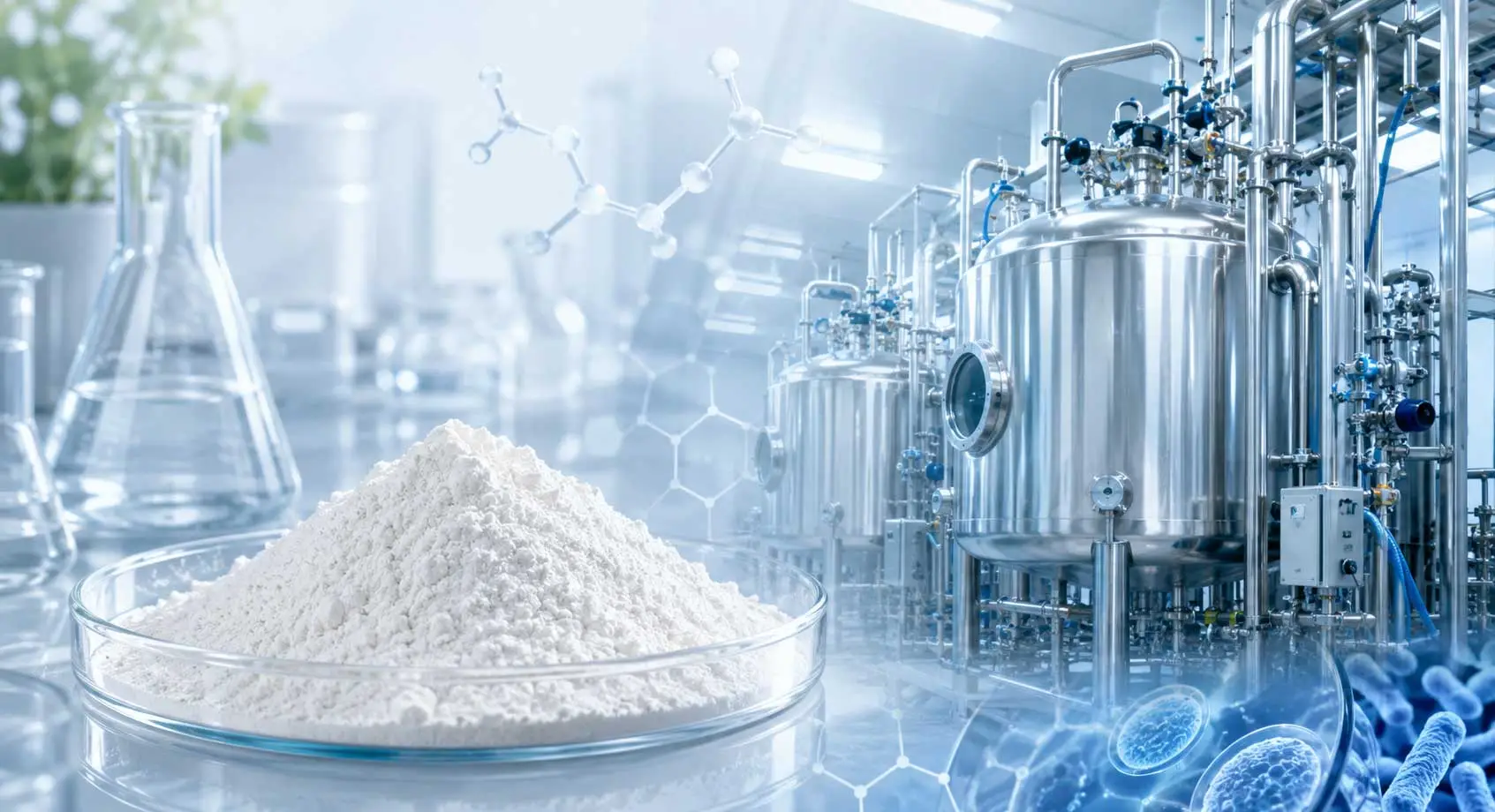
Furthermore, regulatory compliance is increasingly tied to traceability. Brands sourcing bulk ergothioneine powder must ensure that the ingredient is produced under GMP standards with proper documentation. Suppliers able to provide detailed COAs, batch records, and technical data sheets reinforce trust and streamline the procurement process, facilitating smoother bulk orders and long-term commercial partnerships.
In summary, understanding the manufacturing method is not just a technical concern—it is a business-critical factor influencing ingredient quality, supplier selection, and risk management.
What Are the Main Production Methods for Ergothioneine?
Ergothioneine can be produced through three primary methods: natural extraction, chemical synthesis, and microbial fermentation. Each method has distinct implications for quality, scalability, and cost, which procurement teams must evaluate carefully.
♦Natural Extraction
Historically, ergothioneine was extracted from mushrooms or other natural sources. While this method produces a naturally derived ingredient, the yield is low, and impurities can vary between batches. For bulk buyers, natural extraction may present challenges in ensuring consistent powder quality, stability, and long-term supply.
♦Chemical Synthesis
Synthetic production of ergothioneine allows for large-scale manufacturing but requires complex chemical processes. Some chemical methods produce racemic mixtures or require extensive purification steps, impacting the final ergothioneine purity. For supplement manufacturers, choosing synthetic sources often involves balancing cost with the need for verified COAs and quality control reports.
♦Fermentation Production
Modern ergothioneine manufacturing predominantly relies on microbial fermentation. Using carefully selected microbial strains, producers can achieve high yields of L-ergothioneine, the bioactive form preferred in nutraceutical applications. Fermentation-derived ergothioneine offers several advantages: higher purity, consistent batch quality, and scalable production suitable for international bulk orders.
Fermentation also allows suppliers to implement stringent quality control measures throughout the production process. Monitoring parameters such as pH, temperature, and nutrient availability ensures reproducibility, while downstream purification and drying processes maintain the stability and functional integrity of the powder.
For ergothioneine buyers, understanding which method a supplier uses is fundamental. It influences not only the quality of the raw material but also the supplier’s ability to meet demand reliably, comply with global regulatory standards, and maintain traceable supply chains.
Why Fermentation Has Become the Preferred Production Method
Microbial fermentation has emerged as the leading method for producing ergothioneine powder because it addresses both quality and commercial requirements. Compared to natural extraction and chemical synthesis, fermentation offers several distinct advantages.
First, consistency is key. Microbial fermentation allows for controlled production parameters, minimizing batch-to-batch variability. For brands and OEM manufacturers purchasing bulk ergothioneine powder, this means predictable quality, easier formulation integration, and reduced risk of product recalls or performance inconsistencies.
Second, purity is significantly higher in fermentation-derived material. Modern purification and crystallization processes remove unwanted residues, ensuring that the ergothioneine content aligns with declared specifications. High-purity ingredients enhance efficacy in antioxidant supplements and cognitive health formulations, increasing the commercial value of the final product.
Third, scalability and supply reliability make fermentation ideal for global distribution. Suppliers can adjust production volumes to meet growing demand without compromising quality, providing buyers with confidence for bulk procurement. This scalability also reduces lead times and supports timely international shipping, which is crucial for businesses with multiple product lines.
Finally, fermentation aligns with sustainability trends. Microbial production is more environmentally friendly than large-scale chemical synthesis or overharvesting of natural sources. Buyers increasingly consider sustainability when evaluating ergothioneine suppliers, as brands are held accountable for responsible sourcing practices.
In summary, fermentation combines quality assurance, reproducibility, and commercial efficiency, making it the preferred method for suppliers targeting serious international buyers in the nutraceutical and dietary supplement markets.
Step-by-Step: How Ergothioneine Powder Is Produced Through Fermentation
Understanding the step-by-step fermentation process provides clarity on how bulk ergothioneine powder is generated and why it commands trust among international buyers. Each stage contributes to purity, potency, and batch consistency.
1. Strain Selection and Development
Production begins with selecting high-performing microbial strains capable of producing L-ergothioneine efficiently. These strains are often optimized through iterative development to maximize yield while minimizing impurities. For procurement teams, knowing that a supplier invests in validated strains demonstrates technical competence and production reliability.
2. Fermentation Process
Microbial cultures are grown under tightly controlled conditions, including temperature, pH, and nutrient composition. Automated monitoring ensures that the ergothioneine yield is consistent across batches. This stage is where the bulk of the commercial value is established, as predictable production translates directly to reliable bulk supply.
3. Purification and Concentration
After fermentation, the solution undergoes multi-step purification to remove cellular debris, residual nutrients, and by-products. High-purity L-ergothioneine is concentrated, achieving the desired powder specification for commercial distribution. Verified purification processes reinforce quality assurance, a key factor for international buyers.
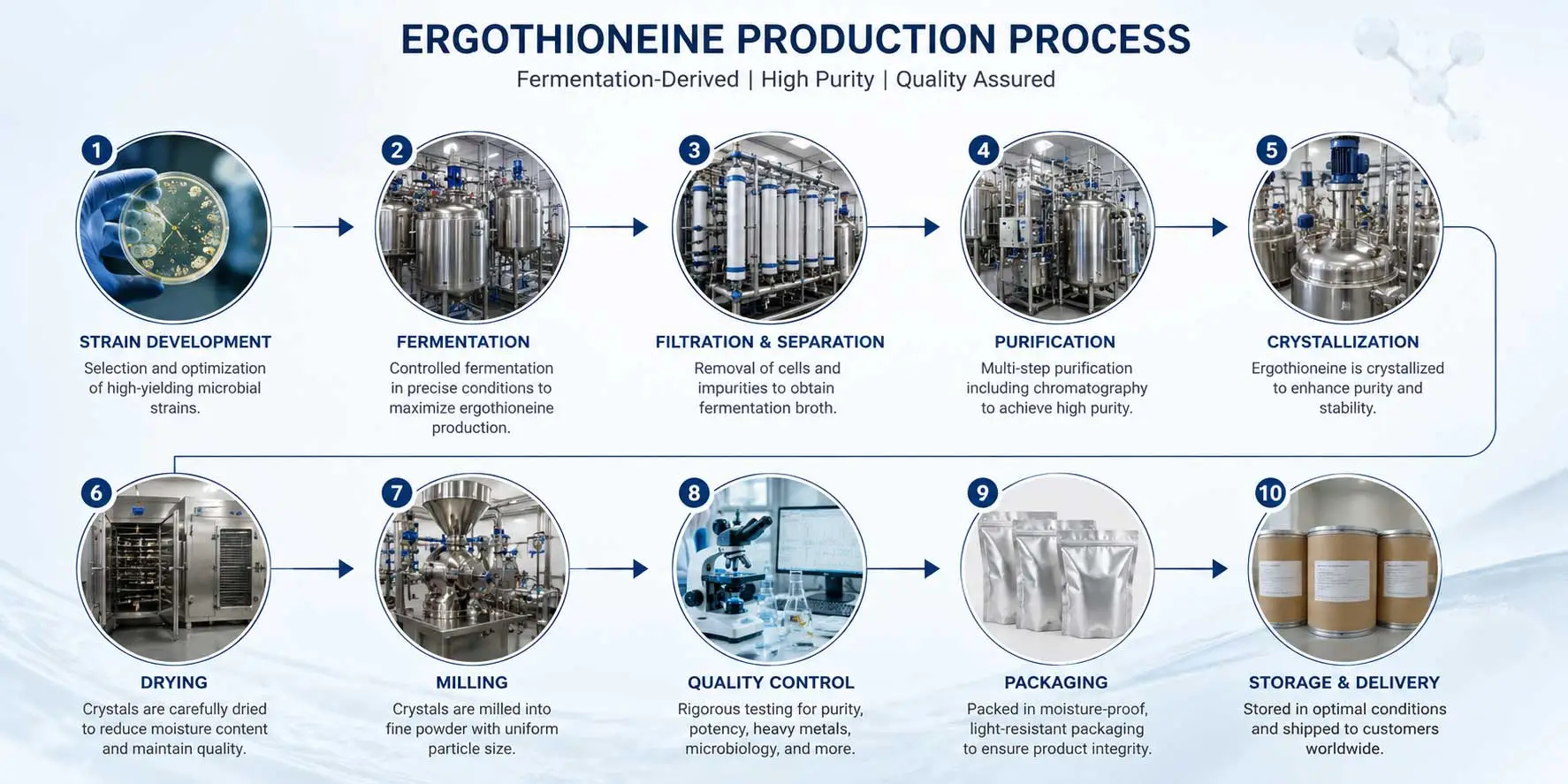
4. Crystallization and Drying
Purified ergothioneine is crystallized and then dried under controlled conditions to maintain stability and prevent moisture-related degradation. Drying parameters are optimized to retain functional activity while producing a flowable, uniform powder suitable for bulk handling.
5. Milling and Packaging
The final powder is milled to the required particle size and packaged using food-grade materials such as aluminum foil inner bags, plastic liners, or fiber drums for 25 kg bulk shipment. Smaller packaging units (1 kg or 5 kg) can be prepared for formulation labs or pilot-scale production. Proper packaging ensures that the ergothioneine powder maintains its potency throughout storage and transit.
Quality Control Throughout the Manufacturing Process
Ensuring consistent quality is a cornerstone of any ergothioneine manufacturing process. For bulk buyers and international brands, reliability depends not only on the production method but also on robust quality control systems integrated into every stage of fermentation, purification, and powder handling.
Identity Testing
One of the first steps in quality assurance is confirming the identity of the ingredient. Ergothioneine identification typically involves high-performance liquid chromatography (HPLC) or UV spectroscopy against certified reference standards. Correct identification prevents the risk of mislabeling or adulteration, which can compromise finished product safety and regulatory compliance.
Purity Analysis
Ergothioneine assay values are crucial for product consistency. Most high-quality suppliers guarantee purity levels of 98% or higher. Procurement teams rely on these values to ensure accurate formulation and dosage in dietary supplements, functional foods, and cosmetic products. Suppliers who consistently meet these specifications demonstrate operational reliability and technical proficiency.
Heavy Metal Testing
Safety is paramount for international shipments. Heavy metals in ergothioneine powder are tested to comply with global regulatory standards. Verified testing for lead, arsenic, cadmium, and mercury ensures that the ingredient meets the quality expectations of brands and regulatory authorities alike.
Microbiological Testing
Microbial contamination is another potential risk. Ergothioneine microbiological testing typically includes total plate count, yeast and mold, E. coli, and Salmonella. Maintaining low microbial counts throughout production is essential for bulk orders, particularly for ingredients destined for capsules, tablets, or beverages.
By integrating these quality controls, buyers can confidently rely on their ergothioneine supplier for consistent, high-performance raw material, reducing risk and supporting brand integrity.
How Ergothioneine Powder Is Packaged for Commercial Supply
Packaging plays a critical role in maintaining ergothioneine stability and facilitating bulk orders. Proper packaging ensures that the ingredient arrives in optimal condition, protects against moisture and oxygen, and supports regulatory compliance.
Inner Food-Grade Plastic Bag
Each production batch is first placed in a food-grade plastic liner, preventing contamination and moisture ingress. This step is particularly important for bulk ergothioneine powder intended for long-term storage or international shipping.
Aluminum Foil Barrier Packaging
The inner liner is then placed inside a moisture-proof aluminum foil bag, providing a barrier against oxygen, light, and humidity. This packaging ensures that the ergothioneine powder maintains potency and purity throughout its shelf life.
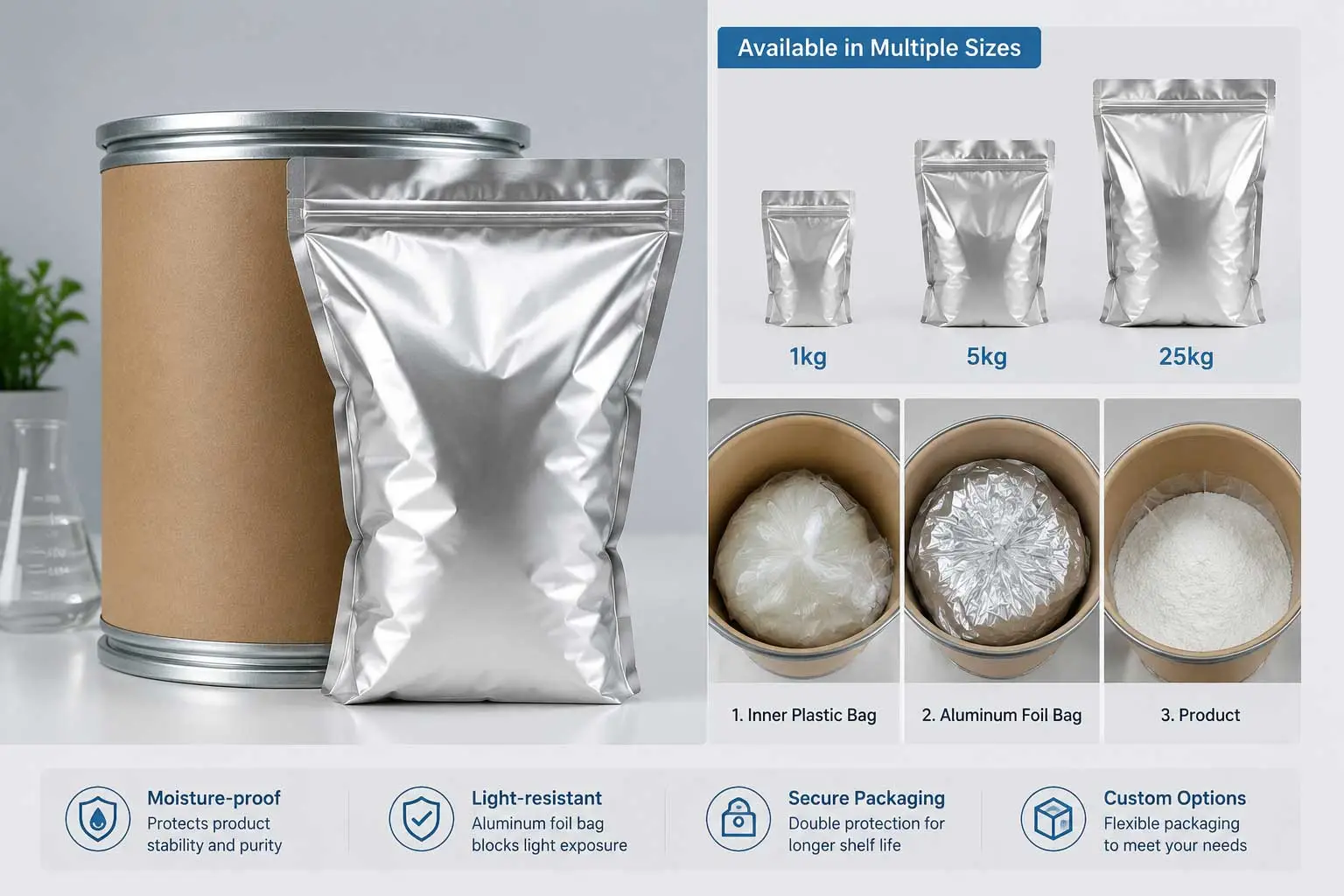
Fiber Drum Packaging
For commercial supply, the powder is shipped in 25 kg fiber drums, which offer robust protection during handling and transit. This packaging format is widely preferred by supplement manufacturers for ease of storage and transport.
Available Packaging Sizes
Smaller units are also available, including 1 kg and 5 kg packages, to support pilot production, R&D testing, or laboratory applications. Providing flexible packaging options enhances supplier accessibility and supports diverse procurement needs.
How Buyers Can Evaluate an Ergothioneine Manufacturer
Selecting a reliable supplier requires more than reviewing product specifications. Buyers must consider the supplier’s production transparency, quality assurance, and capacity to consistently deliver.
•Manufacturing Capability: Assess whether the supplier operates its own fermentation facilities or relies on third-party production. Ownership of the production process often correlates with higher quality control and supply reliability.
•Documentation: Review COAs, stability studies, and batch records to confirm compliance with quality standards and shelf life claims.
•Traceability: Ensure that each batch is fully traceable, from microbial strain selection to final powder packaging.
•Technical Support: Suppliers who provide guidance on handling, formulation, and storage demonstrate deeper expertise, which is valuable for long-term partnerships.
•Consistency: Historical batch data can indicate the supplier’s ability to maintain consistent ergothioneine purity, moisture control, and microbial safety across production cycles.
By evaluating these criteria, buyers can mitigate risks and identify ergothioneine manufacturers capable of supporting both immediate production needs and future growth.
Frequently Asked Questions About Ergothioneine Manufacturing
Q1: Is ergothioneine naturally extracted or fermented?
Modern commercial production predominantly relies on fermentation-derived ergothioneine due to superior purity, consistency, and scalability. Natural extraction yields lower quantities and is less predictable for bulk orders.
Q2: Why is fermentation preferred for commercial production?
Fermentation allows precise control over microbial growth and product quality, supporting reliable bulk supply, higher purity, and reproducibility across batches.
Q3: What purity can fermentation-derived ergothioneine achieve?
Most fermentation-derived material achieves ≥98% L-ergothioneine, meeting the standards of dietary supplements and functional foods. Verified COAs provide assurance for buyers.
Q4: How is ergothioneine tested before release?
Suppliers perform identity testing, assay verification, heavy metal, and microbiological analysis. Batch-specific documentation ensures traceability and compliance.
Q5: How is bulk ergothioneine powder packaged?
Standard packaging includes inner food-grade bags, aluminum foil barrier bags, and 25 kg fiber drums, with optional smaller units (1 kg and 5 kg) for lab or pilot-scale use.
Q6: Can manufacturers provide custom packaging?
Many professional suppliers accommodate custom packaging requirements to support specific shipping, storage, or formulation needs, enhancing supply chain flexibility.
Choosing a Reliable Fermentation Ergothioneine Supplier
For experienced procurement professionals, selecting an ergothioneine supplier involves much more than comparing product specifications or requesting a quotation.
In today's nutraceutical industry, supply chain stability, manufacturing transparency, and quality consistency often have a greater impact on long-term business success than short-term pricing advantages.
As global demand for fermentation-derived ergothioneine continues to grow, buyers are increasingly focused on identifying suppliers capable of delivering reliable quality, regulatory compliance, and dependable production capacity.
A strong supplier relationship should support not only current purchasing requirements but also future business growth.
Evaluate Manufacturing Capability, Not Just Product Specifications
One of the most common mistakes buyers make is focusing exclusively on the product specification sheet.
While purity, assay values, and microbiological results are important, they provide only a partial picture of supplier capability.
Experienced sourcing teams often look beyond the COA and evaluate whether the supplier possesses:
•Dedicated manufacturing facilities
•Fermentation expertise
•Quality management systems
•Production scalability
•Technical support resources
A supplier with established manufacturing infrastructure is generally better positioned to maintain consistency across multiple production batches and respond effectively to future demand increases.
When sourcing bulk ergothioneine powder, production capability often becomes just as important as product quality.
Assess Quality Systems and Documentation Standards
Reliable ergothioneine manufacturers should maintain comprehensive documentation throughout the production process.
This documentation may include:
•Certificate of Analysis (COA)
•Technical Data Sheet (TDS)
•Safety Data Sheet (SDS)
•Stability Studies
•Batch Records
•Traceability Documentation
For procurement teams operating in regulated markets, access to accurate and transparent documentation is essential.
Comprehensive records not only support internal quality programs but also simplify supplier qualification procedures and regulatory audits.
Well-organized documentation often reflects a mature quality culture and a commitment to long-term customer support.
Consistency Is More Valuable Than Occasional Excellence
Many suppliers can produce a high-quality batch.
Far fewer can maintain the same standard across hundreds of production cycles.
For supplement brands, batch-to-batch consistency is one of the most important indicators of supplier reliability.
Variations in purity, moisture content, particle size, or microbiological specifications may create formulation challenges and increase manufacturing costs.
For this reason, buyers frequently request:
•Historical batch data
•Stability reports
•Trend analysis
•Quality performance records
These documents provide insight into process control and manufacturing discipline.
Suppliers capable of demonstrating consistent performance over time are generally viewed as lower-risk sourcing partners.
Technical Support Matters
Technical expertise can become particularly valuable during product development and commercialization.
Questions regarding:
•Ingredient compatibility
•Storage recommendations
•Stability performance
•Packaging requirements
•Regulatory documentation
often arise throughout the product lifecycle.
A knowledgeable ergothioneine powder supplier should be able to provide clear and timely technical guidance.
Responsive support not only improves communication efficiency but also helps brands accelerate product development and reduce sourcing uncertainty.
Long-Term Supply Security Should Be Part of the Evaluation Process
Many procurement teams now consider supply security as a key qualification criterion.
Factors worth evaluating include:
•Production capacity
•Inventory management
•Raw material sourcing
•Lead times
•Export experience
Reliable suppliers should have systems in place to support both routine purchasing requirements and periods of increased demand.
For brands planning long-term product launches, consistent supply availability often becomes a competitive advantage.
Ultimately, the strongest supplier relationships are built on transparency, quality, and mutual trust rather than pricing alone.
Manufacturing Transparency Builds Buyer Confidence
As the global market for ergothioneine powder continues to expand, buyers are becoming increasingly selective about supplier partnerships.
Manufacturing transparency has emerged as one of the most important factors influencing purchasing decisions.
Companies developing dietary supplements, healthy aging products, cognitive health formulations, and functional foods are under growing pressure to ensure ingredient quality and traceability throughout their supply chains.
As a result, many procurement teams now request detailed information regarding:
•Production methods
•Quality control procedures
•Stability testing
•Packaging systems
•Supply chain management
Suppliers capable of providing this level of transparency often establish stronger long-term relationships with customers and achieve higher levels of buyer confidence.
Transparency demonstrates not only technical competence but also a willingness to support customer success beyond the initial transaction.
Conclusion: Manufacturing Quality Ultimately Determines Ingredient Quality
The growing popularity of ergothioneine in dietary supplements, healthy aging formulations, and functional nutrition products has increased the importance of understanding how this ingredient is produced.
As discussed throughout this guide, the ergothioneine manufacturing process directly influences purity, consistency, stability, and long-term supply reliability.
Modern fermentation production has become the preferred manufacturing approach because it offers significant advantages in scalability, product quality, and process control.
From strain development and fermentation to purification, quality testing, and packaging, every stage contributes to the overall performance of the finished ingredient.
For procurement teams evaluating potential ergothioneine manufacturers, understanding these production fundamentals can help reduce sourcing risks and support more informed purchasing decisions.
In practice, selecting a supplier should involve more than reviewing a specification sheet or comparing prices. Manufacturing transparency, documented quality systems, technical expertise, and long-term supply capability are often stronger indicators of value.
For organizations seeking additional technical information regarding fermentation-derived ergothioneine powder, including product specifications, stability documentation, COA review, packaging options, or sample requests, our technical team can be contacted at admin@chenlangbio.com.
Access to accurate information is an important part of responsible sourcing, and informed buyers are generally better positioned to build reliable and sustainable ingredient supply chains.

Send Inquiry
Related Industry Knowledge
- Can L-Ergothioneine Support Cognitive Health?
- Is L-Ergothioneine Safe for Consumption?
- What is Ergothioneine Powder Used for?
- How Does Ergothioneine Benefit Health?
- How Does Mung Bean Peptide Powder Compare to Other Protein Sources
- Is Ergothioneine A Longevity Vitamin
- Could Ergothioneine Cure Alzheimer's Disease
- What is Ergothioneine in Skin Care
- What Foods are High in Ergothioneine and Glutathione
- What is the Best Ergothioneine Supplement